
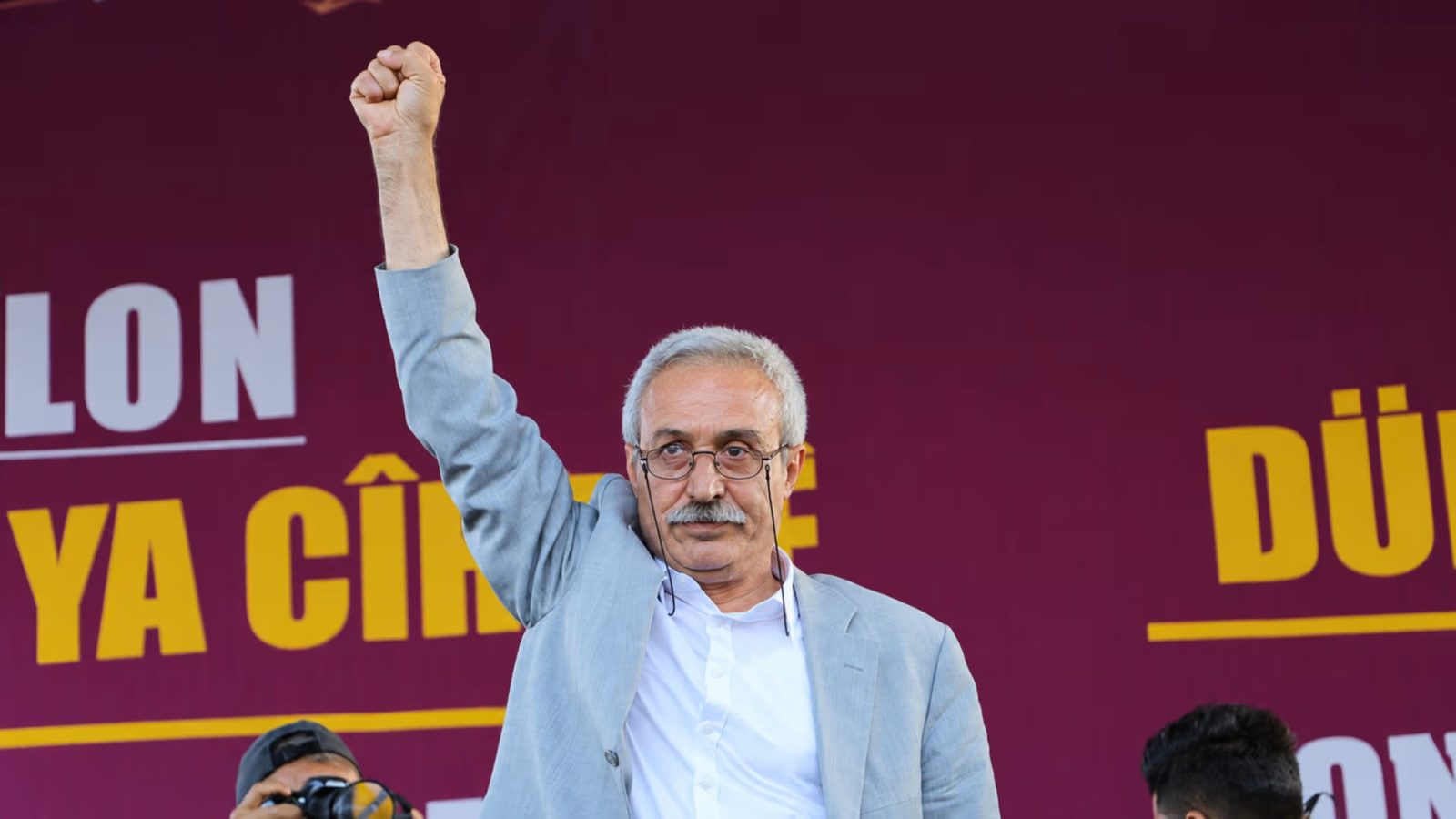
Selcuk Mizrakli: The needs of Turkish Kurds should not be examined only from the perspective of Turks
According to KurdPress, Selcuk Mizrakli, former mayor of Diyarbakir, emphasized in an interview with the "Amargi" magazine that Kurds in Turkey do not want privileges or forgiveness, but rather demand the rights they enjoy as human beings and a nation. He said: "Kurds do not expect favors; they want their rights and what they deserve to be realized." Mizrakli also demanded that Turkish Kurds be recognized as equal and free citizens and that Turkey's relations with Kurds in neighboring countries be based on friendship and cooperation.Mizrakli, a surgeon and politician, was elected mayor of Diyarbakir with 62.93% of the vote in 2019, but was removed from office and arrested just five months later, spending nearly seven years in prison. He was released from Edirne High Security Prison on September 8, 2026, after completing his sentence, and upon returning to Diyarbakir, he once again emphasized the need for social peace and justice. His professional life began with medical school and work as a doctor in Diyarbakir, and later continued with civic activities, parliamentary representation, the municipality, and finally long years in prison.
Regarding the Kurdish issue, he said that in recent years, Turkish society has faced the regional reality of the Kurdish presence more than ever before.According to Mizrakli, the Turkish people now see the Kurdish presence in the Kurdish areas of Syria, the Iraqi Kurdistan Region and the large Kurdish population in Iran more than ever before, and as a result, the Kurdish presence in the Middle East has become more apparent as a “regional reality.” He added that this presence has grown in size and depth in recent years, becoming “a geopolitical actor” that can have an impact on its regional arena.
Mizrakli believes that Turkey also knows that the Kurdish issue has become a constraint on its foreign policy. He said that Ankara faces obstacles in every step it takes in the international arena, some of which are related to the Kurdish issue, but on the other hand, moving towards peace, friendship and reconciliation can significantly increase “Turkey’s sphere of influence.”In his view, the coexistence of Kurds and Turks could create a force capable of significantly changing the balance of power in the Middle East.
Explaining Erdogan’s preferred approach to the Kurdish issue, he said that if the Turkish president were to declare that he intended to create an order in which the country’s Kurds would consider themselves “equal and free citizens” while at the same time strengthening Turkey’s relations with the Kurds in the region, such a stance could break many existing molds and assumptions. According to him, the lack of such a clear framework and the failure to reflect the internal results of the peace process in the external arena, especially by the highest executive authority, have caused this process to be considered more of a tactical stance and public trust has not been built in it.
Mizrakli devoted a significant part of the interview to the peace process and the rule of law issue.He said that no relationship or agreement that is not backed by law is sustainable, describing law as the “adjusting screw and fuse of democracy.” According to him, the most important issue that has affected Turkish politics over the past 10 to 12 years has been the distancing from the law; a situation that, when the government also violates the law, spreads to politics, economy, culture and the daily lives of citizens.
He said that one of the main signs of the genuineness of the peace process should be the return to the rule of law based on modern, global and international standards. In Mizrakli’s view, the decisions of the Turkish Constitutional Court and the rulings of the European Court of Human Rights must be implemented, and issues such as the appointment of guardians, detentions, restrictions on fundamental rights and freedoms, and issues related to property rights must be resolved within the framework of the law. He stressed that the implementation of court rulings must be carried out without exception.
In the personal part of the interview, Mizrakli also described the years in prison. He said that he tried to maintain himself both intellectually and socially in order to turn the seven years in prison into an opportunity for personal growth. He spent two years in Bunyan and five years in Edirne, and spent a significant part of this time with Selahattin Demirtaş. He described Demirtaş as a politician, writer, artist, thinker, father and husband who was also a "very good friend" and said that they complemented each other in prison like "bees and pollen" until the result of this cooperation turned into "honey". He said that prison could not turn these years into "seven dark years" and they tried to maintain their social and psychological connection. Mizrakli also said that during his imprisonment, he tried to help sick prisoners medically and check the results of their tests and health problems.He plans to return to the medical profession after his release and believes that medical skills, although they require retraining after years of absence, do not fade from a doctor’s mind.
In conclusion, Mizrakli said he expects the “process of peace and democratic society” to continue in a realistic way. He believes that the achievements made so far should be recognized, but the slow pace of progress puts the process at risk and that this process needs to be accelerated.
User comments