Is the Iraqi Kurdistan Region on the Brink of Collapse?
According to Kurdistan Press, Foreign Policy magazine, in an article titled “Will the Kurdistan Region of Iraq Disintegrate?” writes that the escalating differences between the two main parties in the Kurdistan Region, the Kurdistan Democratic Party of Iraq and the Patriotic Union of Kurdistan, have exposed the region to one of its most serious political crises since the end of the civil war in the 1990s. The dispute over the distribution of parliamentary seats and government positions has now reached a stage where the possibility of forming two separate governments and two separate administrations in the Kurdistan Region has once again been raised. This situation could put the political and economic achievements of the Kurds of the past few decades at risk.
Since 2006, the Kurdistan Democratic Party, led by the Barzani family, and the Patriotic Union of Kurdistan, led by the Talabani family, have accepted a form of power-sharing in the Kurdistan Region, based on a US-brokered agreement. Under the agreement, the Kurdistan Democratic Party held the presidency of the Kurdistan Region, while the Patriotic Union held the presidency of Iraq in Baghdad.
However, the balance of power between the two parties gradually shifted. Since 2009, the Patriotic Union has been losing some of its electoral base to smaller opposition parties, and in the 2013 Kurdistan parliamentary elections, the Democratic Party won 38 out of 100 seats, while the Patriotic Union's share was only 18.
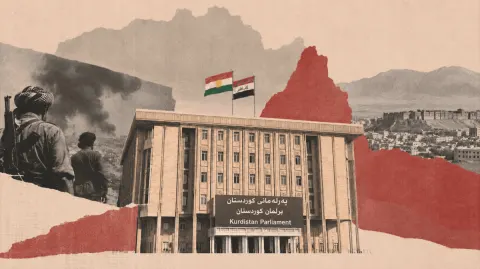
The October 2024 parliamentary elections once again intensified the dispute over power sharing, This disagreement has left the Kurdistan Region virtually without an active parliament and a new government since late 2024. Long negotiations between the two parties to form a cabinet have also failed, and the political crisis has reached a stalemate.
When the Democratic Party succeeded in securing the legal quorum of 51 seats to convene a parliamentary session by attracting the support of a number of opposition parties and three Patriotic Union representatives, the party then elected a new presidium of the Kurdistan Regional Parliament, a move that was met with strong opposition from the Patriotic Union.
To end this impasse, the Democratic Party was forced to resume parliamentary activity by forming a parliamentary majority. In response to these developments, Bafel Talabani announced that the Patriotic Union would withdraw from the Kurdistan Regional Government and that if the Democratic Party continues the process of forming new institutions, this party would also form an independent government outside the current structure of the region.
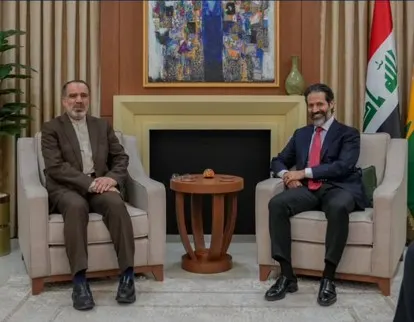
Meanwhile, the two parties have sought to gain support from Baghdad to strengthen their positions. Kurdistan Regional Government Prime Minister Masrour Barzani met with Iraqi Prime Minister Ali al-Zaidi on November 9. Bafel Talabani also traveled to Baghdad on November 12 and met with a number of Iraqi officials, including representatives of the Coordination Framework Movement, to garner the necessary political support for the Patriotic Union's positions.
The publication further points to the United States’ stance that it continues to want to preserve the unity of the Kurdistan Region. Tom Barrack, the US ambassador to Turkey and the country’s special envoy for Syria and Iraq, advised the Kurdish parties on November 11 to put aside their differences. In talks with officials from both parties, he stressed the need to preserve the region’s unity.
In conclusion, Foreign Policy believes that the current crisis goes beyond a dispute over the division of ministries and parliamentary positions and could threaten the existence of a unified political structure of the Kurdistan Region. Although there is still a possibility of an agreement between the Democratic Party and the Patriotic Union, and the United States is also opposed to dividing the region into two administrations, the continuation of the confrontation between the two parties could pave the way for a return to the conditions of the 1990s. In such a situation, not only will the region's autonomy and its place in the federal structure of Iraq be weakened, but international support for it may also decrease, and the region's citizens will pay the main price for the political competition between the two parties.
User comments