
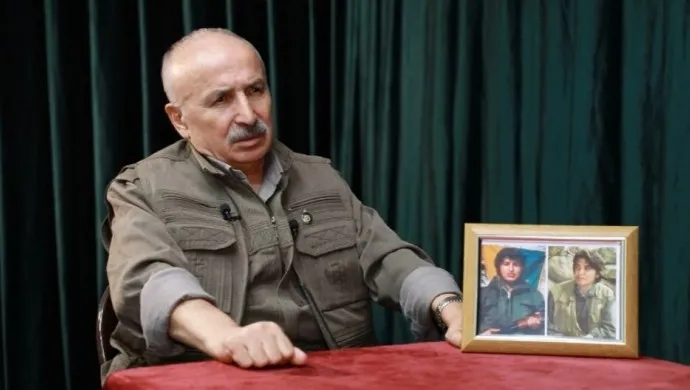
Karasu: Law passed, but peace process still behind closed doors
According to KurdPress, Mustafa Karasu, a member of the KCK Executive Council, in an interview with Media Khabar, pointed out that nearly two months have passed since the framework law was passed on August 10, and criticized the process for being stalled at the decision-making stage. According to him, despite the formation of various committees and committees, there is still no sign of their practical activities or the implementation of the provisions of the law.Qarasu said that the Kurdish movement has taken the expected steps by ending the armed struggle against Turkey; however, these measures have not been matched by a level-playing field from the government, and no tangible changes have been made in the political, legal and democratic spheres.
Framework law alone is not enough
The KCK Executive Council member described the approval of the framework law and the formation of some committees as initial steps and said that the existence of a law on paper, without practical implementation and the approval of supplementary reforms, cannot provide the basis for solving the Kurdish issue.
According to him, the laws and legal structure that have provided the basis for limiting political activity and the continuation of the Kurdish issue in recent years cannot become a means of solving this issue without changes.
Qarasu called for the approval of laws that guarantee political freedom, organization and democratic participation.He also considered the continued detention of political opponents and the appointment of caretaker mayors instead of elected mayors to be incompatible with the claim of moving towards peace.
Criticism of the government’s procrastination and the possibility of electoral calculations
Criticizing the delay in implementing the framework law, Karasu said that it was unclear why the government had postponed the start of the practical activities of the committees and subcommittees.
He suggested that the government might want to manage the process with electoral calculations and postpone the main measures until the elections. However, he emphasized that such an approach is dangerous in the unstable and changing conditions of the Middle East and could destroy the opportunity to achieve a lasting solution.
According to Karasu, the delay in implementing the announced steps undermines the Kurdish community’s trust in the process and creates the impression that the government has not yet made a definitive decision on advancing a political and democratic solution.He also demanded that the reports and proposals presented in parliament should not remain just official documents and that the government show its seriousness with practical actions.
Öcalan's legal and political status should be clarified
One of the main themes of Karasu's speech was Abdullah Öcalan's position in the peace process. He said that Öcalan cannot be considered a negotiating party only in the phase of laying down arms and then ignoring his role in the political process.
Karasu described Öcalan as the main negotiator of the Kurdish side in the Kurdish issue and said that his role in coordinating the peace process, disarmament and transition to democratic politics should be given an official and legal status.
He added that if Öcalan is to take on a role in the Peace and Politicization Board, the limits of his authority, legal status and mode of operation must first be clearly defined.According to Karasu, it is not possible to continue the process without resolving this issue.
The need to provide conditions for Öcalan to operate freely
Karasu emphasized that Öcalan cannot play the expected role in the peace process in the current conditions and with limited communication facilities.
He called for the creation of conditions for Öcalan to be able to communicate directly with the media, intellectuals, academics, politicians, representatives of civil society and various social groups and to share his views with public opinion without intermediaries.
According to him, currently, various individuals and movements in the name of Öcalan are talking about his views and positions; while society and the media should have the opportunity to hear his words directly.Qarasu said that if Öcalan is expected to play a role in coordinating the process and preparing society for the transition from armed conflict to democratic politics, he should be given the necessary tools and conditions to fulfill this responsibility.
The need to make the peace process transparent
The KCK Executive Council member also stressed the need to make the peace process transparent, saying that the public should know what the tasks of the established delegations and committees are, what actions they have taken and what stage the process is at.
He said that limited confidentiality may be necessary at certain stages of the negotiations; however, making confidentiality a permanent feature of the process would erode public trust and social support.
According to Qarasu, government delegations, subcommittees and the parliamentary oversight commission should regularly inform the public about their activities.He added that a process that directly affects the future of millions of people cannot be carried out only in closed-door talks.
Recognition of Kurdish language, culture and identity
In another part of his speech, Karasu considered the solution to the Kurdish issue to require recognition of Kurdish identity, language and culture, and said that the peace process should not be limited to disarmament alone.
He contrasted “democratic integration” with assimilation and denial of identity, defining it as the connection of the Kurdish community with the state and other sectors of Turkish society on the basis of equality, freedom and democratic rights.
According to him, democratic integration does not mean absorbing individuals into the state structure or simply providing them with employment opportunities; rather, it must be accompanied by ensuring education and cultural activities in the Kurdish language, recognizing Kurdish identity, strengthening local administrations and expanding political and social rights.Qarasu emphasized that the Kurds' renunciation of forming an independent national state should not be interpreted as their renunciation of their democratic, linguistic, cultural and collective rights.
He concluded by saying that the solution to the Kurdish issue would not be achieved by simply laying down arms, and that in order to achieve lasting peace, Turkey's political and legal structures must also be rebuilt on the basis of equality, pluralism and democratic participation.

User comments