
Did the Syrian Kurds experience the defeat of the Iraqi Kurds in 1975?
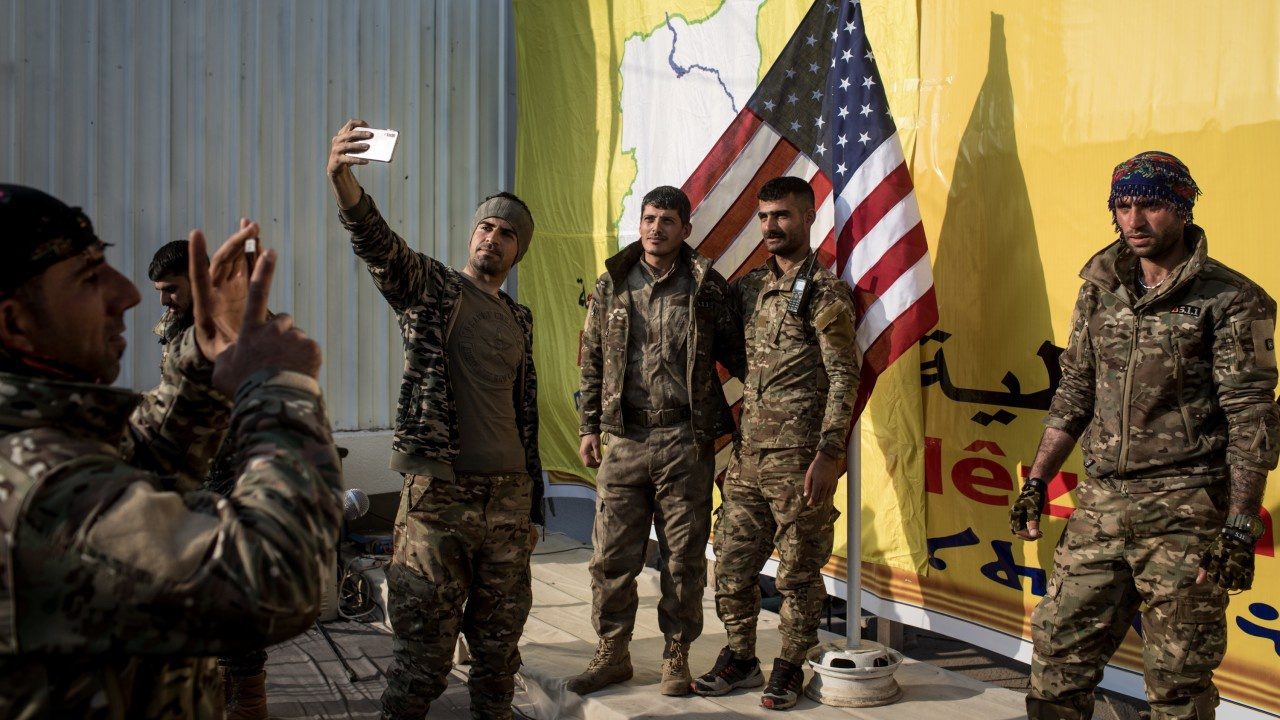
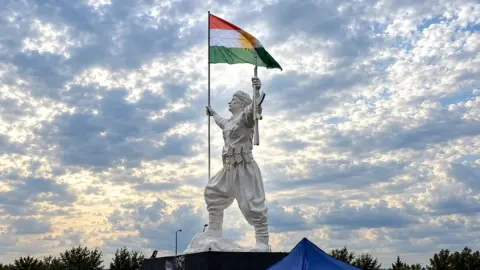
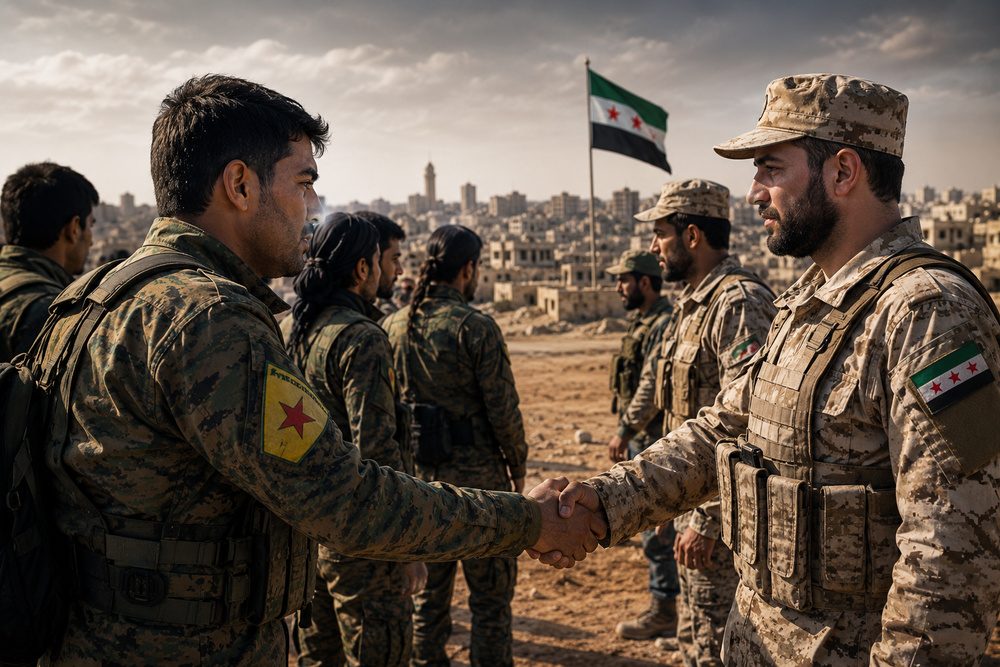
According to KurdPress, the announcement of the integration of the "Syrian Democratic Forces" forces into the Syrian army by Mazloum Abdi, the former commander of these forces, has been interpreted by some Kurds as another defeat in the contemporary history of the Kurds; a defeat that is reminiscent of the collapse of the Iraqi Kurdish movement after the Algiers Agreement in 1975.Dr. Ali Zalmay, comparing the situation of the Syrian Kurds with the defeat of the Iraqi Kurdish movement in 1975, known as Ash Batal, believes that recent developments in Syria and the experience of the Iraqi Kurds after 2003 show that the political achievements of the Kurds, no matter how consolidated they are in the field, ultimately remain vulnerable to the logic of regional states and the state-centered international system.
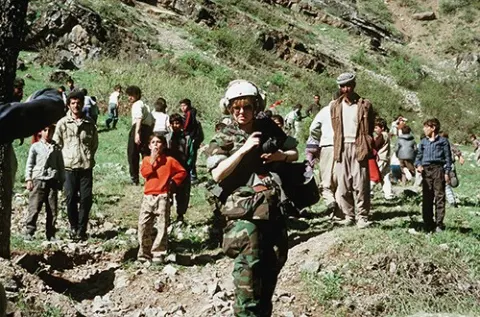
Of course, comparing Syria today with Iraq in 1975 does not mean that the two events are the same. In 1975, the Algiers Agreement between Iran and Iraq directly led to the cessation of Iranian and American support for the armed movement of the Iraqi Kurds, and as a result, the Iraqi Kurdistan movement collapsed in a short time. However, in Syria, the main issue is not the sudden cessation of foreign support and the military collapse of a movement, but the process of integrating a Kurdish political and military structure into the structure of the central government of Syria.However, from the author’s perspective, the commonality between these two experiences lies elsewhere: when the interests of regional and international powers change, support for non-state actors can also change and their achievements can be influenced by state considerations.
The Iraqi Kurdish Experience: From the 2003 Opportunity to Strengthening Baghdad
After the fall of the Iraqi Baath government in 2003 and the removal of Saddam Hussein, the country was faced with a power vacuum and severe weakness of government institutions. In those circumstances, the Iraqi Kurdistan Region was in a different situation. Before the fall of Saddam, the regional government had years of experience in administering Kurdish areas and had a set of political and administrative institutions at its disposal.
Kurdish political leaders also participated in the process of forming the new political structure of Iraq and cooperated with the Iraqi Governing Council.However, the United States and coalition forces continued to pursue a policy based on preserving the unified structure of Iraq.
According to Zalmay, the consequences of this approach became apparent in the following years. Although the Kurds enjoyed American support at times and were recognized as Washington's allies, this relationship was always limited and dependent on the political conditions of the region. As a result, along with the gradual strengthening of the central Iraqi government, the idea of Iraqi Kurdistan's independence also faced more restrictions.
Now, with the reduction of the US military presence in Iraq and the withdrawal of American forces from the region, questions have been raised about the future of the political and security position of the Kurdistan Region.
Syria; Repeating a Different Pattern
The developments in Syria after the fall of Bashar al-Assad's government in December 2024 created a new situation for the Kurds in the country.The Syrian Democratic Forces, which had become one of the most important military forces in Syria during the years of civil war and the fight against ISIS, controlled a large part of the north and northeast of the country at that time.
During the years of war, the Autonomous Administration had also managed to create political and administrative structures and form a kind of multi-ethnic and multi-religious system in the areas under its control. Kurds, Arabs, Assyrians, Turkmens and Armenians were present in this structure, and women also played a significant role at various political and military levels.
From this perspective, the situation of the Syrian Kurds after the fall of the Assad regime is comparable to the situation of the Iraqi Kurds after the fall of Saddam.In both cases, the collapse of the previous central government structure provided an opportunity to consolidate Kurdish institutions; but in both experiences, the future of these achievements was heavily influenced by foreign power politics and the balance between the central government and Kurdish forces.
However, there is an important difference. The Iraqi Kurdistan Region enjoyed a relatively established political-legal structure in 2003, and later consolidated its position in the Iraqi constitution. In contrast, the Syrian Kurdish political-military structure lacked such international legal guarantees or a solid constitution. For this reason, the integration of the SDF into the Syrian army cannot be seen as a precise repetition of the 1975 defeat; rather, it can be seen as part of a gradual process of returning power to the central government.
Shifting Allies and the Nation-State Logic
One of the most important points of Zalmay’s analysis is the rapid shift in alliances in the Middle East.The Syrian Kurds were among America’s closest military partners during the war against ISIS. But as the political situation in Syria changed, so did the priorities of Washington and other foreign powers. Forces that were once important allies of the United States must now find their place in the structure of the new Syrian government.
From the author’s perspective, this development shows that in international politics, state interests often override long-term relationships with non-state actors. This has been repeated many times in the contemporary history of the Kurds, from the Algiers Agreement in 1975 to the developments in Iraq after 2003 and now the developments in Syria.
For this reason, Zalmay warns that relying on the support of foreign powers cannot be a permanent guarantee of the Kurds’ political achievements.A more difficult situation in Turkey
According to the author, the situation in Turkish Kurdistan is also uncertain. Because the peace process between the PKK and the Turkish government remains fragile and slow, and it is not yet clear what political and legal structure this process will ultimately create for the Kurdish issue in Turkey.
Moving beyond traditional nationalism?
Zalmay believes that the experience of the past century should force the Kurds to reconsider their method of political and social struggle.
Over the past century, the Kurds have pursued a form of political nationalism, mainly in response to powerful and sometimes aggressive nationalism. This nationalism has appeared at various times in the form of armed struggle, autonomy, federalism, or demands for independence.
However, the author believes that recent experiences show that continuing this approach alone cannot guarantee the security and survival of Kurdish achievements.Regional states remain the main players in the international system, and non-state actors are vulnerable to the policy changes of the great powers.
Therefore, he suggests that a new phase of the Kurdish movement should focus more on strengthening the social and cultural foundations of Kurdish identity.
Language, literature, education, sports, preserving historical memory, cultural production, and creating social and cultural networks can play an important role in this direction. The goal is to create a kind of cross-border bond between Kurdish communities; a bond that does not necessarily depend on the creation of a single state.
Everyday nationalism; a different way to preserve Kurdish identity
To explain this approach, Zalmay refers to the concept of “everyday nationalism” or “ordinary nationalism”; a concept that Michael Billig has put forward to explain everyday and informal forms of nationalism.In this sense, nationalism is not necessarily limited to the flag, the army, the border, and the state. The Kurdish language used in the home and school, Kurdish literature, music, sports, the media, education, and the preservation of history and collective memory can also help to reproduce national identity.
This approach, if successful, could emphasize building social capacities from within Kurdish society rather than focusing solely on confrontation with states.
1975 Defeat or a New Turning Point?
The answer to the question, “Did the Syrian Kurds experience the 1975 Defeat of the Iraqi Kurds?” is therefore not absolute.
If the 1975 defeat is meant to be the collapse of a Kurdish movement following a sudden shift in the calculations of external powers, the developments in Syria do not exactly repeat such a pattern. In 1975, the Algiers Agreement between Iran and Iraq and the cessation of foreign support led directly to the collapse of the Iraqi Kurdish insurgency.In Syria, the situation is more complex, and the Kurds still have considerable political, social, and cultural potential.
But if the “defeat of 1975” is a historical experience in which a Kurdish movement faces a limitation of its achievements after a shift in the regional balance of power, Zalmay’s comparison is worth considering.
The Syrian experience shows that territorial control, military power, and the support of a foreign power are not enough to guarantee a lasting political achievement. The main question now is to what extent the Syrian Kurds can preserve and consolidate their political, cultural, and social achievements within the framework of the new Syrian structure.From this perspective, perhaps what has happened in Syria is not a “complete repeat of 1975,” but rather a warning about the same problem that the defeat of the Iraqi Kurds in 1975 revealed: that is, until a Kurdish movement can create sustainable institutional, social, and political foundations, its achievements can be altered by changing regional and international power balances.
And this issue, in the author’s opinion, raises the need for a new phase in Kurdish political approach; a phase in which the preservation of identity, language, culture, historical memory, and social institutions, alongside political activism, become a central part of the Kurdish strategy for the future.
User comments