
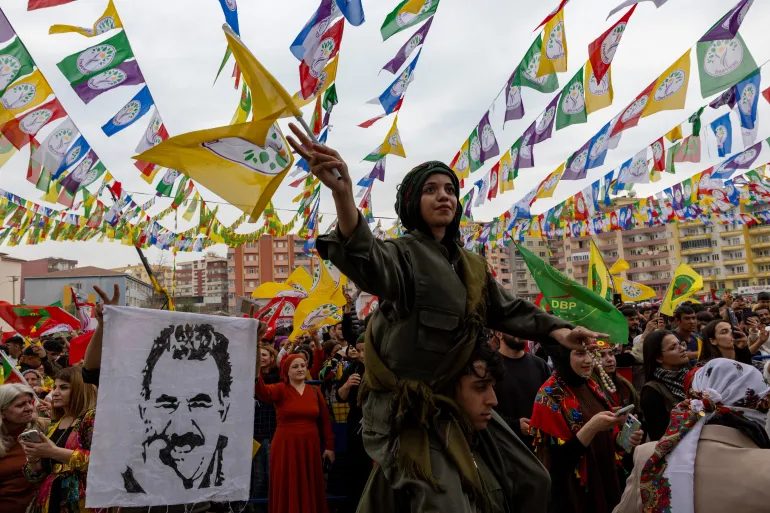
The situation of the Kurds after the dissolution of the PKK and the Syrian Democratic Forces
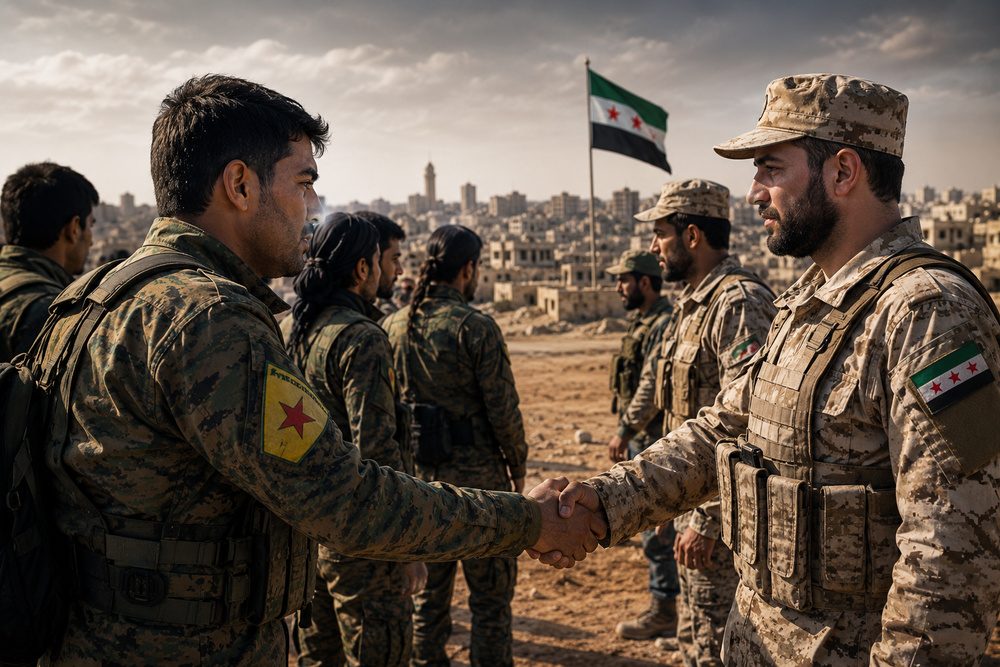
According to KurdPress, the integration of the Syrian Democratic Forces into the Syrian government forces and the end of the PKK's military activity have sparked new discussions about the future of the Kurdish issue and how to guarantee their rights in Syria and other Kurdish-populated parts of the region.While some currents see these developments as an opportunity to transfer the Kurdish struggle from the military arena to the political and legal arena, a number of experts warn of the lack of clear guarantees for the national, political, cultural and linguistic rights of the Kurds.
According to a report by Al Jazeera English, the dissolution of the Syrian Democratic Forces and its integration into the structure of the Syrian government forces last month, along with the end of the PKK's military activity, has left many Kurds in Syria, Iraq and Turkey with the question of how and through what channels the rights of the Kurds should be ensured in the new phase.
Syrian President Ahmed al-Sharaa has promised that the political and linguistic rights of the Kurds will be protected in the country's future constitution.However, a number of analysts are concerned that abandoning the armed struggle, in the absence of clear political and legal mechanisms, will weaken the Kurds’ position to achieve their rights.
“We want this day to be the beginning of a real transition from battlefields to battlefields of construction and from the era of weapons to the era of peace,” said Mazloum Abdi, commander of the Syrian Democratic Forces, at a ceremony announcing the agreement at the Syrian presidential palace in Damascus. He added that this development marked an “important page” in Syrian history.
The development has received mixed reactions among Kurdish political movements.Some Kurdish politicians see the integration of the SDF as an opportunity for the Kurds to participate in building a new Syria and pursue their rights through a constitution, while others believe that the decision was the result of regional and international pressure, especially from Turkey and the United States, rather than an independent Syrian-Kurdish agreement.
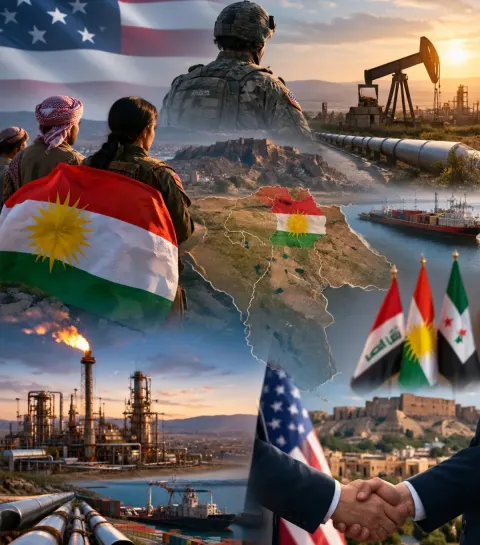
Turkey, which has established close relations with the new Syrian government, has targeted Kurdish forces along its border with Syria in recent years. The United States, although it played a role in the formation of the SDF in 2015, has increased its support for the government of Ahmed al-Sharaa in recent developments.The Syrian Democratic Forces, formed with US support to fight ISIS, controlled large parts of northern and eastern Syria, the region where the majority of the country’s Kurdish population lives, for more than a decade. But after this year’s military upheavals and the changing equations following the fall of Bashar al-Assad’s regime, negotiations between Damascus and the SDF eventually led to the dissolution of the force and the end of the autonomous administration in the region.
Talal Mohammed, head of the Kurdistan Democratic Peace Party in Syria, sees the developments as a turning point in the process of the Kurdish issue. “This is an opportunity for the Kurds to be partners in building a democratic Syria. We had an autonomous administration and a military force before, but we did not have international or regional support and recognition."The next step requires uniting the ranks of the Kurds and working to achieve all our rights in the new constitution," Mehmet stressed. However, he believes that Turkey has played a decisive role in ending the activities of the Kurdish armed groups.
Turkey considers the PKK and its affiliates in Syria, Iraq and Iran to be "terrorist" groups and holds the PKK responsible for decades of armed conflict. The PKK announced its decision to disband and end its armed struggle in May 2025, a move that followed a call by the group's imprisoned leader Abdullah Ocalan to end the armed conflict. Regarding the impact of this process on Syria, Mehmet said: "The PKK is the most important Kurdish group in the entire region and it will affect the Kurdish issue in Syria." He added: "Ending the activities of the Syrian Democratic Forces and the PKK“The KDP was Turkey’s dream and one of its main projects.”
In contrast, some Kurdish politicians believe that recent developments do not necessarily mean a retreat for the Kurds and could provide a new path for them to achieve their rights through politics and the constitution.
Parvin Yusuf, co-chair of the Democratic Union Party, rejected the view that the integration of the Syrian Democratic Forces is a retreat for the Kurds, saying: “We have not felt any sense of despair. Our project continues and we will strive to achieve all our rights through political understandings and agreements within the framework of the new Syrian constitution, and our struggle will continue.” However, Yusuf acknowledged that in the current situation there are no concrete guarantees for the national, political and cultural rights of the Kurds, an issue that she said could affect the fate of any agreement.“There are currently no guarantees for the Kurds,” he said. “We want to guarantee cultural rights and recognition of the Kurdish language as an official language, in addition to the political rights of the Kurdish people and participation in decision-making within the Syrian government.”
These concerns come at a time when Kurds live in different countries and their political and legal experiences are different in each of these countries.
Joost Hilterman, a senior adviser to the International Crisis Group, wrote in a 2016 article on the Kurdish diaspora that Kurdish populations in different countries have found over time that their differences, including differences in dialect, tribal affiliations, political leadership, ideology and historical experience, have sometimes been more important than their commonalities.
Sarbast Nabi, a professor of political philosophy at the University of Kuwayh in the Kurdistan Region of Iraq, is more pessimistic about the recent agreements.He believes that agreements regarding the PKK and the Syrian Democratic Forces with the Turkish and Syrian governments could have a negative impact on Kurdish demands. Regarding the decision of the Syrian Democratic Forces to merge with the Syrian government forces, Sarbast Nabi said: “The Syrian Democratic Forces found themselves forced to make this decision; a decision that is subject to the will of Turkey, because Turkey has Abdullah Ocalan.” He emphasized: “Therefore, this decision is neither Syrian nor Kurdish, but it expresses the will of Turkey.”
Nabi believes: “What happened in Syria serves Turkey’s national security, and this process followed the marginalization of the Kurdish issue in a situation where there was a perception in the Trump administration that Turkey should be brought to its side.” He added: “The Kurdish issue fell victim to the pressure exerted by the Turkish lobby, and the Syrian Kurds became a tool in the hands of the Kurdistan Workers’ Party.Currently, there is no independent discourse for the Kurds in any part of Kurdistan.”
Despite these differences of opinion, some experts believe that the Syrian Kurds had limited options after the decline in Western support and the change in the balance of power.
Mohammad Amin Panjvini, an expert on PKK political issues and Turkish politics, says that the Kurds must act more realistically in the new circumstances.
He does not consider the integration of the Syrian Democratic Forces into government forces a defeat, saying: “What the Syrian Democratic Forces achieved by integrating into the Syrian forces was not a defeat, but a victory; because after the withdrawal of American and French forces, they had no other choice and were left without military or political support against Turkey and Syria."It is true that the Syrian Democratic Forces were a major military force against ISIS with the help of the US, but after the fall of Bashar al-Assad's regime, the equation changed," Panjwini added. He stressed that the Kurds had "no other option" than to integrate into the Syrian army.
Despite the positive atmosphere created around these agreements, distrust and skepticism among parts of Kurdish society remain, and the fate of Abdullah Ocalan could be one of the determining factors in the future of the Turkish peace process.
PKK leaders have also warned from their base in the mountainous regions of northern Iraq that the peace process with Turkey could be halted if democratic reforms are not implemented.
Panjwini said in this regard: "The PKKThe PKK burned its weapons as a sign of goodwill, but the party will not surrender its weapons until Abdullah Ocalan and other members held in Turkish prisons are released.” He also said: “The dream of the Kurds to form a Kurdish entity remains. There are positions from the US, France and Britain that believe that the Treaty of Lausanne, which was signed in the last century, failed to bring stability to the region.” Panjwini added that the Kurds have been victims of this treaty for the past century, which was signed in 1923 between Turkey and the Allied Powers and divided the Kurdish regions among four countries.
However, the political experience of the Kurds is not the same in different countries. In Iraq, the Kurds enjoy the most extensive political and legal rights in the region, and the Kurdistan Region’s status was recognized in the constitution after the fall of Saddam Hussein in 2003.The Kurdistan Regional Government is also the formal structure for governing the autonomous region.
Soran Ali, a Kurdish writer based in Iraq, believes that the achievements of the Syrian Kurds, despite all the limitations, are remarkable compared to the past. “What the Syrian Kurds have achieved is better than what they had under Assad,” he said. “In Iraq, independence or the formation of a Kurdish state is out of reach, because the Kurdistan Region is a legal autonomous region recognized in the constitution.”
In Turkey, however, some Kurdish activists and scholars are much more pessimistic about the future.
“The dream of the Kurds has been destroyed because of the issues of the Syrian Democratic Forces, the PKK, Iraq and elsewhere,” Ahmet Kani, a Kurdish nationalist researcher in Turkey, told Al Jazeera.
“As long as Turkey is a strong state, the Kurds in various places will not be able to realize their dream of forming their own state.”
He added: “As long as Turkey is a strong state, the Kurds in various places will not be able to realize their dream of forming their own state.»
Overall, the dissolution of the PKK and the Syrian Democratic Forces has moved the Kurdish issue from a phase based on military power and territorial control to a more complex one, one in which the constitution, political structure, legal guarantees, participation in decision-making, and the extent to which regional governments adhere to political agreements will be more important than ever.
For the Syrian Kurds, the main question now is not just whether they can maintain a separate military or administrative structure; it is whether they can translate the achievements of the past years into sustainable and guaranteed rights in the new political structure of Syria.
User comments