
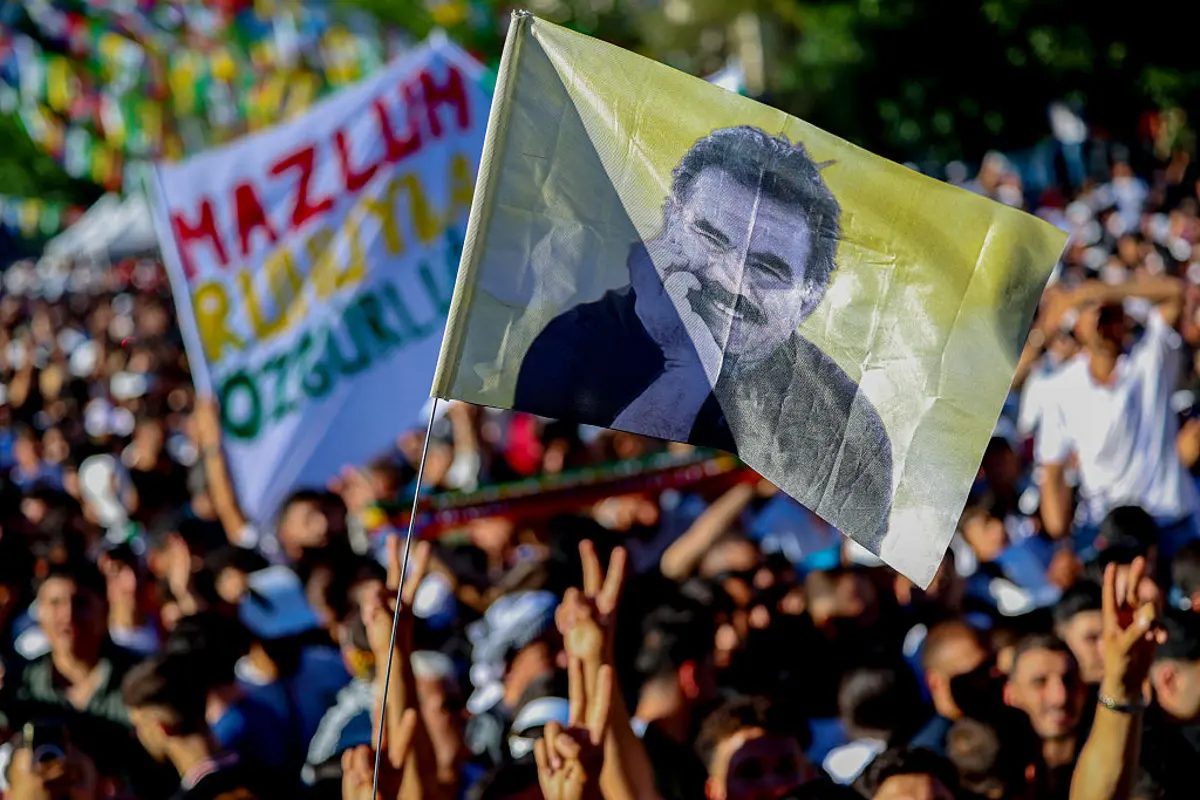
Dissecting the Promise of Peace with the Kurds in Turkey
According to the KurdPress News Agency, Time magazine, in an analysis by Galip Dalai, a senior researcher at Chatham House, considered the peace process between Turkey and the Kurds one of the important developments in recent years in Turkey and the Middle East, and wrote that the passage of the law on the dissolution of the PKK and the return of members of this group to society could pave the way for the formation of a "new social contract" between the Turkish government and the Kurds; provided that the peace process is not limited to disarmament alone and is accompanied by a simultaneous transformation of Turkey's political and legal structure.
According to Time, August 2026 was accompanied by important developments for Turkey, the Kurds, and the country's surrounding environment.On August 10, the Turkish parliament passed a law that provides the legal framework for the dissolution of the Kurdistan Workers’ Party (PKK) and the gradual process of integrating its members into society.
The significance of this development becomes clearer when considering the decades-long conflict between the Turkish government and the Kurdish movement, says Galip Dalay, the author of the analysis. The armed conflict between the PKK and the Turkish government has killed some 40,000 soldiers, members of the group, and civilians for more than four decades, and has also imposed heavy economic costs on Turkey.
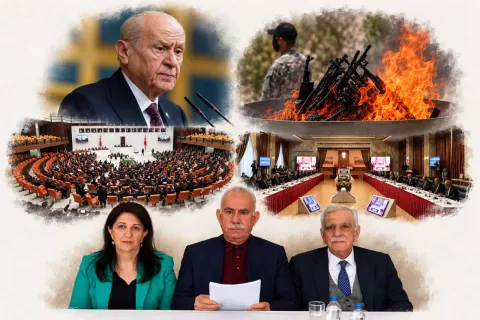
According to him, the PKK began its disarmament process in July 2025 with a symbolic ceremony to burn its weapons, taking an important step towards ending the armed conflict. The passage of the new law in the Turkish parliament completes the legal phase of this process and provides former PKK members with the opportunity to return to their homes.The law also provides legal protections for PKK members who have not committed specific crimes. The law also allows for the suspension of prison sentences in some cases.
Thousands of PKK sympathizers, activists associated with the movement, and Kurdish politicians have fled to Europe and other regions in recent years to escape prosecution in Turkey, Dalai writes, and the new law could pave the way for some of them to return to the country.
In the Time writer’s view, the importance of the law is not limited to ending an armed conflict, but could be the starting point for a new social contract between the Turkish government and the country’s Kurdish community; a contract whose effects could extend beyond Turkey’s borders.
The Kurdish peace process could also have implications for Turkey’s relations with major powers, particularly the United States.
Dalai believes that the Syrian civil war was one of the most important factors in the dispute between Ankara and Washington in recent years. At the heart of this dispute was the issue of the Syrian Kurds, and especially the People’s Protection Units (YPG), a force that Turkey considers affiliated with the PKK, and which was later organized into the Syrian Democratic Forces (SDF), which received US military support and advice.
According to Dalai, the integration of the SDF into the Syrian government structure and its coincidence with the PKK disarmament process have reduced one of the most important obstacles in Turkish-American relations and could pave the way for closer cooperation between the two countries on Syria and other regional issues.A Thousand Kilometers Ahead
Referring to Abdullah Öcalan’s stance on Turkey’s new law, Dalai writes that he has described the law as “the first step on a journey of a thousand kilometers.”
In the author’s view, this interpretation suggests that the current process should not be seen as the end of the conflict. Although the disarmament and dissolution of the PKK, the adoption of a new legal framework, and the beginning of the integration of Kurdish forces are important milestones, fundamental challenges remain.
The most important issue, Dalai believes, is to translate legal and security decisions into a sustainable political transformation; one in which both the Kurdish movement moves from armed struggle to political activism and the Turkish government changes its definition of national identity, citizenship rights, and its relationship with the Kurds.He emphasizes that no two wars or peace processes are exactly alike, but the Turkish experience can convey a general message: peace is possible, and the role of political leadership in achieving it is crucial.
In concluding this analysis, Dalai does not see long-standing conflicts over identity as the inevitable fate of societies, but rather as solvable political issues; issues that can be agreed upon through negotiation, reform of political structures, and the creation of mutual legitimacy.
According to Time, in a world still defined by war and insecurity, the Turkish experience of peacebuilding shows that ending conflict does not simply mean turning off the guns; it can be sustainable when both armed actors and the state transform themselves to build a new, inclusive political order.

User comments