

Globetrotter: It is time for the left to reconsider the Kurdish issue
According to KurdPress, in an article for Globetrotter, Rozgar Akrawi, referring to the recent developments in Syria and the end of the independent activities of the Syrian Democratic Forces, calls on the left to reconsider their view of the Kurdish issue and to distinguish between defending the rights of the Kurds and unconditional support for Kurdish political parties and structures.The author, referring to the announcement of the end of the mission and the dissolution of the Syrian Democratic Forces and the end of the activities of the Autonomous Administration and its affiliated military and civilian institutions on August 25, 2026, considers this development to be, on the one hand, an end to the risk of escalating war and ethnic conflict, but on the other hand, he believes that the agreement reached has failed to clearly guarantee some of the basic demands emphasized by the leftist movements, including women's rights, secularism, support for the public sector, opposition to privatization, workers' rights, and the holding of democratic elections.
Akrawi believes that the end of the Syrian Autonomous Administration experience has raised important questions about the image that was presented in previous years of this experience as a "social, feminist, and democratic revolution from below."According to him, the final decision was announced not through a public referendum, nor based on a clear decision of the councils and communes that were considered the real centers of power in the self-government structure, but from the Syrian presidential palace.
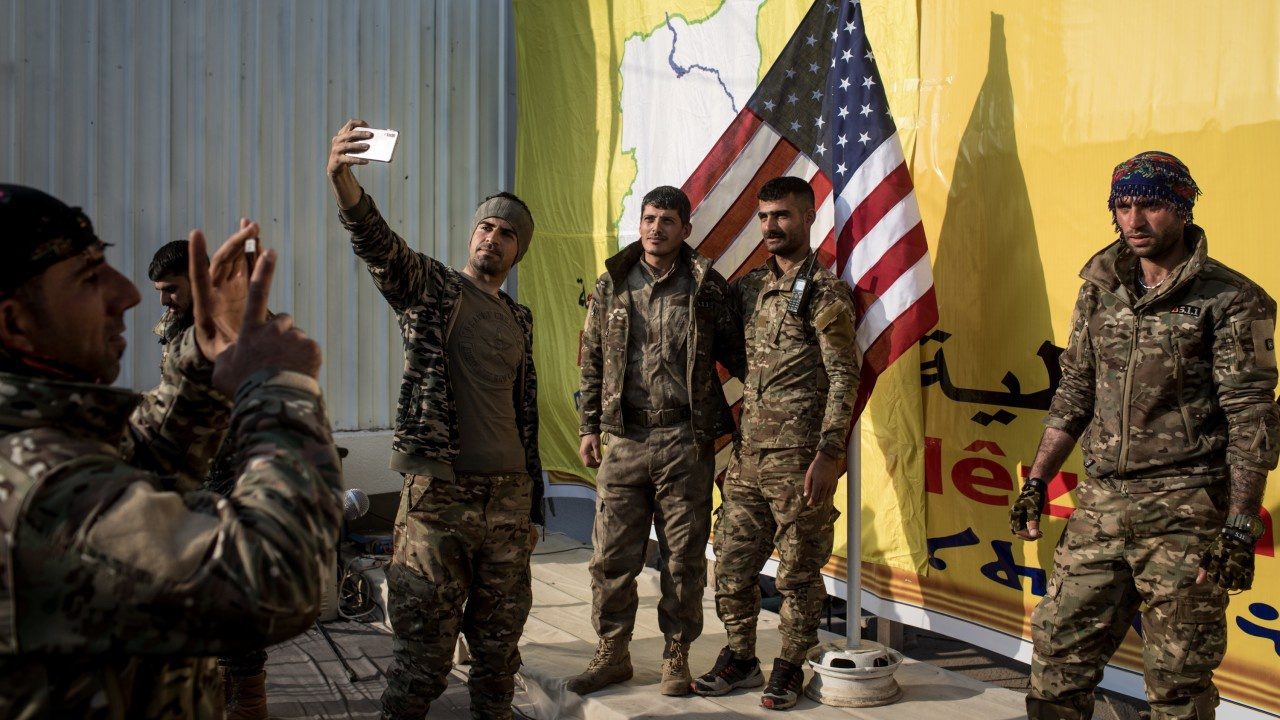
He also considers the dependence of the Syrian Democratic Forces on American military and political support to be one of the most important weaknesses of this experience, and says that reliance on a major foreign power, especially the United States, ultimately made the project vulnerable to changing priorities in Washington. In the author’s view, this experience should be an important lesson for movements that consider themselves liberating and revolutionary: an independent project cannot be built on the support of an imperialist power.
However, Akrawi emphasizes that recent developments do not only mean the loss of Kurdish gains.He points to the recognition of the Kurds as an integral part of the Syrian people, the recognition of the Kurdish language as the national language, the recognition of Nowruz as a national holiday, and the annulment of the consequences of the 1962 Hasakah census, as real achievements of generations of Kurdish struggle. In his opinion, these rights should be enshrined in the Syrian constitution so that their fate does not depend solely on decrees and decisions that can be changed.
In another part of the article, the author discusses the contradiction between the discourse of “democratic confederalism” and the political and military performance of the autonomous administration.In his opinion, a part of the international left, influenced by the theories of Abdullah Öcalan, considered the experience of self-government as a model beyond the nation-state, but the actual practice showed that a significant part of the military and financial decisions were in the hands of party cadres and distanced itself from the claim of democracy from below.
Akrawi also applies the same critical criterion to the Iraqi Kurdistan Region. He believes that supporting the Kurdish people should not mean unconditional support for the ruling parties and elites. According to his writing, in the Kurdistan Region, the widespread influence of the ruling parties, political wealth and power, family and party relations, and restrictions on freedoms have continued alongside problems such as unemployment, corruption, and a decline in the quality of public services.He also emphasizes that criticizing the Syrian Democratic Forces does not mean opposing Kurdish rights, and criticizing the ruling parties in the Kurdistan Region should not be seen as opposing the Kurdish issue. In his view, the left should have a single standard for evaluating human rights violations, regardless of whether the violator is a state, a nationalist party, or a movement that presents itself as a liberation movement.
Finally, Akrawi does not consider the creation of a Kurdish nation-state in the current circumstances to be a feasible project in the near future, and suggests that Kurds and other nationalities and communities in the region pursue a joint effort to create a “democratic citizen state.”This state, in his opinion, should be based on a democratic constitution, national and cultural equality, a federal system and the possibility of extensive self-government within the framework of a united state, free elections, political pluralism, judicial independence, freedom of the press and the activity of labor and political unions.
The author also emphasizes the observance of social justice, the protection of the public sector, opposition to privatization and neoliberal policies, and the guarantee of the rights of workers and other social groups. Finally, he says from the perspective of his personal experience that defending the rights of the Kurds does not require the defense of all Kurdish political structures, and the rejection of the nation-state does not mean the rejection of the Kurdish identity or national rights; rather, it can be an attempt to overcome extreme nationalism and move towards civicism, observance of social justice and a perspective for the preservation of universal rights.



User comments