Turkey calls for accelerating the process of integrating the Syrian Democratic Forces into government structures
According to Kurdistan Press, Turkey has increased its diplomatic efforts in recent days regarding the developments in northern and eastern Syria and has expressed concern about the slow implementation of the agreement to integrate the Syrian Democratic Forces into the government institutions of Damascus.
In this context, Turkish Foreign Minister Hakan Fidan met with Thomas Barrack, the US Special Representative for Syria and the country's ambassador to Turkey, in Ankara on Wednesday, November 18, and discussed developments in Syria. The details of the meeting have not been officially announced.
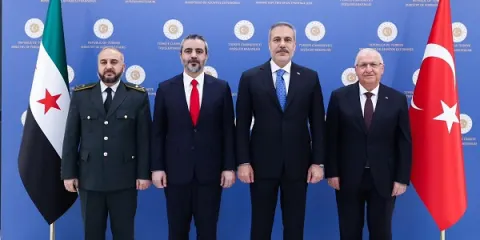
In joint statements with his Syrian counterpart, Fidan emphasized that the process of integrating forces in northern and eastern Syria must be completed based on the principle of “one country, one army.”
Also, Ahmet Yildiz, Turkey’s representative to the United Nations, announced at a Security Council meeting that the progress on the ground in implementing the agreement on the integration of the Syrian Democratic Forces is far from Ankara’s expectations.
Disagreement over the method of integrating forces
The integration agreement between the Syrian Interim Government and the Syrian Democratic Forces was reached with US mediation on January 29, 2026.According to the agreement, the SDF’s military and security structures are to be gradually integrated into Syrian state institutions, and the self-governing civilian institutions are to be included in the structure of the Damascus government.
However, the implementation of the agreement is accompanied by unresolved questions about the location of the former SDF forces, their command structure and the extent of their operational independence.
According to an October 2026 report by the European Union Refugee Agency, about 6,000 former SDF forces have so far joined the four brigades formed as part of the integration process into the Syrian army. These brigades are located in the Hasakah, Qamishlo, Dirak and Kobani regions.
In this regard, the head of the Syrian interim government, Ahmed al-Sharaa, appointed former SDF commander Mazloum Kobani as his advisor in August. In addition, Sipan Hamo, a senior Kurdish commander, was appointed as Syria’s deputy defense minister for eastern affairs in March. Kurdish Rights and the Future of the Women's Protection Units
Along with military issues, the issue of Kurdish political, cultural and linguistic rights is another area of contention in the implementation of the agreement.
In its statement on November 8, the Democratic Union Party (PYD) once again called for a constitutional guarantee of Kurdish rights, an increase in the share of Kurdish representatives in government institutions, and the establishment of a decentralized military that would give more authority to local institutions in northern and eastern Syria.
The party also called for the expansion of Kurdish language education in schools, while the Damascus government has so far agreed to three hours of Kurdish language education per week.
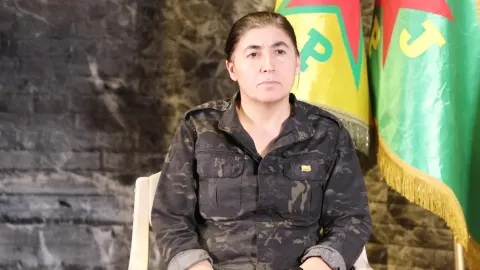
On the other hand, the future of the Women's Protection Units (YPJ) is also still a contentious issue. The spokesperson for the units announced on November 7 that an agreement had been reached for 800 female fighters to join two battalions affiliated with the Syrian Interior Ministry, but the status of hundreds of other fighters remains unclear. Turkey believes that the integration process should lead to the actual transfer of command and control of the former SDF forces to the central government and not be limited to simply changing their name and military uniform.
The SDF file’s connection to the Turkey-PKK negotiations
The case of the SDF’s integration into the Syrian interim government structure is also related to the peace talks between Ankara and the Kurdistan Workers’ Party (PKK).
Turkey considers the SDF to be linked to the PKK and considers the end of the activities of these forces’ independent military structures to be one of its important conditions for advancing the disarmament process and resolving the conflict with the PKK.
Overall, Ankara’s increased consultations with Damascus and Washington show that Turkey continues to follow the military and political developments in northern and eastern Syria with sensitivity; however, the manner of integrating the Kurdish forces, guaranteeing their political and cultural rights, and the future of local structures remain among the most important challenges facing the implementation of the agreement.
Source: Al-Monitor
User comments