
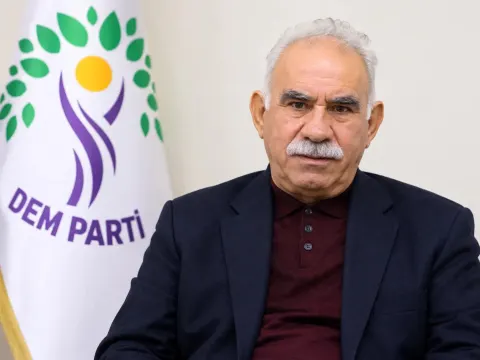
The end of the PKK armed struggle in Turkey is certain
According to Kurdistan Press, Megan Budet explained in an interview with Al-Monitor's "In the Middle East" program after returning from the Qandil region and meeting with jamil Bayk, a senior PKK commander, that the group's leaders and forces see the current process not as a temporary development, but rather as a continuation of efforts that began in 1993 and the first ceasefire announcement by the PKK under the leadership of Abdullah Ocalan.
According to Budet, PKK leaders believe this period is different from previous efforts because this time they have decided to put disarmament and an end to the armed struggle on the agenda before resolving political issues. They justify this approach by relying on their historical experience and believe that political activity is not a new phenomenon for the movement.
Budet emphasizes that the PKK leaders and forces do not necessarily see the end of the armed struggle as a sign of abandoning their political identity and background. They believe that entering politics is not a threat to the movement's identity, but rather a return to part of its historical experience.
However, Budet says that the PKK, in its propaganda and political framework, is trying to present the measures taken not as the result of bilateral negotiations, but as a set of unilateral decisions. According to him, this way of speaking is also important for the Turkish side, because Ankara does not want the current process to be presented as a mutual negotiation with the PKK.
According to Budet, the PKK's goal in these actions is not necessarily to achieve immediate political change, but rather to create a space in which reforms and a solution to the Kurdish issue can be discussed without continuing violence. This approach aims to reduce the securitization of the Kurdish issue and provide a basis for raising political demands.
He believes that this time, PKK leaders believe that by starting to disarm, they can reduce security barriers and pave the way for political participation. The passage of the Framework Law on the Return and Integration of Armed Forces is also, in Budet's view, a sign of progress in this approach, as none of the previous processes had reached such a stage.
One of the unresolved issues is how to determine the fate of the PKK weapons and the body overseeing the disarmament process. According to Budet, based on information he has, the Turkish government wants the weapons to be handed over to it, but the PKK would prefer that the weapons not be handed over to governments and possibly to other Kurdish groups or representatives of Kurdish communities. This issue is still under consideration and appears to be under secret negotiations.
The researcher also emphasizes that the end of the PKK's armed struggle in Turkey should not be equated with the complete end of armed activities of all currents affiliated with the movement's structure in other parts of Kurdistan. According to him, the PKK as a party has been dissolved and the structure of Kurdish society continues to exist, but the conditions in Turkey, Syria, Iraq and Iran are different.
According to Budet, some forces in this movement emphasize the need to create new coalitions and expand activities beyond electoral competitions.
He concludes by emphasizing that the end of the armed conflict does not mean the end of the Kurdish issue. In his assessment, the PKK is now seeking new means to pursue its political and social demands, but the realization of this goal depends on the extent to which the political space in Turkey opens up, the possibility of returning troops, reforming the laws, and creating conditions for effective Kurdish participation



User comments