
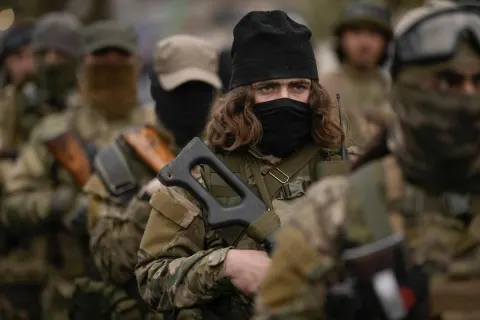
Syria's interim government is trying to integrate thousands of foreign fighters into its security forces
According to Kurdistan Press, nearly two years after the fall of Bashar al-Assad's government, the government of Ahmed al-Sharaa is still facing the issue of determining the fate of thousands of foreign fighters who joined armed groups opposing the former government during the Syrian civil war, some of whom now remain in the country.
These fighters are of various nationalities, including Uyghurs, Uzbeks, Chechens, Dagestanis, and citizens of Arab and Western countries.Some have joined the new government's military and security forces, but others refuse to integrate into government structures.
Many are reluctant to return to their countries of origin, fearing arrest and prosecution if they return. In some cases, their countries of citizenship are unwilling to readmit them for security reasons.
Estimates of the number of foreign fighters remaining in Syria vary, but their number was estimated at 18,000 to 20,000 at the height of their presence during the civil war. While some have joined government forces, ideological differences and security concerns have continued to prevent their full integration.
One of the most pressing concerns is the possibility of radical fighters opposed to the new government joining ISIS. Despite its territorial defeat in 2019, the group still has active clandestine cells in various regions of Syria and carries out attacks against various targets, including government forces and Kurdish forces.
Meanwhile, the presence of foreign fighters is not limited to security issues. Many of them are married to Syrian women, and thousands of children from these marriages face the problem of statelessness due to the limitations of Syrian nationality laws, which currently prevent Syrian women from passing on their nationality to their children. The government has announced plans to change this law.
On the other hand, the continued ethnic and religious tensions, the differences between Kurds and Arabs, and the problems related to the consolidation of government structures have complicated the situation for the new government. Resolving the situation of foreign fighters and preventing the return of extremist movements to the military arena are among the major challenges facing the government of Ahmed al-Sharaa on the path to stability in Syria.
User comments