
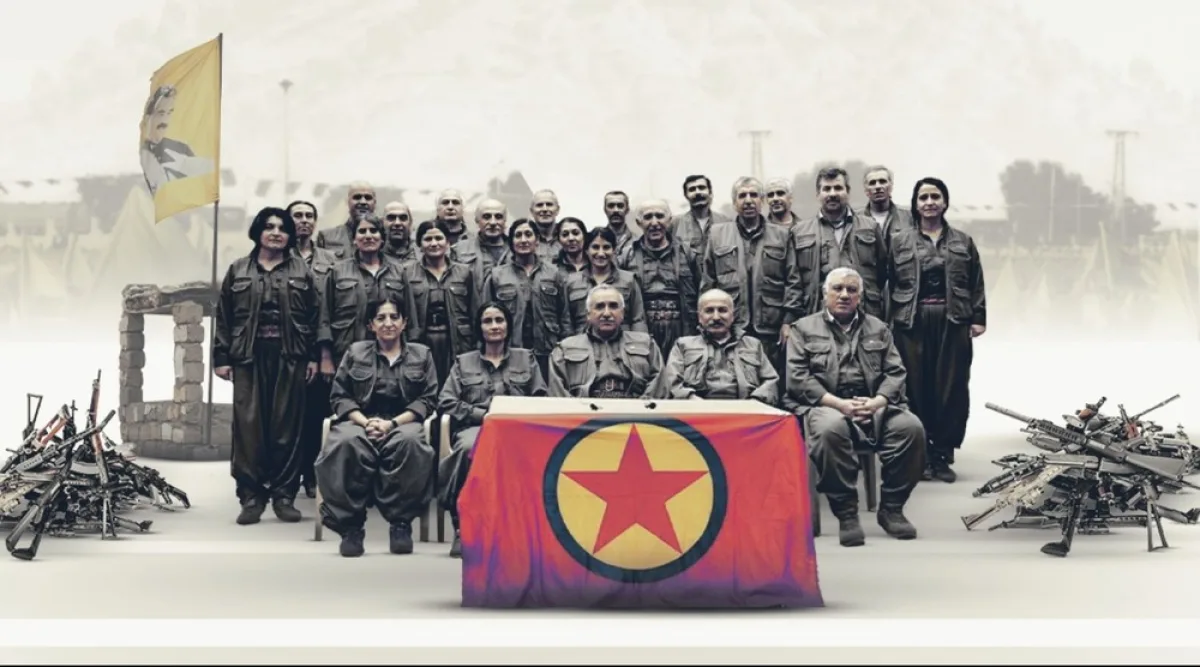
Will Turkey approve the disarmament of the PKK?
According to KurdPress, the statistical magazine wrote about the current state of the peace process in Turkey: The peace process between the Turkish government and the Kurdistan Workers' Party (PKK) is approaching a critical stage, and Ankara is preparing to officially approve the dissolution of the party's organizational structures and disarmament. In this regard, the Turkish government is preparing to form a parliamentary oversight commission, and the meeting of the country's National Security Council on November 27 is expected to be a turning point in the peace process' entry into the executive and legal stage.
In recent days, Turkish Parliament Speaker Numan Kurtulmus has met with representatives of the main parliamentary parties, including the Justice and Development Party, the National Movement Party, the Peoples’ Equality and Democracy Party, the Republican People’s Party and the New Path Alliance. He is also scheduled to complete his consultations with the Good Party and the New Party. The aim of the talks is to determine the composition and working mechanism of the Parliamentary Oversight Commission, which will be responsible for monitoring the implementation of the peace process by parliament.
At the same time, the Peoples’ Equality and Democracy Party has called for the government to immediately move beyond the disarmament phase and enter the phase of political and legal reforms. In a statement issued on November 12, the party called for the implementation of the Peace Framework Law, the determination of the legal status of imprisoned PKK leader Abdullah Öcalan, and the recognition of what it calls the “right to hope.”
On the other hand, the PKK leadership announced in a statement on November 13 that over the past two months it has evacuated more than 10 of its caves and military positions near the Turkish border, withdrawn its forces from areas adjacent to Turkish military bases, and transferred members previously stationed in Turkish cities to their bases in the Kurdistan Region. These measures have been presented by the PKK as practical steps towards withdrawal and disarmament, measures that are to be evaluated at the upcoming meeting of the Turkish National Security Council.
According to the envisaged mechanism, three main bodies will have different responsibilities in the new phase of the peace process.
First, there is the Monitoring and Evaluation Board, chaired by Turkish Vice President Cevdet Yılmaz and operating under the supervision of the Presidency. This board is responsible for executive coordination, monitoring field developments, and following up on cases related to the implementation of the peace process.
Second, the Turkish National Security Council, which is tasked with formally approving the fulfillment of the conditions for the dissolution of the PKK structures and the surrender of its weapons. The framework law, which the Turkish parliament passed in August, will not be effective until the National Security Council approves it and publishes its decision in the official gazette.
Third, there is the parliamentary oversight commission, which Kurtulmus is preparing to establish. Unlike the executive board, this commission will not be responsible for the day-to-day management of the peace process, but will be tasked with parliamentary oversight of the implementation of decisions, examining reports from state institutions, and assessing the need for supplementary legislation.
The law will come into effect if approved by the National Security Council and published in the official gazette. The law provides conditional legal arrangements for eligible PKK members, including the possibility of suspending some court cases and facilitating their return to society, but it does not amount to a general amnesty and does not meet the broader political demands of the Kurds.
However, the People's Equality and Democracy Party emphasizes that the implementation of the framework law is only part of the next stage of the peace process. In this way, the official confirmation of the PKK's disarmament could mark the end of the military phase of this process, but the achievement of lasting peace in Turkey will depend on the extent to which the government makes progress in responding to the political and legal demands of the Kurds.
User comments