
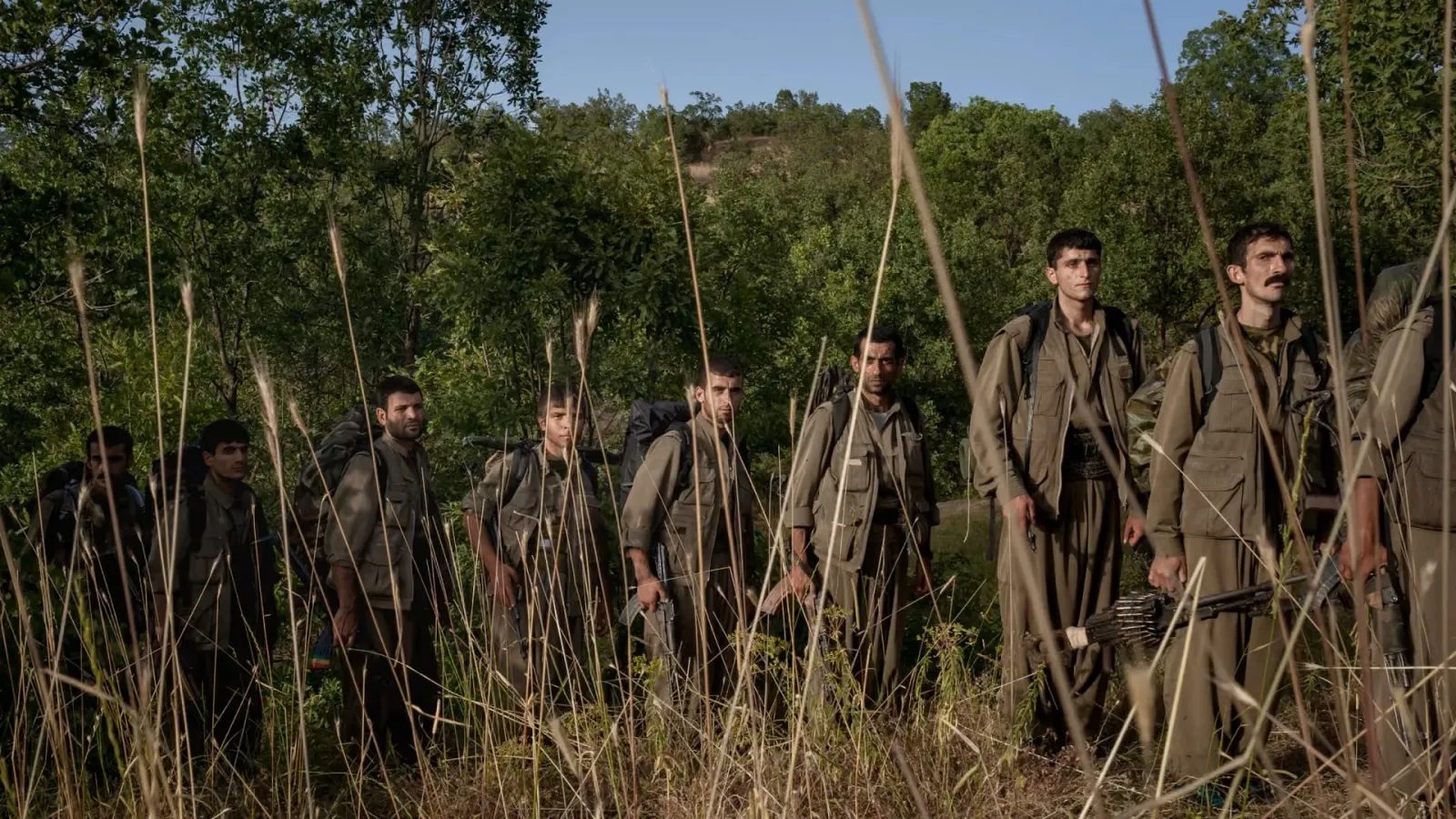
PKK withdrawal and the future of Turkey's military presence in Iraq
Amwaj Media magazine examined in an analytical report to what extent the withdrawal of the Kurdistan Workers' Party (PKK) forces from some of its positions in the Iraqi Kurdistan Region could pave the way for the end of Turkey's military presence in the country. According to the report, the PKK's withdrawal does not in itself mean the withdrawal of Turkish forces, but it could weaken Ankara's justification for continuing its military presence in Iraq and increase political pressure on the Baghdad government to regain control of border areas and military bases.According to Kurdistan Press, the Amwaj Media magazine wrote in a report by Muhammad Alje that the withdrawal of PKK forces from four positions and tunnels on Mount Metina in the Dohuk province of the Iraqi Kurdistan Region has once again made the issue of Turkey’s military presence in Iraq one of the topics of discussion in Baghdad and Erbil. This development occurred at a time when the peace process between the Turkish government and the PKK has entered a new phase and Ankara must explain the justification for the continued deployment of its forces on Iraqi soil, especially in areas from which the PKK has withdrawn.
Since October 2024, the Turkish government and the PKK have begun a process that Turkish officials call the Turkey-Free-Terrorism Initiative. The PKK announced in a statement on October 8 that the group’s forces have evacuated its four positions on Mount Metina. The group, referring to the law passed by the Turkish parliament in August 2026 to create a legal framework for the dissolution and disarmament of the PKK,The PKK, announced that the continued withdrawal of its forces should deprive the Turkish government of the ability to invoke the group’s military threat to justify its security policies.
However, the PKK did not specify in its statement where the forces withdrawn from these positions were transferred, what would happen to their weapons, or whether the group’s activities on Iraqi soil would cease. These ambiguities are of fundamental importance to the media, as Ankara’s decision to reduce its military presence in Iraq depends above all on the fate of the PKK’s weapons and the Iraqi government’s ability to assume security responsibility for the areas where the group was previously present.
Reports published in October indicated that Turkish forces had taken over some of the former PKK positions after evacuating four positions on Mount Metina. If this situation is confirmed and established, the PKK’s withdrawalThe withdrawal of the PKK has not necessarily led to a reduction in its military presence in the region, but may instead replace one armed force with another. Such a development is inconsistent with the stated goal of reducing tensions and restoring stability to the border areas and could increase the sensitivities surrounding Iraqi sovereignty.
Turkish Defense Minister Yaşar Güler announced on October 20 that his country’s forces would remain in Iraq until Ankara was confident that its borders would be secured. A Turkish security official also stressed in an interview with Amvuz Media that the continuation of his country’s military presence depends on whether the security threat Turkey claims has truly ended. The official claimed that the deployment of Turkish forces in Iraq was the result of years of Baghdad’s inability or unwillingness to confront the PKK.However, Media Waves believes that if the threat that Ankara cites to justify its military presence diminishes, it will become more difficult to continue the deployment of Turkish forces on the current scale. In such a situation, Baghdad and Ankara will be forced to agree on new security arrangements that both take into account Turkey's security concerns and allow the Iraqi government to exercise more effective control over its territory.
In its conclusion, Amwaj Media emphasizes that the withdrawal of the PKK alone will not lead to the end of Turkey’s military presence in Iraq, but it could weaken Ankara’s argument for maintaining the status quo. A wider Turkish withdrawal will depend on the Iraqi government’s ability to secure the former PKK strongholds, control the armed groups, and reach an agreement with Ankara.
Ultimately, the main issue is not just the withdrawal of an armed group from its positions or the handover of a military base, but how the Iraqi government establishes authority in areas that have been the scene of various armed forces and Turkish military intervention over the past years. If Baghdad can effectively assume security responsibility for these areas while simultaneously reaching sustainable arrangements for the disarmament of the PKK and other armed groups, the groundwork for a reduction in Turkey’s military presence will be better prepared.Otherwise, the PKK's retreat is likely to merely change the makeup of the armed forces in the region, rather than ending the foreign military presence in northern Iraq.
User comments