
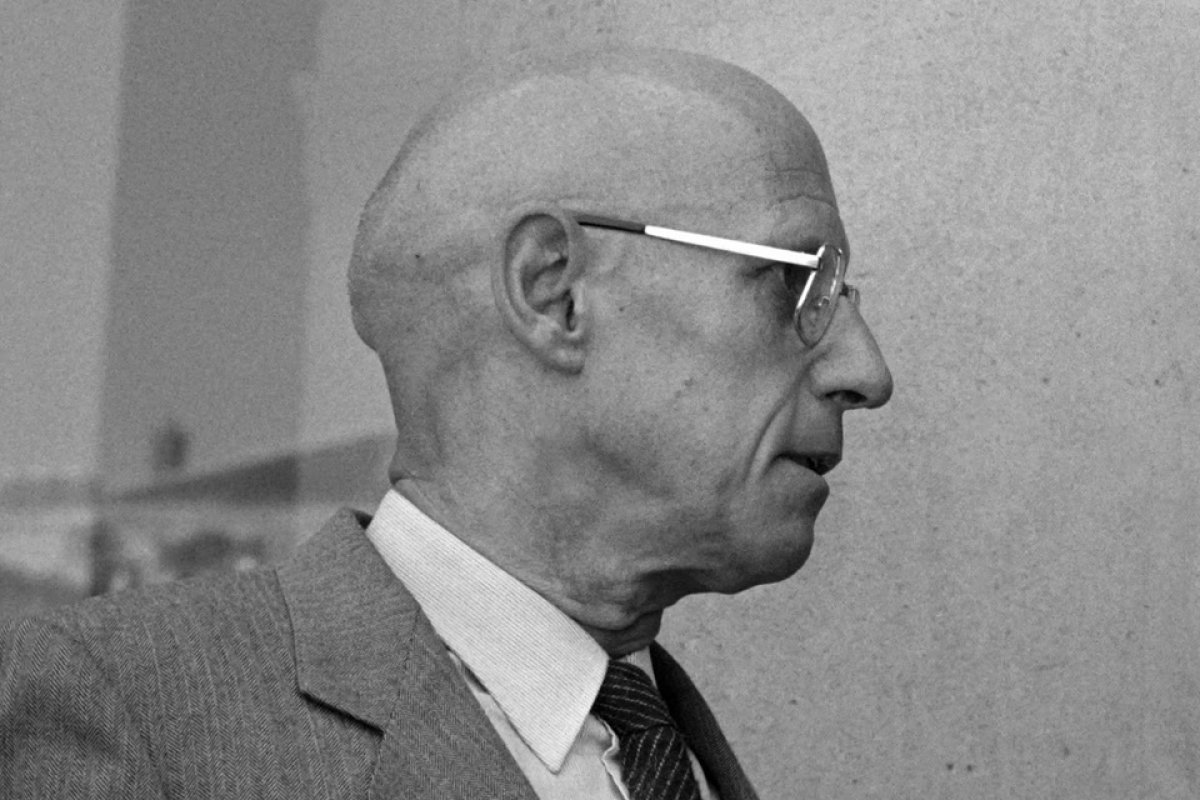
The Influence of Michel Foucault's Thoughts in Iraqi Kurdistan
According to KurdPress, a century after the birth of Michel Foucault, a French philosopher, his thoughts on power, discourse, and the relationship between the government and society have gained a more prominent place in the intellectual space of Iraqi Kurdistan; thoughts that entered this region in the early 1990s and were gradually used in the criticism of political structures, social relations, and the performance of ruling parties.However, the expansion of the translation of Michel Foucault’s works into Kurdish and the increasing presence of his concepts in universities and cyberspace have not yet led to the widespread and systematic use of his theories to analyze the political and social situation in the Kurdistan Region.
Michel Foucault, who was born on October 15, 1926, was one of the prominent figures of contemporary French thought between the 1960s and 1980s. Michel Foucault’s works on power and the mechanisms of its application, institutions, knowledge, and the formation of social identity gradually went beyond the boundaries of French academia and were taken into consideration in various societies. In Iraqi Kurdistan, these ideas also entered the intellectual space in a situation where political developments after 1991 had provided greater opportunities for Kurdish society to communicate with the outside world.
During the rule of Saddam Hussein, political power in the Kurdish areas of Iraq was exercised mainly through direct control, threats, and overt displays of violence and repression. This model was an example of a power structure in which the government relied on political authority and means of coercion to dominate the behavior and lives of the people. The widespread repression and genocide of the Kurds were also part of this society’s historical experience of centralized state power.
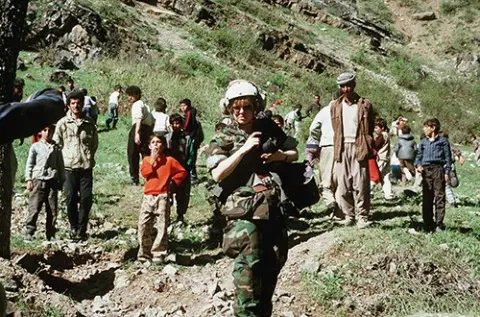
However, the formation of a self-governing system in Iraqi Kurdistan after 1991 created different conditions. Now, for the first time, the Kurds had taken over the administration of a large part of their society within the framework of the modern Iraqi state, and power was no longer solely in the hands of an external government with a different language and culture.This development did not mean the end of relations of domination, but rather created a new formation of power in which political parties, government institutions, the administrative apparatus and social relations played a decisive role.
During this same period, the ideas of Michel Foucault gradually challenged the dominant position of Karl Marx's theories in part of the intellectual space of Kurdistan. Karl Marx had been an important intellectual source for leftist political movements and a number of Kurdish parties for decades. However, the developments after the fall of the direct authority of Saddam Hussein's government raised questions that were not easy to answer simply by relying on traditional frameworks of class and economic analysis. Examining the ways in which power is exercised, the role of discourses, the functioning of institutions and how citizens' political behavior is shaped became more important.In this framework, Michel Foucault’s thought allowed for power to be seen not only as an instrument of government or a characteristic of political leaders, but also as a network of relationships that permeates society. In Foucault’s view, power is not the monopoly of a specific individual or institution, but is produced and reproduced through relationships between individuals, institutions, and social structures. This view differs from the traditional understanding of power, which sees power as something that one individual or group possesses and that others are deprived of.
The increasing number of translations of Michel Foucault’s works into Kurdish, the presence of his books in bookstores in the region, and the popularity of his name and concepts in social networks and universities indicate a growing interest in these ideas. However, Sardar Aziz emphasizes that the application of Michel Foucault’s methods and concepts to explain the current situation in the Kurdistan Region is still limited. In other words, the popularity of a theory and the popularity of its vocabulary do not necessarily mean that its analytical capacity is being used in depth.Michel Foucault’s theories can provide a critical examination of questions that are important for the political and social future of Iraqi Kurdistan: How is power reproduced in government institutions and party relations? How do administrative and economic mechanisms influence citizen behavior? What is the relationship between knowledge production, the formation of dominant discourses, and the limitation of the possibility of criticism? And how can the difference between enjoying political autonomy and realizing accountable governance be explained?
Finally, Michel Foucault’s place in Iraqi Kurdistan is not limited to the influence of a French philosopher in academic circles. The reception of his ideas must be examined in connection with the transformation of the Kurdish political experience, the changing concept of power, and the increasing attention to the relationship between society and the ruling elite.However, the value of this intellectual legacy will become clearer when its concepts are transformed beyond everyday use and academic quotations into a tool for the detailed analysis of political and social structures. In such a situation, Michel Foucault's thought can help to understand why changing those in power alone is not enough to transform all the mechanisms of power in society.
User comments