
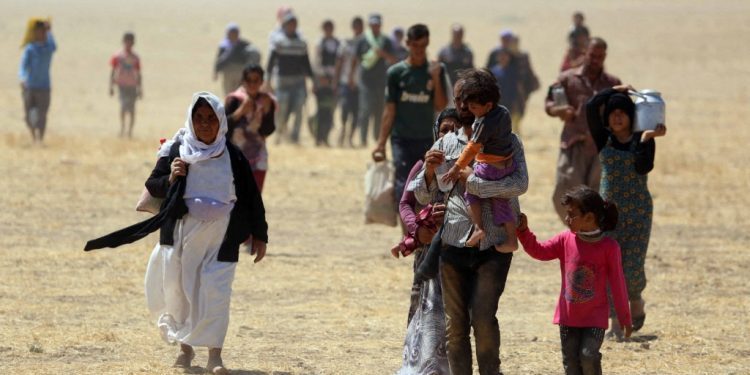
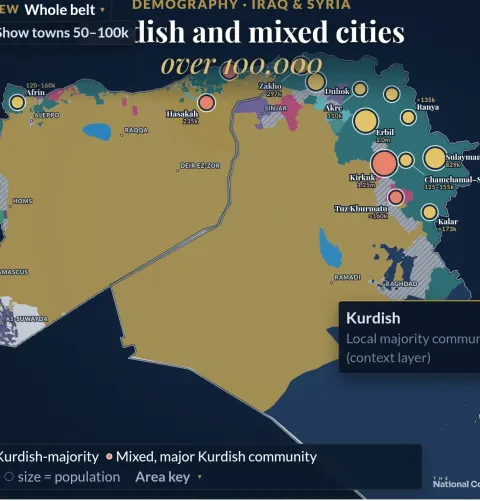
Has the Kurdistan Region been excluded from the process of governing Sinjar?
According to KurdPress, citing the Kurdish Studies Center, Iraqi Prime Minister Ali Faleh al-Zaidi has created new conditions for the security future of this region by announcing the complete transfer of authority to administer the Yazidi region of Sinjar to the federal government and the beginning of the process of handing over weapons to the Sinjar resistance units. This issue has also been linked to the peace process between Ankara and the PKK, with the support of the PKK leadership and signs of Türkiye's support.Al-Zaidi announced on September 11 that the Iraqi government would take full control of Mount Shingal and that the Shingal resistance units would begin the process of handing over their weapons to the government. The Iraqi government also announced that it would protect the rights of members of the Shingal resistance units and women's units and would integrate eligible members of these forces into Iraqi security institutions in accordance with official laws and mechanisms.
According to information provided to the Kurdish Studies Center by Saman Dawood, a Yazidi journalist living in Germany, about 4,000 Yazidi men and women may be integrated into the Iraqi army, the Popular Mobilization Forces, and the local police as part of the agreement. These forces are expected to remain in Shingal after the integration and play the role of ensuring the security of the Yazidi community.The rapprochement between Baghdad and the Sinjar resistance units has come at a time when Turkey has also taken a different approach to the future of these forces. Turkish President Recep Tayyip Erdogan and Iraqi Prime Minister Ali Falih al-Zaidi agreed in New York on September 23 to implement full state rule and law in Sinjar and end the presence of banned foreign armed elements. Turkey has also promised to begin the process of gradually handing over the Bashiqa-Zelikan base in Nineveh province to the Iraqi federal government.
Abdullah Ocalan, the imprisoned leader of the PKK, also announced on September 30 that it would be appropriate for the Sinjar resistance units to join the Iraqi army and continue their presence in Sinjar. Mustafa Karasu, a member of the PKK Executive Council, had previously considered the integration of a self-defense force into the Iraqi army as a logical step.These positions show that the future of the Sinjar Resistance Units is closely linked to the peace process between Turkey and the PKK, which began in October 2024.
Sinjar Resistance Units officials and commanders have not yet officially announced a final agreement to integrate into the Iraqi security structure. Published reports indicate that the force has accepted the principle of disarmament, but a part of the military branch and a number of its commanders are still skeptical about the details of the integration process.
Joel Wing, an expert on Iraq issues, also believes that if the integration is implemented, this process may be carried out only in appearance; meaning that the current commanders and political ties are maintained and the forces are placed in the structure of the Iraqi security forces only under a new title. Wing has also raised the possibility that the Kurdistan Democratic Party will oppose such a model.The Iraqi Kurdistan Region has not yet issued a formal statement on the new process, but on September 20, Prime Minister Masrour Barzani said in response to a question about Sinjar that weapons outside government control should be brought under government control. This could be a sign of the region’s general support for bringing weapons under government control, although Erbil has not yet announced an official position on how the Sinjar resistance units will be integrated.
The current agreement differs significantly from the 2020 Sinjar agreement. The 2020 agreement, which was also supported by the Turkish government, called for the withdrawal of the PKK and its affiliates from Sinjar and the establishment of a new security and administrative structure in the region. The Sinjar resistance units opposed the agreement at the time, and its implementation was halted.
The security situation in Sinjar has also changed compared to previous years.Turkey, which considers the presence of the Sinjar resistance units a threat to its security, carried out the last recorded drone attack against the force on November 10, 2024, and no other recorded attacks against the Sinjar resistance units have been reported since then. The cessation of these attacks, along with the peace process between Turkey and the PKK, is considered one of the signs of a changing political atmosphere around Sinjar.
At the same time, the withdrawal of the US-led coalition from Iraq on September 30 and the end of the NATO mission in Iraq have increased the importance of the role of the central government and regional actors in determining the security arrangements for Sinjar. Other reports also indicate the possibility of a phased withdrawal of Turkish forces from Iraq, and some sources have linked this process to the peace process between Turkey and the PKK and the handover of the group’s weapons.In such circumstances, the Sinjar Resistance Units have for the first time encountered a pattern in which Baghdad, part of the political current associated with the PKK, and apparently Ankara, insist on transferring the security responsibility of these forces to the official Iraqi structure. However, the final outcome will still depend on the official position of the Sinjar Resistance Units, the role of the Kurdistan Region, the implementation of the integration and the success of the peace process between Turkey and the PKK.
User comments