
Is Syrian Kurdish autonomy a thing of the past?
According to KurdPress, after the official dissolution of the Syrian Democratic Forces and the end of the political structure of the Autonomous Administration, the Kurds of northeastern Syria have entered an uncertain phase in which the integration of the region's forces and institutions into the structure of the Damascus government is underway, but disputes over the status of the Kurds, the role of women in the security forces, Kurdish language training, and the way in which central sovereignty is exercised continue.The Autonomous Administration of North and East Syria and the Syrian Democratic Forces were officially dissolved on August 25, after more than a year of negotiations with the new Syrian government headed by Ahmed al-Sharaa, according to Drop Site News. The negotiations then entered a decisive phase when the Syrian government’s military operation in January forced the Syrian Democratic Forces to accept an agreement to integrate into the Syrian government structure.
Despite the formal end of the previous structures, the situation in northeastern Syria remains unstable. Many Kurds who spoke to this outlet expressed concern about the return to a state structure, especially given what they described as a decades-long history of marginalization and discrimination against Kurds under Bashar al-Assad.In Qamishlo, families who lost their children in the fight against ISIS are now facing questions about the achievements of the past years. A resident of the area whose son was killed in 2017 fighting ISIS in the Al-Omar oil field told the outlet that his son died “for Rojava,” and now the question is what happened to those sacrifices.
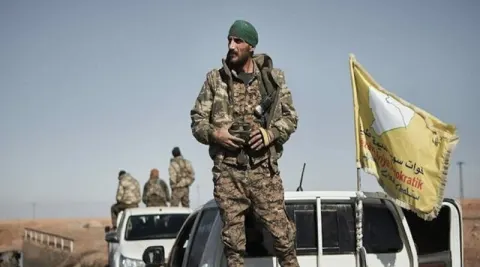
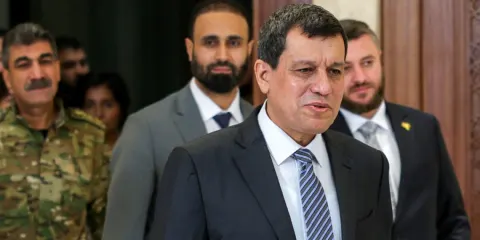
Under the integration agreement, the Syrian Democratic Forces now operate under the banner of the Syrian government, and a number of their senior commanders are set to take on responsibilities in the new government structure. Mazloum Abdi, the commander of the Syrian Democratic Forces, has also been appointed as a special advisor to Ahmed al-Sharaa.
However, the status of the Women’s Protection Units, known as the Women’s Defense Units, remains unclear.The Syrian Ministry of Defense has refused to accept women into the military structure, leaving the future of hundreds or thousands of former female soldiers in limbo.
Mustafa Abdi, a senior member of the presidential team implementing the merger agreement, told Drop Sight News that Syrian law allows women to work in various jobs, but their presence as a combat force in the military structure is not foreseen. According to him, there is no intention of having a female combat element in the Syrian army.
This stance has left the future of the Women’s Defense Units (WDU) in limbo. A spokesperson for the forces announced that after the formal dissolution of the Syrian Democratic Forces (SDF), the leaders of the WDU met with officials from the Syrian Ministry of Interior and discussed the possibility of integrating the force as a special and organized force.However, no date has been set for the talks to resume.
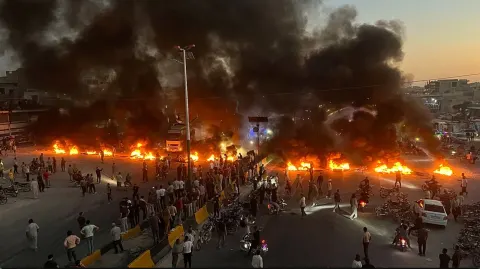
Security is another major concern in northeastern Syria. According to the media outlet, protests and unrest erupted in the region following the kidnapping and killing of Sipan Hezni, a Kurdish fighter who had recently been integrated into government forces. The unrest eventually led to clashes and a fire in a prison in Kobani, in which seven prisoners lost their lives.
At the same time, the government’s decision to end fuel subsidies that were in place during the SDF’s era has increased economic pressure on residents of Hasakah. Some residents say the rising cost of electricity and fuel has made daily life more difficult.
The issue of displaced people and property ownership has also become another point of tension.A number of Kurds who have returned to Serikani after years of displacement have found their homes and properties in the hands of other people. One of them told Drop Sight News that after returning, he found his house and shop in the hands of other people, and that his family was also injured during an attack by a group of armed men on the returnees.
The Syrian government-appointed deputy governor in Hasakah has condemned the attacks, and the deputy head of Hasakah’s internal security forces has also announced the arrest of a number of perpetrators. However, the government’s response has failed to prevent the protests from continuing, and during the unrest in Hasakah, protesters attacked the internal security forces headquarters and burned the newly raised Syrian flag.The following day, a headquarters of former Syrian Democratic Forces forces that had joined the new structure was attacked, leaving one dead and three injured.
In addition to security issues, the issue of the Kurdish language is one of the most important challenges of the new phase. After taking office, the new mayor of Qamishlo, Cihan Saeed Hossam, who previously participated in negotiations on behalf of the autonomous administration with the Syrian government, was faced with a gathering of hundreds of children and young people protesting the reduction in the use of the Kurdish language in the education system.
The protesters demanded the protection of the Kurdish language and the recognition of its place in the Syrian constitution. Hossam also announced among the protesters that he would share their concerns with Damascus.Elham Ahmed, a former co-chair of the PA and who is set to join the Syrian parliament and the constitutional committee after the dissolution of the body, has expressed concern about the progress of the talks. He said some issues are not being taken seriously enough by the Kurds and that the current government approach is not enough to achieve lasting solutions.
One of the most contentious issues is how to teach the Kurdish language. Under the current agreement, Kurdish is to be taught in schools for three hours a week next school year, with another hour dedicated to teaching geography, history or philosophy in Kurdish. The mechanism is intended as a temporary arrangement and a final agreement on the place of the Kurdish language in Syria’s education system has not yet been reached.Hundreds of children in Qamishli took to the streets to protest the government’s plan to return the education system in northeastern Syria to Arabic. Some students also expressed concern about the reduction in Kurdish language education and its impact on their educational future.
Mustafa Abdi acknowledged that three hours of Kurdish language instruction per week is not enough for the Kurdish areas of northeastern Syria, but he saw it as a first step towards implementing the agreement. He said that around 1,400 schools are set to teach Kurdish, and the government hopes that number will increase next year.
Meanwhile, Mazkil Hassan, a Kurdish language instructor at the University of Rojava, sees the policies as part of a process of reversing the linguistic and cultural changes among the Kurds of northeastern Syria over the past decade. He believes that Kurdish identity is linked to their language, and that limiting Kurdish education could affect this identity.According to the report, the University of Rojava, which was established in 2016 as a Kurdish-language university and was recently recognized by the Syrian government as part of an integration agreement, is set to switch its teaching to Arabic, a subject for which the Syrian Ministry of Higher Education did not respond to a request for comment.
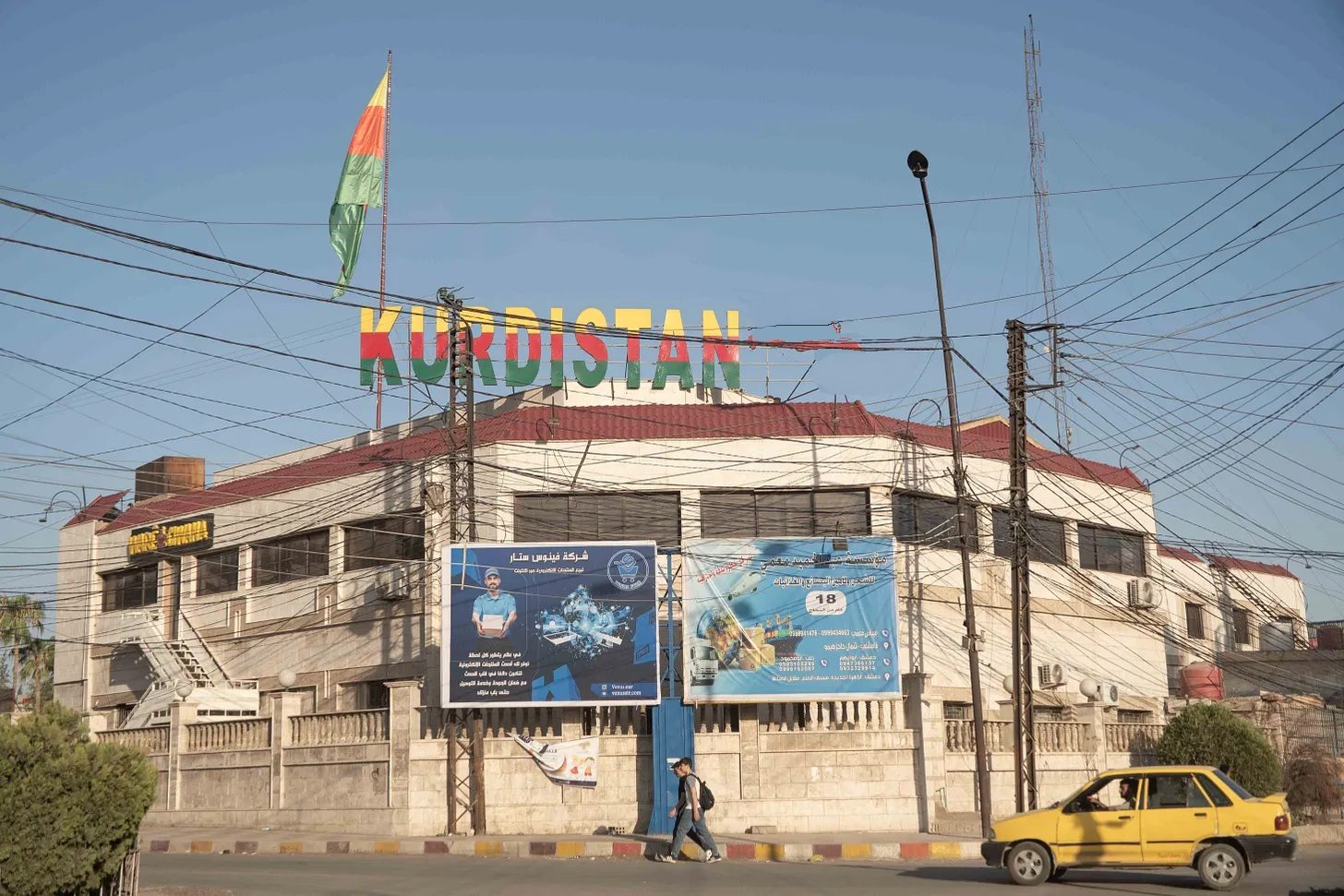
In contrast, the Syrian government has indicated steps to ease Kurdish concerns. In January, Ahmed al-Shara issued a presidential decree recognizing Kurdish as a “national language” and repealing the controversial 1962 census decree that had deprived thousands of Kurds of their citizenship. However, the decree did not make Kurdish the country’s official language, according to the report, and a new Syrian constitution has yet to be drafted.Overall, although the former political and military structures in northeastern Syria have been officially dissolved, signs of this change are not yet visible in all aspects of life in the region. According to Drop Site News, in some areas the people at the checkpoints are the same as the former forces, although some of them are now wearing Syrian government uniforms. The Syrian flag has been raised on government buildings, but the flags of the former structure and pictures of the dead can still be seen on the streets of the city.
According to the report’s conclusion, the future of northeastern Syria will not be determined simply by changing flags and uniforms. After 15 years of local structures running the region, the Kurds are now being asked to trust a centralized government.The success of the integration process will depend on how this trust is built, as well as on ensuring the Kurds' place, language, and rights in the new Syrian structure.
User comments