
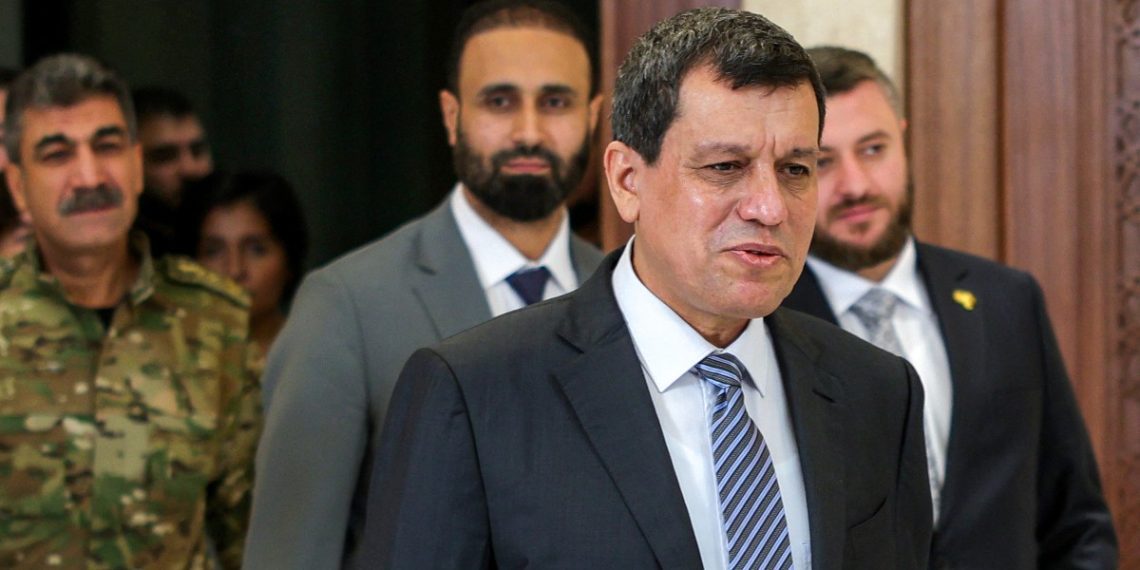
Syrian Kurdish discontent grows
According to KurdPress, tensions in the Kurdish-populated areas of northeastern Syria have increased as the process of integrating the Kurdish-led forces into the central government structures progresses. The increase in fuel prices, disagreements over Kurdish language training, the fate of women's units and the killing of a former Syrian Democratic Forces member who had joined the Syrian army are among the most important factors that have intensified discontent in these areas in recent weeks.The Associated Press reported that hundreds of oil trucks were stopped in northeastern Syria on Wednesday after a major road was blocked near Tel Tamr. Protesters blocked the M4 highway, which carries oil from the Qamishli and Rmeylan fields, in protest at rising fuel prices.
The protests are the latest sign of growing discontent in Syria’s Kurdish-dominated regions, which after years of independent rule by Kurdish-led forces are now gradually returning to central government control under a deal between Damascus and the Syrian Democratic Forces.
The deal to integrate the Syrian Democratic Forces into the Syrian government’s military structure has been seen by many as a victory for the government of Syrian President Ahmed al-Sharaa.However, a series of developments in recent weeks have raised concerns and discontent among Kurdish communities, challenging the central government’s ability to consolidate control over northeastern Syria and create unity in a country that is rebuilding its political structure after 14 years of war.
Growing discontent in Kurdish areas
Kurds made up about 10 percent of the country’s 23 million people before the start of the Syrian civil war in 2011 and faced widespread restrictions and discrimination under the Assad family. During the civil war, Kurdish-led forces were able to establish a de facto autonomous region in northeastern Syria, forming independent administrative, educational, and security structures.As the new Syrian government reasserts control over these areas, concerns have grown about the loss of rights and privileges that Kurds have gained over the years of self-rule.
One of the main areas of discontent is the issue of Kurdish language education. Students in the cities of Qamishli and Hasakah have held mass rallies in recent weeks to protest a government decree that recognizes Kurdish as an official language of instruction for the first time in Syrian history, but restricts its teaching to three sessions a week.
Under President Bashar al-Assad, Kurdish was banned from schools. In contrast, during the war, institutions affiliated with the Syrian Democratic Forces established an education system in the northeast of the country in which most instruction was conducted in Kurdish.Unrest also grew in Hasakah after the kidnapping and killing of a former SDF soldier. He had joined the Syrian army after a merger agreement between the SDF and Damascus, and was kidnapped and killed by a group of Arab men earlier this month.
A prison riot in Kobani later led to a fire that killed nine inmates, according to the Associated Press. Mazloum Abdi, a former SDF commander who now serves as an adviser to Ahmed al-Sharaa, traveled to Kobani to attend the funerals of the victims and tried to calm the anger and protests.
Masoud Bouzi, a resident of Kobani, told The Associated Press that there was a “wave of tension” among the people of the city.According to him, the closure of shops on the day of public mourning was a sign of the severity of dissatisfaction and this situation could negatively affect the integration process.
Fuel price hike and economic pressure
The fuel price hike has also become another factor in the escalation of the protests.
On Sunday, the Syrian government increased the price of gasoline by about 30 percent and diesel by 40 percent. The government cited the increase in global fuel prices following the US-Iran war and the repairs to the Banias refinery on the Syrian coast as reasons for this decision.
Protests took place in several regions of Syria, but the northeast of the country was more sensitive to the price hike because the people of this region had already faced the consequences of the removal of fuel subsidies.
During the period when northeastern Syria and its oil fields were under the control of the Syrian Democratic Forces, fuel was supplied with significant subsidies.After the transfer of control of these resources and the fuel market to the central government, the removal of subsidies led to a significant increase in prices, and the new fuel price hikes have intensified the economic pressure on residents of the region.
Protesters near Tel Tamr blocked the M4 highway, preventing trucks carrying oil from the Qamishlo and Remilan fields. They said they would not reopen the route until the price hikes were lifted.
Noah Bonsi, senior adviser on Syria at the International Crisis Group, warned that protests over fuel price hikes could become “a serious obstacle to the integration process.”
He said the rising cost of living could erode support among Kurds who support the principle of integration, while giving opponents of integration another reason to oppose it.The Future of Women’s Units in Syria’s Security Structure
The fate of the women’s units of the Syrian Democratic Forces has also become another point of contention between the two sides.
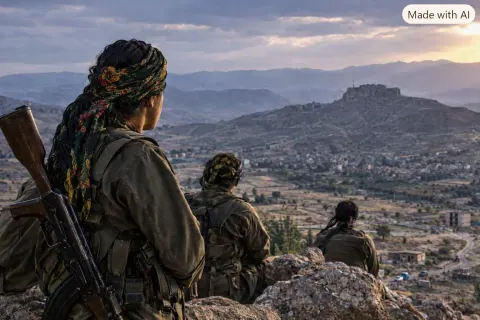
The Women’s Defense Units, which played a key role in the fight against ISIS in northeastern Syria, are now facing the question of how to integrate them into the central government’s security structures. Current military officials in Damascus, many of whom have a history of working in Islamist rebel groups opposed to Bashar al-Assad, have opposed the presence of women in combat units.
Nowruz Ahmed, the commander of the Women’s Defense Units, told The Associated Press that the unit’s leaders have demanded that their forces be integrated into the security structures of the Syrian Interior Ministry as a regiment in the special missions department.According to him, Damascus authorities have announced that women are present in the Ministry of Interior and the General Security Forces and that their number can be increased, but they have not agreed to the presence of women's units in the special mission forces.
Nowruz Ahmed also said that the Women's Defense Units want to continue operating in their current areas in the provinces of Hasakah and Aleppo, and the Syrian government has not opposed the principle of this request, but its details are still being negotiated.
He announced the current number of the unit's forces to be about 1,500 women; a figure that represents a significant decrease compared to the peak of the force's activity, which was about 5,000.
Nowruz Ahmed emphasized that for the Women's Defense Units, maintaining the nature and main function of the force to protect women, the movement, and especially the region where it operates is of fundamental importance.Syrian Interior Ministry officials declined to comment on the talks regarding the unit’s future.
Integration agreement continues to be implemented
Despite the rising tensions, some analysts believe that these developments should not be assessed in isolation from the progress made in implementing the agreement between Damascus and the Syrian Democratic Forces.
Nouah Bonsi said the two sides have come a long way since January, when the integration agreement between the central government and the Syrian Democratic Forces was reached after weeks of fighting.
He said that the fact that the two sides were able to prevent an escalation of the conflict, negotiate the integration process, reach an agreement to end the war and then begin its gradual implementation is a significant achievement in itself.Bonci also said that implementing the agreement required concessions from both sides, although due to Damascus’s superior position, the concession process has generally benefited the central government.
He described the current situation as a “challenging but overall positive” process that faces “significant obstacles on the ground.”
Overall, the Associated Press report shows that the process of integrating the military and administrative structures of the Kurdish regions into the central government of Syria has entered a phase where economic issues, cultural rights, the status of women’s forces and security issues are intertwined. The rise in social discontent, along with the continued implementation of the Damascus-SDF agreement, will be an important test of how this process is managed and the extent to which the central government is able to create consent in the Kurdish regions.


User comments