
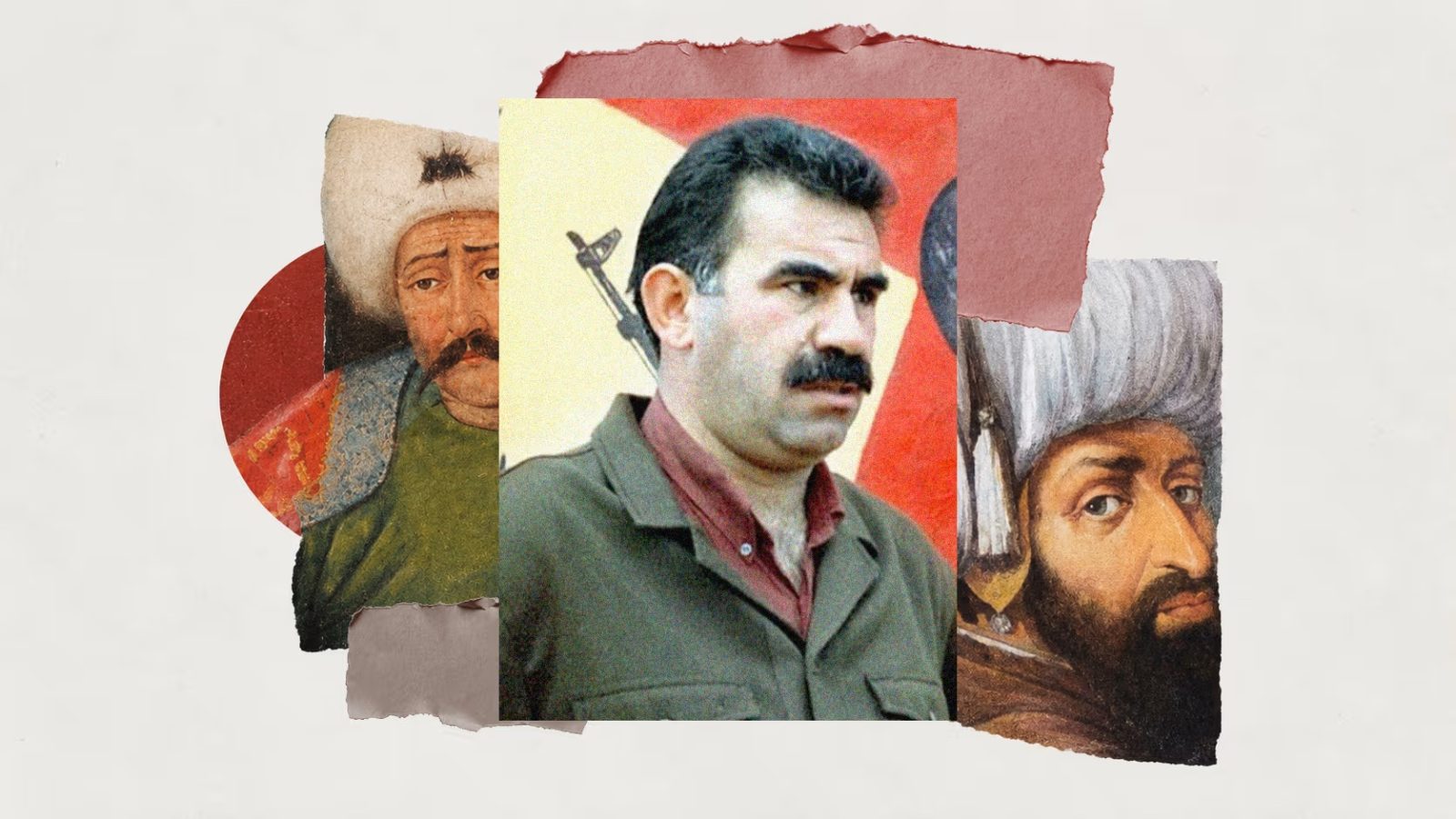
Öcalan's controversial Kurdish-Turkish model
According to KurdPress, after decades of armed conflict, the Turkish government and the Kurdistan Workers' Party (PKK) are on the path of disarmament, political negotiations and the creation of a framework to end the conflict; but now the reference to Ottoman Sultan Selim I, known as "Yavuz Sultan Selim", and Idris Bedlisi, a Kurdish thinker, historian and political advisor to his court, has become a controversial issue in the peace process.The debate has brought back into the political discourse of Turkey the historical differences between Turks, Kurds and Alevis over the role of Sultan Selim I in the 16th century, a subject that has raised concerns about its impact on the peace process between Ankara and the PKK.
In recent months, both sides have warned of the danger of actions that could derail the peace process. Abdullah Ocalan, the founder of the PKK, has repeatedly warned of attempts to derail it. Turkish President Recep Tayyip Erdogan and Devlet Bahçeli, the leader of the country’s nationalist movement, have also warned of the provocative consequences and delays in the negotiations.
The affair began after the publication of notes attributed to one of Abdullah Ocalan’s previous meetings with a delegation of the Peoples’ Democracy and Equality Party on the island of Imrali.These notes, some of which were later found to be inaccurate, contained statements about the historical relationship between Sultan Selim I and Idris Badlisi.
Idris Badlisi played a role in bringing a number of Kurdish rulers and principalities closer to the Ottoman state during Sultan Selim's campaign against the Safavid state, one of the main rivals of the Ottoman Empire. This cooperation took place in 1514 and 1515, at the same time as the Ottoman-Safavid war, and is cited as one of the examples of political cooperation between Kurdish rulers and the Ottoman state.
However, Sultan Selim I's place in the historical memory of the Alawites is quite different. His conflict with the Safavids and the suppression of the Qizilbash, a religious movement with historical links to the Alawite tradition, form an important part of the historical memory of the Alawites.For this reason, the presentation of the relationship between Sultan Selim and Idris Bedlisi as a historical example of political cooperation was met with reactions and concerns from some Alevi figures.
The Peoples’ Democracy and Equality Party initially denied the accuracy of attributing these statements to Öcalan. The party’s Ethnic and Religious Affairs Commission stated that Öcalan had not provided an assessment of the “Selim and Bedlisi alliance” as stated in the published notes. The commission also warned against the political exploitation of Alawite sensitivities and emphasized that Alawites should be part of the peace process, not set against it.
The controversy intensified on August 31, after a statement was issued by a number of Alevi figures. The statement, which was initially signed by 53 Alevi figures and then the number of signatories increased, rejected what it described as the “old and bloody alliance” of Selim and Bedlisi.The signatories emphasized that this historical relationship cannot be separated from the repression and violence against the Alevi communities.
Öcalan’s Explanations on Sultan Selim and Idris Bedlisi
Abdullah Öcalan directly addressed this controversy in his most recent meeting with the Peoples’ Democracy and Equality Party delegation in Imrali on September 13.
After the party’s official statement about the meeting was released, party officials provided reporters with more details of Öcalan’s remarks, including his explanation of the controversial reference to the relationship between Sultan Selim and Idris Bedlisi.
In his explanation, Öcalan denied the accuracy of some of the published notes about the previous meetings and said that his assessment of Idris Bedlisi, which he had previously presented in the framework of the “Democratic Society Manifesto,” was incompletely reflected, and this is what has laid the groundwork for the recent controversy.According to the explanations provided by the sources of the Peoples' Democracy and Equality Party of Öcalan regarding Öcalan's statements, he emphasized that some of the information published in his name in the reports of previous meetings does not correspond to reality.
Explaining his view on the relationship between Idris Badlisi, the Sunni Kurdish emirates and the Ottoman state, Öcalan said that his goal is not to revive the same historical structure with all its features and shortcomings.
According to him, the goal is to transform the idea of political cooperation contained in that historical experience beyond the framework of the interests of the emirs and rulers and into a model for cooperation between nations and followers of different religions and sects.
He also explicitly emphasized the importance of the historical memory of the Alevis and their concerns.Explaining this view, Öcalan said that the aim of this plan is not to “dissolve Alawism within Sunnism,” but rather that Kurds and Alevis should become the main actors in a new democratic coalition while preserving their independent identities and characteristics.
He also distinguished between the historical model mentioned and his proposed model, saying that what he wanted was not a “coalition of emirs,” but a “coalition of nations”; a coalition based on equality and freedom, not sovereignty and domination.
Öcalan also referred to what he called the “Alawite renaissance” as one of the most important foundations of a shared democratic future.Accordingly, he is trying to use the experience of Selim and Badlisi not as a political model to be repeated, but as a historical example of political cooperation, and to redefine the idea of cooperation contained therein into a framework based on equal participation of different nations and religious and religious communities.
However, the entry of this historical debate into the peace process shows that the negotiations between Turkey and the PKK are not only faced with issues related to disarmament and future political arrangements, but also different perceptions of the history of Kurds, Turks and Alevis can become one of the sensitive issues of this process.
Amarci Magazine

User comments