
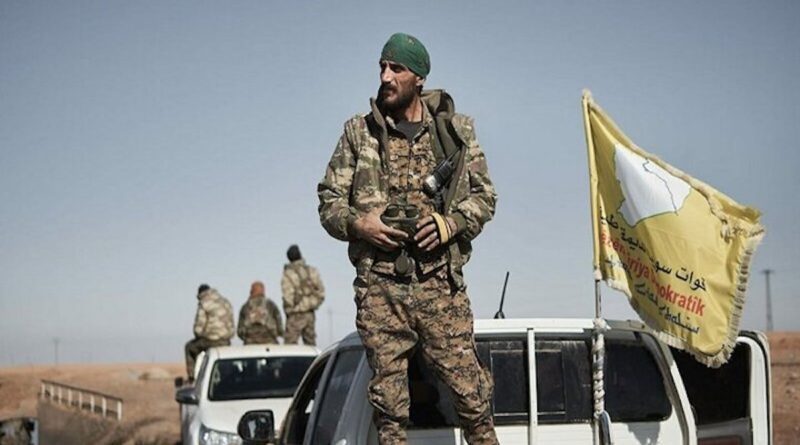
Eurasia Review: The dissolution of the Syrian Democratic Forces was the result of a change in the balance of power
According to Kurdistan Press, according to Eurasia Review, after nearly a decade of playing the role of the most important US-backed military force in northeastern Syria, the Syrian Democratic Forces have now ended their role as an independent military force and the process of integrating its military and civilian structures into the institutions of the Syrian government is being completed. This development can be considered one of the most important stages of the project of Syrian President Ahmed al-Sharaa to return parallel and armed structures to the framework of the central government.The Syrian Democratic Forces were formed in 2015, amid the rapid expansion of ISIS in Syria and Iraq. The coalition was formed around the People’s Protection Units (YPG) and the Women’s Protection Units (YPG), with the participation of Arab, Assyrian, and other local groups, and gradually became the most important ground partner of the United States in the war against ISIS in Syria.
Before the formation of the coalition, the United States had also supported the YPG, especially during the Battle of Kobani in 2014 and 2015. After the formation of the SDF, Washington provided weapons, training, military advice, and air support to the forces. In the following years, the SDF played a major role in the territorial defeat of the group by capturing one area after another under ISIS control, and finally ended ISIS’s territorial presence in Syria with the capture of Baghouz in 2019.After the defeat of ISIS, the SDF did not remain just a military force, but gradually formed a network of security forces, civil institutions and administrative structures in large parts of northern and eastern Syria, becoming practically the most important military and administrative power in the region.
However, this position was met with strong opposition from Turkey from the beginning. Ankara considers the YPG to be linked to the Kurdistan Workers' Party, an organization that Turkey and the United States have listed as terrorist organizations. Therefore, the expansion of the SDF's influence and the formation of a Kurdish-led military and administrative structure in the vicinity of the Turkish borders were one of the main issues of disagreement between Ankara and the Syrian Kurdish forces.The End of an Independent Force
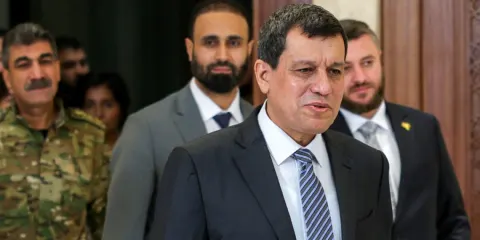
On August 25, 2026, Mazloum Abdi, the commander-in-chief of the Syrian Democratic Forces, announced in Damascus that the mission of the force had ended and that the Syrian Democratic Forces would no longer operate as an independent military force, but rather that its forces would be integrated into the Syrian army in the form of brigades.
This decision was not limited to the military structure alone. Abdi announced that the structures of the Autonomous Administration of Northern and Eastern Syria and its military and civilian institutions had also been integrated into the framework of Syrian state institutions.
According to Eurasia Review, this development cannot be considered simply a voluntary decision by the Syrian Democratic Forces to disband, but rather the result of a political and security process in which the balance of power changed significantly.The SDF leadership ultimately concluded that integration into the Syrian government structure would provide a better opportunity to preserve Kurdish rights and interests than continuing to operate as an independent armed force against Damascus, Turkey, and an unreliable American backer.
The March 2025 Agreement; the Starting Point for Integration
On March 10, 2025, Ahmed al-Sharaa and Mazloum Abdi signed an agreement under which the military and civilian institutions of the SDF and the autonomous administration, including border crossings, oil and gas facilities, and airports, were to be placed under the control of the Syrian government.
In return, the Kurds were to be recognized as an integral part of Syria and were to enjoy citizenship, political participation, and other related rights.However, the March 2025 agreement did not contain enough detail to resolve the fundamental differences and failed to prevent further confrontation. In January 2026, Syrian government forces launched a rapid offensive against the SDF, capturing a significant portion of the areas under their control.
At this point, the SDF’s hopes for US military support were also not realized, as they had been in the past. Ultimately, a ceasefire and a broader agreement paved the way for the SDF-affiliated forces to enter the structures of the Syrian Ministry of Defense and the Ministry of Interior. At the same time, control of border crossings, oil and gas fields, and civil institutions was transferred to the central government.
Mazloum Abdi’s integration into the political structure
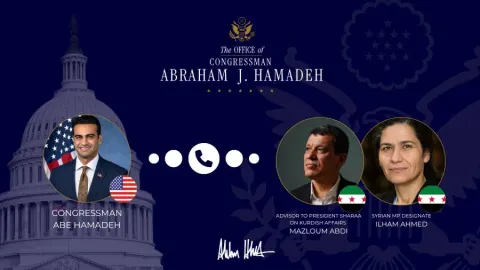
The process of integration continued in the following months, ultimately leading to the announcement of the dissolution of the SDF as an independent force.A few days after this announcement, Ahmed al-Shara appointed Mazloum Abdi as presidential advisor, a move that was interpreted by many as a sign of Damascus’s efforts to integrate the Syrian Kurdish leadership into the new political structure.
From this perspective, Damascus’s goal is not simply to eliminate the Kurdish leadership or dismantle existing structures in Kurdish-populated areas, but to create an order in which the rights of different communities are recognized, but independent military structures and quasi-state institutions outside the central government do not exist.
Challenges facing the Syrian government
While the end of the independent operation of the Syrian Democratic Forces is significant, this development is not the end of Ahmed al-Shara’s state-building project. The next most important challenge is to establish a monopoly of state sovereignty over the means of exercising power and to end the independent operation of other armed groups.The SDF was the largest remaining independent military structure in Syria, but there are other groups and armed forces that need to be brought within the formal structures of the state.
Another major challenge for Damascus is the situation in Sweida and its Druze community, which remains largely outside the effective control of the central government. Resolving this issue requires restoring state sovereignty without triggering a new wave of sectarian conflict.
At the political level, Damascus must also move towards a broad national consensus that can convince Kurds, Druze, Alawites, Christians, and other Syrian communities of their security and rights within the framework of a central government.The model envisaged by Damascus, according to Eurasia Review’s understanding of the process of integrating the Syrian Democratic Forces, appears to be based on one principle: recognizing the rights of different communities, but ending independent armed and quasi-state structures.
From Transitional to Legal Government
In addition to the issue of the armed forces, the Syrian government must also complete the transition from a revolutionary and transitional structure to a functioning state. The establishment of national ministries, a judiciary, a police force, a tax system, public services, and a unified economic structure are among the measures that remain on the agenda.
Eurasia Review emphasizes that the Syrian transitional government remains a fragile structure in which a significant part of the power is concentrated in the presidency. Therefore, the final stage of the Al-Sharaa project is not simply the unification of the military forces, but the creation of a stable legal and political framework for governing the country.On March 13, 2025, Ahmed al-Shara signed the “Constitutional Declaration,” which sets out the legal framework for a five-year transitional period. According to this framework, the transitional period should eventually lead to the drafting of a permanent constitution and the holding of elections.
The Syrian People’s Assembly, which held its first session in Damascus in July 2026, is considered a transitional legislative body, not a fully elected parliament, within this framework. It has 210 seats, two-thirds of which are elected through regional electoral assemblies, and 70 others appointed by Ahmed al-Shara.
According to the announced roadmap, the next step is to form an institution that will be responsible for drafting a permanent Syrian constitution. Once the constitution is approved, parliamentary elections are to be held based on it.If this process proceeds according to the announced framework, March 2030 will be the final horizon of the five-year transition period.
The end of the independent operation of the SDF is therefore not simply the end of a military coalition, in Eurasia Review’s view; it is part of a broader process of redefining the relationship between local communities and the central Syrian government. The integration of the SDF’s military and administrative structures into state institutions is one of the most important steps for Damascus to establish a monopoly of sovereignty and move towards a unified state; but the ultimate success of this process will depend on how the issue of other armed groups is resolved, the rights of different communities are guaranteed, and Syria moves through the transition to a political system based on a constitution and elections.
User comments