
Energy Crisis in Syria, Iraq, Kurdistan Region and Turkey
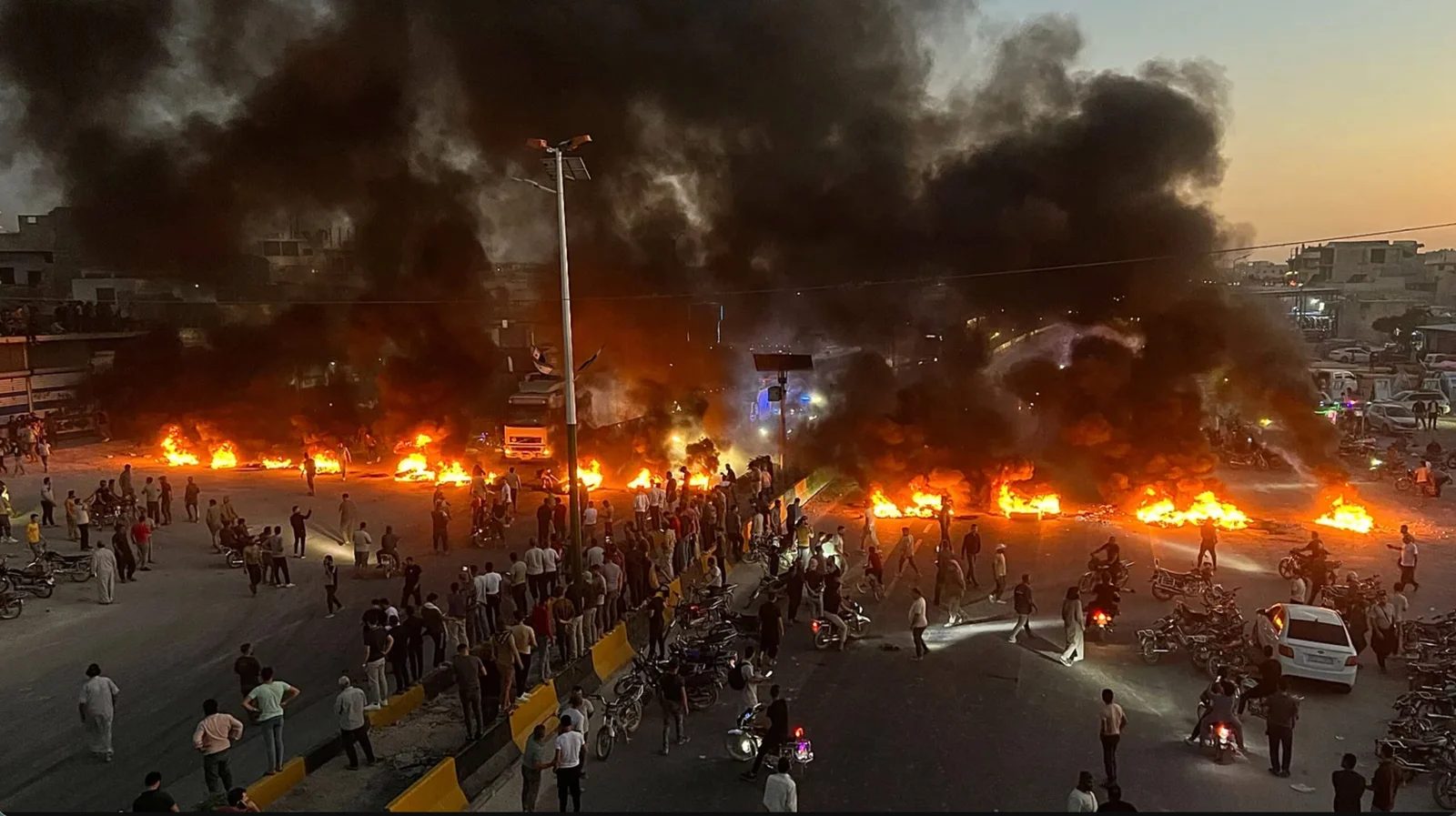
According to KurdPress, the sharp increase in fuel prices in Syria, Iraq, Kurdistan Region and Turkey shows that the energy shock caused by the war with Iran is no longer just an issue related to the oil and gas market. This crisis has now quickly spread to transportation, food production, electricity supply, public services, government budgets and the cost of living of households. The experience of these four regions also shows that countries that are themselves oil and gas producers are not necessarily immune to the consequences of a global energy crisis.On September 14, Syria witnessed the most widespread protests since the fall of Bashar al-Assad in December 2024. The increase in the price of regular diesel from 125 to 175 Syrian pounds per liter, a 40 percent increase in one decision, brought protesters to the streets. In some areas, tires were set on fire, the Damascus-Aleppo road was blocked, and fuel tankers were prevented from moving.
The increase came at a time when the price of diesel had more than doubled since February, and the price of 95-octane gasoline had increased by about 86 percent. Truck drivers went on strike, and the Syrian Ministry of Transport announced that the movement of goods had almost stopped in several provinces. In Hasakah, bakeries also stopped production because the new diesel price made it uneconomic for them to sell bread at the official rate.
The Damascus government reversed part of the price increase three days later, on September 17.Under the new decision, diesel for heating, agriculture and some household uses was sold at 115 liras, and for the manufacturing and service sectors at 150 liras, but the standard price remained at 175 liras. The government said that even 175 liras was less than the cost of supplying diesel, which had reached 206 liras per liter.
Despite this setback, protests continued in Hasakah. Protesters linked the diesel price hike to rising bread prices, transportation costs and the cost of operating local generators. Generators provide a significant portion of the electricity used by people in many areas.
But what happened in Syria is not an isolated incident. In the same week, Iraq and Turkey also faced sharp increases in fuel costs.In Iraq’s Muthanna province, farmers and factory owners took their tractors, combines and heavy machinery to the roads to protest the increase in the price of diesel from 400 to 1,250 dinars per liter. In the Kurdistan Region, the price of a 216-liter barrel of kerosene reached about 330,000 dinars in Erbil and 280,000 dinars in Sulaymaniyah.
In Istanbul, the price of diesel exceeded 100 lira per liter for the first time on September 17. This is an increase of about 66 percent compared to 60.30 lira on February 24, four days before the war escalated.
In fact, what is observed in these countries is a single chain: rising energy prices, rising transportation costs, rising prices of goods and services, pressure on households and, ultimately, the formation of protests.
Why does diesel have this effect?
Diesel is different from many other goods.Its rise in price does not only increase the costs of those who directly purchase fuel; it affects almost the entire economic chain.
Trucks depend on fuel to transport goods, tractors and combines for farming, generators to generate electricity, and bakeries to bake bread. So when the price of diesel rises, the effect is quickly reflected in the prices of food, construction materials, transportation fares, and electricity.
On the other hand, the energy crisis is not limited to just price increases. If fuel is available but expensive, household and business budgets are strained; but if fuel is not available at all, economic activity and public services come to a standstill. In the current crisis in the region, both are happening at the same time.
Syria is a clear example of this chain.The fuel price hike first hit transportation, then bread and public services, and finally led to street protests. The process took place over a period of about a week.
The important point is that Syria itself has oil resources. However, the Damascus government, which is trying to rebuild an economy damaged by more than a decade of war, has limited financial capacity to absorb the shock of global energy prices. Therefore, the increase in energy costs is almost directly passed on to consumers.
Iraq
Iraq may at first glance be the country that should be most able to cope with the energy crisis. It is OPEC’s second-largest oil producer, and the government has also tried to keep fuel prices for consumers stable.Regular gasoline is still sold at government-run stations for 450 dinars per liter, and the state-run Petroleum Products Distribution Company has said consumer prices have not changed.
But pressure has come from another direction. The government reduced fuel subsidies for institutional consumers and the manufacturing sector on September 1. The decision resulted in a more than 200 percent increase in diesel prices in Muthanna and the outbreak of protests. Farmers warned that the increase in fuel costs would eventually be passed on to the prices of products, construction and consumer goods. In Wasit, farmers blocked roads in protest.
In Babol, the price of fuel oil used in brick kilns rose from 100 to 480 dinars per liter. Production has almost stopped, and the price of a typical shipment of bricks has risen from about 1.1 million to 1.5 million dinars.
At the same time, fuel shortages have exacerbated the problem.Iraq’s oil ministry said regional clashes had delayed the arrival of imported gasoline at its ports. In Mosul, truck drivers blocked a main road to protest a shortage of diesel after waiting for up to four days.
In Diyala, generators ran out of fuel, shutting down some government offices. In Dhi Qar, fuel shortages affected hospital generators and ambulances. In Baghdad, owners of private generators that provide electricity to many households during grid outages protested the cost of fuel until the government guaranteed diesel at 400 dinars for September.
Iraq’s experience makes an important point: having crude oil underground is not the same as having cheap, accessible energy.Oil must be refined, imported when there is a shortage, transported by tankers and trucks, and ultimately used to generate electricity.
Iraq has been able to control consumer fuel prices to some extent, but the cost of this policy has been manifested in the form of shortages, rising production costs, protests, and rising subsidy costs, all while Iraq’s own oil revenues have been hit by disruptions in the Strait of Hormuz.
Kurdistan Region: An Oil-rich Region and Fuel and Electricity Shortages
The Kurdistan Region is experiencing a combination of three problems: rising prices, fuel shortages, and vulnerable infrastructure.
The price of regular gasoline in Erbil, which was around 800 dinars per liter on February 8, reached 1,300 to 1,400 dinars at the peak of the price hike in July. This represents an increase of 63 to 75 percent.Long queues formed at subsidized stations, and the regional government began setting price caps and piloting electronic ration cards to control the market.
But the problem was not just price. Regional authorities announced a daily need of around 6 million liters, while the shortage was estimated at around 4.5 million liters. For this reason, at some stations the official price was maintained, but there was no longer enough fuel.
In the gas sector, the shutdown of the Kormor field in July showed how much a single infrastructure can affect people’s daily lives. The field, the main source of fuel for regional power plants, was taken out of production due to security threats linked to regional conflicts.
The shutdown of Kormor took out around 2,500 megawatts of electricity generation capacity.The price of household LPG rose overnight from 400 to 800 dinars per liter, and the price of a standard cylinder rose from about 9,000 to 18,000 dinars. The power outage also disrupted water supplies in parts of Erbil, as pumping stations lost power.
Heating fuel has now become another problem. The price of kerosene, which households use for heating and cooking, has risen from about 120,000 dinars per barrel last year to 200,000 dinars in mid-July and then to 330,000 dinars this week.
The fuel price hike has even had environmental consequences, with some mountainous areas seeing a resurgence in deforestation for fuel. More than 1.3 million households will need hundreds of millions of liters of fuel next winter.In this way, a region that produces both oil and gas is seeing an increase in the use of wood for heating, as gasoline rationing and heating fuel prices rise.
Turkey
Of the four economies examined, Turkey has the best capacity to cope with the crisis and has not yet experienced large queues or physical fuel shortages. The country has diverse supply sources, refining capacity, growing gas production from the Sakarya field on the Black Sea and increasing oil production from the Gabar field in the southeast.
However, this capacity has not protected Turkey from price increases. Gasoline prices rose from 57.19 lira on February 24 to 80.31 lira on September 17, an increase of about 40 percent. Diesel prices have also increased by 66 percent over the same period.
The Turkish government has taken action to limit the impact of these increases.Ankara used a fiscal mechanism to ease pressure on fuel prices in March, and in August reduced the special tax on diesel to zero, a move that cut the price of about 9 lira per liter. The government also continues to subsidize some of the cost of electricity and gas for households.
However, Turkey imports about 47 percent of its diesel needs. So a drop in refined product exports from the Persian Gulf and Russia directly affects the domestic market. On the other hand, Turkey’s heavy reliance on road transport means that rising diesel prices are quickly passed on to agriculture, food production, industry, and distribution.
Turkey’s experience shows that even a government with high financial resources and economic capacity cannot eliminate the real cost of the crisis.The government can absorb some of the cost for a while, but ultimately this cost is either transferred to the public budget or returned to households and businesses through price increases and inflation.
The Strait of Hormuz: The Main Link to the Crisis
The main root of the crisis goes back to the war with Iran and the disruption of tanker traffic through the Strait of Hormuz. Before February, about 20 million barrels of crude oil and oil products passed through the strait daily, about a fifth of global oil consumption. But the amount of oil passing through Hormuz fell to about 4.9 million barrels per day in the second quarter of this year; while this figure was about 21.6 million barrels per day by the end of 2025. The International Energy Agency This disruption.
In the early months, some of this pressure was contained by using alternative routes. Saudi Arabia increased oil shipments through the East-West pipeline to the Red Sea port of Yanbu, some countries used their reserves, and refineries looked for alternative sources.
But now even these alternative routes are facing problems. On July 20, the Houthis announced a naval blockade of Saudi Arabia and expanded their presence in the Bab al-Mandab region. Saudi Arabia’s East-West pipeline has also been targeted. Since late July, major Chinese oil carriers have also avoided transiting through Hormuz and the Bab al-Mandab, relying more on ship-to-ship transfers outside the Persian Gulf.
The significance of the current crisis becomes clear here.In past oil crises, one main route or source has usually been under pressure, but now both the main route through the Persian Gulf and some alternative routes are under pressure.
The Strait of Hormuz remained open during the 1973 oil crisis, the tanker wars of the 1980s, and the 1991 Gulf War. Even during the Houthi attacks on Red Sea shipping in 2023 and 2024, oil from the Persian Gulf continued to flow through Hormuz. The current situation is different, as both the main route and some alternative infrastructure have been disrupted.
The crisis goes beyond the Middle East
For many countries, there doesn’t even need to be a physical shortage of fuel to feel the effects of the crisis. Rising global oil prices raise the cost of imports, and if a country’s national currency also depreciates against the dollar, the pressure will be even greater.Governments have tried not to pass on these cost increases to households all at once. According to the International Monetary Fund, some 900 measures have been implemented in nearly 170 countries since the war began, including subsidies, tax cuts and price controls.
But subsidies do not eliminate costs; they shift costs from consumers to the government. Governments that allocate more resources to subsidize fuel and electricity will have to borrow more, raise taxes or cut other spending to pay for them.
Rising energy prices also fuel inflation and can make it harder for central banks to cut interest rates. As a result, the impact of the crisis extends beyond fuel markets to financial markets and the cost of financing.For households and companies, this means that the effects of the crisis may last much longer than the period of rising fuel prices. Rising interest rates will make it more expensive to borrow money and finance businesses. Rising subsidy and debt costs will also strain government resources, and companies facing rising energy and financing costs may reduce investment and employment.
As a result, what starts as a rise in the price of a litre of diesel can end up being a problem for economic growth and government finances.
Signs of this trend are also visible outside the Middle East. Indonesia has been hit by petrol and LPG shortages, blackouts and protests.Transport workers in the Philippines have called for more government support against rising fuel costs, and in Kenya, fuel price hikes have been met with protests and disruptions.
Ultimately, the protests in Syria, farmers’ tractors on Iraqi roads, the rise in kerosene prices in Erbil, and the price of diesel exceeding 100 lira in Istanbul are not isolated events. They are different symptoms of a broader crisis that has started in the energy market and has now spread to transport, food production, electricity, government budgets, and household living costs.
If disruptions in the Persian Gulf and Red Sea continue, the strain on the region’s economies and then beyond could increase.Countries with fewer financial resources to pay subsidies, weaker currencies, and greater dependence on energy imports will face greater constraints in coping with this shock.
National Context




User comments