
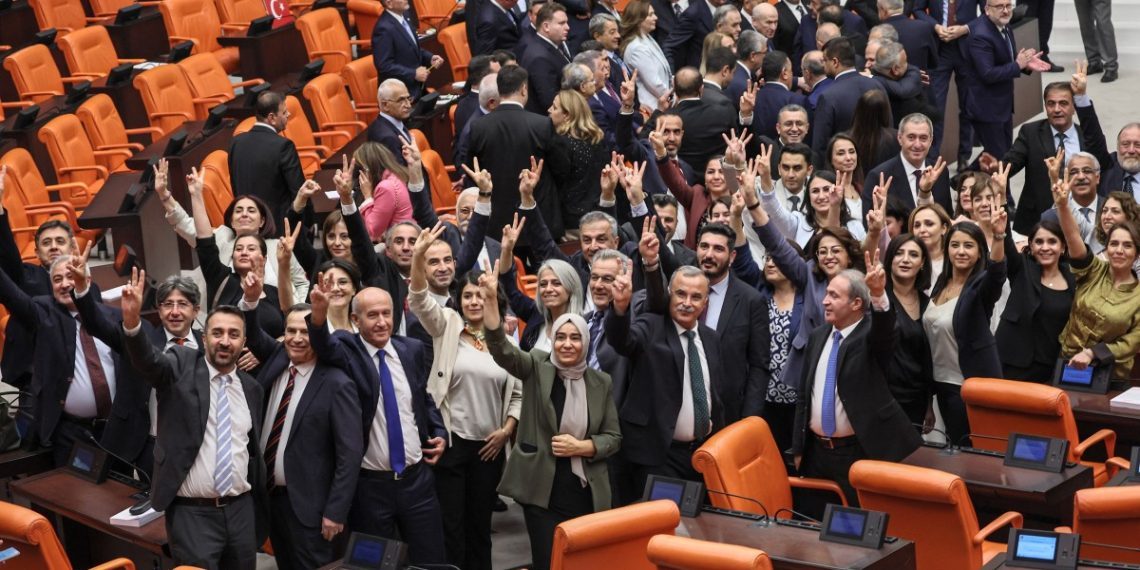
Peace between Kurds and Turkey; The end of the war or the beginning of a long political transition?
According to KurdPress, the Kurdish Studies Center, in an analysis of the "peace and democratic society" process in Turkey, considers this process a new stage in the relations between the Turkish government and the Kurds, which, after more than four decades of conflict, is supposed to move the Kurdish issue from the military path to the political arena.From the center's perspective, despite the efforts of some power centers and political movements to undermine the peace process, the framework agreement, which was approved on August 10, 2026, by a vote of 468 out of a total of 600 deputies in the Turkish parliament, has now entered the practical implementation stage, and it is expected that specific steps will be taken by both sides in the coming weeks.
According to this analysis, the implementation process of the agreement is based on the principle of reciprocal and phased action; meaning that each action by one side must be accompanied by a corresponding step by the other side in order to build trust between the parties and measure their commitment to a political solution. The Kurdish Studies Center refers to the statements of Mehmet Oçum, an advisor to the Turkish President, according to which Abdullah Öcalan will participate in the parliamentary subcommittee to monitor the disarmament process of the Kurdistan Workers' Party.From the center's perspective, such a mechanism could maintain Öcalan's direct connection with the parliament in the process of legal reforms, the release of political prisoners and the return of Kurdish figures from exile. At the same time, the People's Democracy and Equality Party has also announced the possibility of positive developments in the near future and has considered the Turkish National Security Council meeting in October as one of the important points for assessing the implementation of the agreement.
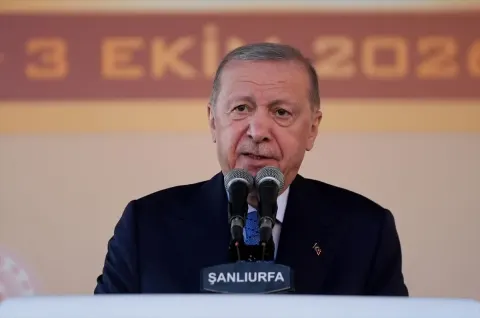
The Kurdish Studies Center also believes that there is a will on both sides to make the peace process a success and to achieve a stable and conflict-free situation. This will has been accompanied by new calculations and considerations after more than 40 years of war and confrontation. In this context, the center believes that the Turkish government has concluded that the armed Kurdish movement cannot be eliminated through military means and that the economic costs of this war have also reached a very heavy level.The analysis cites the estimate of the Turkish parliament speaker Numan Kurtulmus of the cost of the war at around $2 trillion, as well as the figure of $2.3 trillion mentioned by Recep Tayyip Erdogan. In the center’s view, this reality has paved the way for abandoning reliance on a military solution and moving towards a political approach.
In this context, the Center for Kurdish Studies assesses Turkey’s new approach based on two main axes: first, legal reforms and the removal of restrictions related to Kurdish identity and language and the granting of broader administrative powers; second, determining the status of the armed forces, political figures and academics in exile and preparing the ground for their return to political life in the country. The analysis also considers the release of thousands of Kurdish cadres and activists as part of the expected process.
User comments