
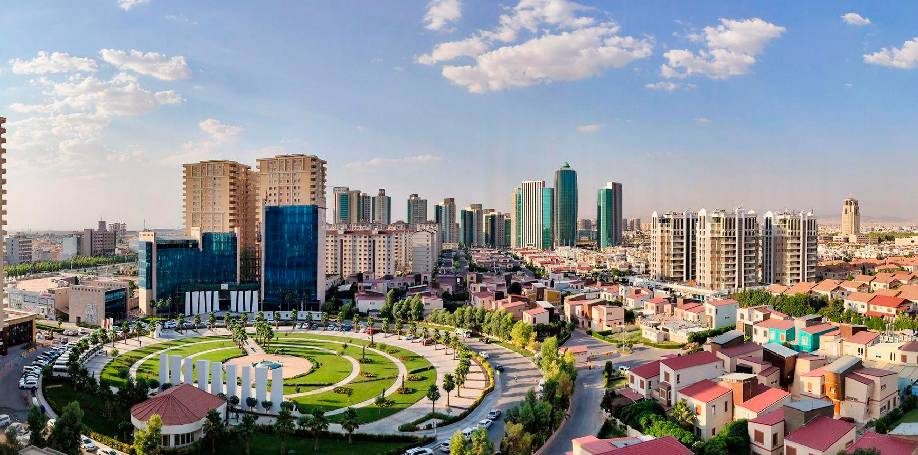
Security in the post-American region; from relying on the outside to building power within / Mansour Ouli
KurdPress- The complete withdrawal of American forces from Iraq at the end of September 2026 has opened a new chapter in the country's security equations; a chapter in which the main responsibility for maintaining security and stability will fall more than ever on the shoulders of Iraqi institutions.
The last American forces left Iraq on September 30, and the "Operation Inherent Resolve" mission in Iraq ended. However, the end of the military mission does not mean a complete severance of security relations between Washington and Baghdad, and the United States has announced that bilateral defense relations and some training and intelligence cooperation will continue.The headquarters of the coalition forces has also been moved to Jordan.
This development is of double importance for the Kurdistan Region. A significant part of the US military presence in the recent phase was carried out through the region, and the last US forces have also withdrawn from the Erbil air base. Meanwhile, the Ministry of Peshmerga Affairs of the region has announced that the US withdrawal will not be accompanied by the creation of an alternative air defense system and has placed the responsibility for protecting the airspace of Iraq and the region on the federal government within the framework of the constitution.Therefore, the main question for the Kurdistan Region is no longer simply, “Who will replace America?” But the more important question is how the region can rebuild its security structure in a way that is stable and institutionally resilient in the face of regional changes and the withdrawal or reduction of the presence of any foreign power?
The experience of the past years has shown that international cooperation has been of great importance in confronting security threats, especially ISIS. The Peshmerga forces played a significant role in the fight against ISIS, and the support of coalition member countries in the field of training, advising and support was also effective in strengthening the capacity of Iraqi and Kurdish forces.
But there is an important principle in security policy: no foreign presence can be assumed to be guaranteed forever.Foreign powers make decisions based on their own interests and circumstances, and their missions, priorities, and levels of presence may change. For this reason, relying on foreign support can be useful in times of crisis, but it cannot replace building sustainable domestic capacities.
The US withdrawal from Iraq is important precisely from this perspective. This event could push the region towards redefining the concept of security; a security in which foreign cooperation still exists, but whose main pillar is based on domestic institutions, cooperation with Baghdad, and balanced regional relations.
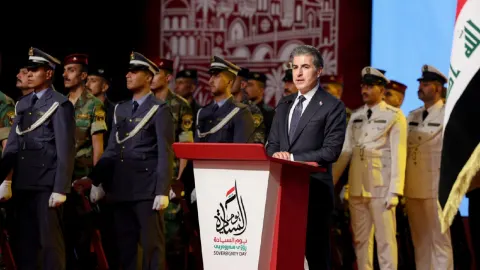
One of the most important internal developments in the region has occurred in this very year 2026. The region’s Ministry of Peshmerga Affairs announced in September that the process of integrating and organizing the Peshmerga forces under the Ministry of Peshmerga Affairs had been completed.According to the ministry’s official announcement, the forces have been organized under a single command and control structure, and two regional commands have also begun their activities.
This development is not just an organizational change; it can also be one of the foundations for the formation of a sustainable security structure in the region. In the past, the issue of fragmentation of security structures and their relationship with the main parties in Kurdistan was one of the well-known problems of the region. The United Nations had previously emphasized the difficulty of integrating the Peshmerga forces under a single security structure.
Now that the region is officially talking about completing this process, the more difficult stage begins: transforming organizational unity into real unity in command, training, discipline, budget, decision-making, and institutional culture.If the region's security forces can become professional, national, and accountable institutions, the withdrawal of foreign forces will not necessarily mean a reduction in security; rather, it could be an opportunity to increase accountability and institutional reliance on domestic capacities.
The experience of Iraq over the past two decades has shown an important fact: foreign power can play a decisive role in creating or maintaining security at a historical juncture, but no foreign power can replace the domestic institutions of a country or region.
The Kurdistan Region is now at a point where it must move from the stage of “receiving security support” to the stage of “building sustainable security capacity.”
This does not mean cutting off cooperation with the United States or European countries. On the contrary, maintaining international relations, educational and intelligence cooperation, and using the experience of other countries can still be beneficial for the region. The difference is that foreign cooperation should complement domestic power, not replace it.If the region can build its security on professional institutions, a diversified economy, constructive relations with Baghdad, and balanced relations with its neighbors, it will be more resilient to future changes.
The withdrawal of American forces from Iraq marks the end of one phase of the American military presence in the country; but for the Kurdistan Region, it could be the beginning of a more important phase: a phase in which the concept of security must move from “external support” to “internal capacity and regional cooperation.” The region today has capacities that can serve as the basis for this path: Peshmerga forces, geographical location, economic capacities, trade borders, the private sector, natural resources, and extensive regional and international relations.
The main challenge is how to organize and use these capacities.Regional officials must realistically view the surrounding environment, see both the threats and opportunities arising from the neighborhood with Iran and Turkey; work with Baghdad to resolve remaining issues; consolidate the process of professionalizing and integrating security institutions; and at the same time, move the regional economy away from excessive dependence on a single source of revenue.
In such a framework, sustainable security can come neither from isolation nor from dependence. Sustainable regional security can result from a combination of domestic strength, effective governance, cooperation with Baghdad, balanced relations with neighbors, a diversified economy, and the intelligent use of international cooperation.
This is perhaps the most important lesson that the post-US withdrawal period brings to the Kurdistan Region: Foreign friends can help build security, but the foundation for sustainable security must be built at home.

User comments