
Dialogue with Damascus should lead to the development of a new social contract
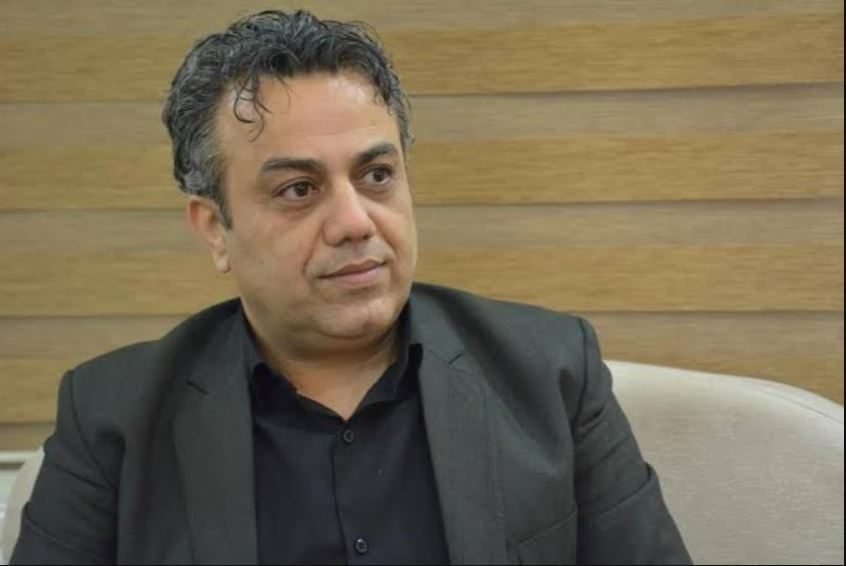
According to KurdPress, "Sihanouk Dibo", a member of the Syrian Kurdish Communication Council, stated that the current stage in Syria should not be merely a period for testing the intentions of Damascus and the Kurdish movement, and called for the start of a real and comprehensive dialogue, emphasizing that this dialogue should lead to the recognition of the rights of the Kurds, determining the form of the state, guaranteeing citizenship rights, and ultimately developing a new social contract in Syria.In an exclusive interview with the "Majher" news site, Dibo stated that the new Damascus speaks of "new Syria" and "rights for all," and that this discourse requires that the Kurdish issue be considered as a political and historical issue, rather than being examined solely within the framework of a security and administrative file.
He added that the Kurdish issue should not be limited to issues such as the integration of forces and institutions or the return of personnel, and that the political and historical roots of this issue should also be discussed.
Recognition of Kurdish rights
According to Dibo, the Kurdish movement has entered the dialogue process expecting the recognition of Kurdish rights, while Damascus, according to his assessment, is expecting the other side to "complete surrender" before moving towards recognizing these rights.He considered this equation inappropriate for the current stage and said that such an approach cannot help the political process progress.
Dibo considered the recognition of Kurdish rights in the constitution, determining the form of the Syrian state, and guaranteeing citizenship rights to be among the most important issues that must be resolved in the dialogue process.
He emphasized that it is necessary to move beyond general phrases such as "rights for all" and clearly recognize the existence of the Kurdish nation and their linguistic, cultural, and political rights in the Syrian constitution.
Decentralization and Citizenship Rights
This member of the Syrian Kurdish Communications Council also considered the issue of decentralization and the form of the future Syrian state to be one of the main axes of disagreement, asking whether Syria would remain a fully centralized state, similar to the Baath Party era, or would it move towards "widespread Syrian decentralization" that would ensure the real participation of different groups.Dibo stressed that this issue is not a side issue, but lies at the heart of political disputes.
He also called for an end to the legal consequences of the exceptional policies imposed on the Kurds, including the 1962 census, the Arab Belt plan, and restrictions on property and language.
According to him, these issues must be resolved through clear laws and regulations to pave the way for equal citizenship and to prevent the Kurdish issue from remaining in a security or administrative framework.
The need to review the priorities of the Kurdish movement
When asked whether the Kurdish movement needed to review its priorities, Dibo answered in the affirmative, saying that the current stage requires the Kurdish movement to move from a regional management approach to participating in the construction of a post-secular Syrian national state.He proposed three main paths in this regard, the first of which is the integration of the Kurdish discourse.
Referring to the April 2026 conference, Dibo said that this framework can still be used, but it must be developed; especially since no alternative has been formed so far that can overcome the difficulty of negotiating with Damascus through multiple delegations and with different perspectives.
He considered the second path to be the transition from security understandings to a political document, saying that the agreements of March 10 and January 29 were more than anything aimed at reducing tensions, but the current situation requires the development of a clear document on political principles.
According to Dibo, the document of the April 26, 2025 conference can be used as a basis for dialogue and presented to Damascus and Syrian public opinion as a plan for resolving the Syrian issue, not simply a set of Kurdish demands.He called the third path the expansion of coalitions, saying that the Kurdish issue will not be able to achieve a lasting solution if it is presented only as a “Kurdish issue.”
Debo called for linking the Kurdish issue to issues such as contractual citizenship, democracy, and transitional justice for all Syrians, saying that expanding this framework could help break the narrative that, during the previous regime, presented the Kurdish issue as a threat to the unity of Syria.
The need to develop a new social contract
Debo emphasized that the transition from initial understandings to an inclusive dialogue is only possible when the Syrian parties accept that the solution is not to make concessions to one side in favor of the other, but to create a new social contract that distances itself from the approach of denial of the past.He added that the creation of a new stage in Syria cannot be done with the same language that the previous regime used to deny the existence of the Kurdish issue.
According to him, denying the issue of a people who have faced deprivation and discrimination for years does not mean achieving national unity, but rather continuing injustice and can also exacerbate internal divisions in Syria.
Finally, Dibo emphasized that recognizing the rights of the Kurds is a condition for achieving equal citizenship and true reconciliation in Syria, and called for the drafting of a new constitution that guarantees the linguistic, cultural, and national rights of the Kurds, as well as fair representation.
He said that citizenship in the new Syria should be based on participation and representation, not quotas.

User comments