
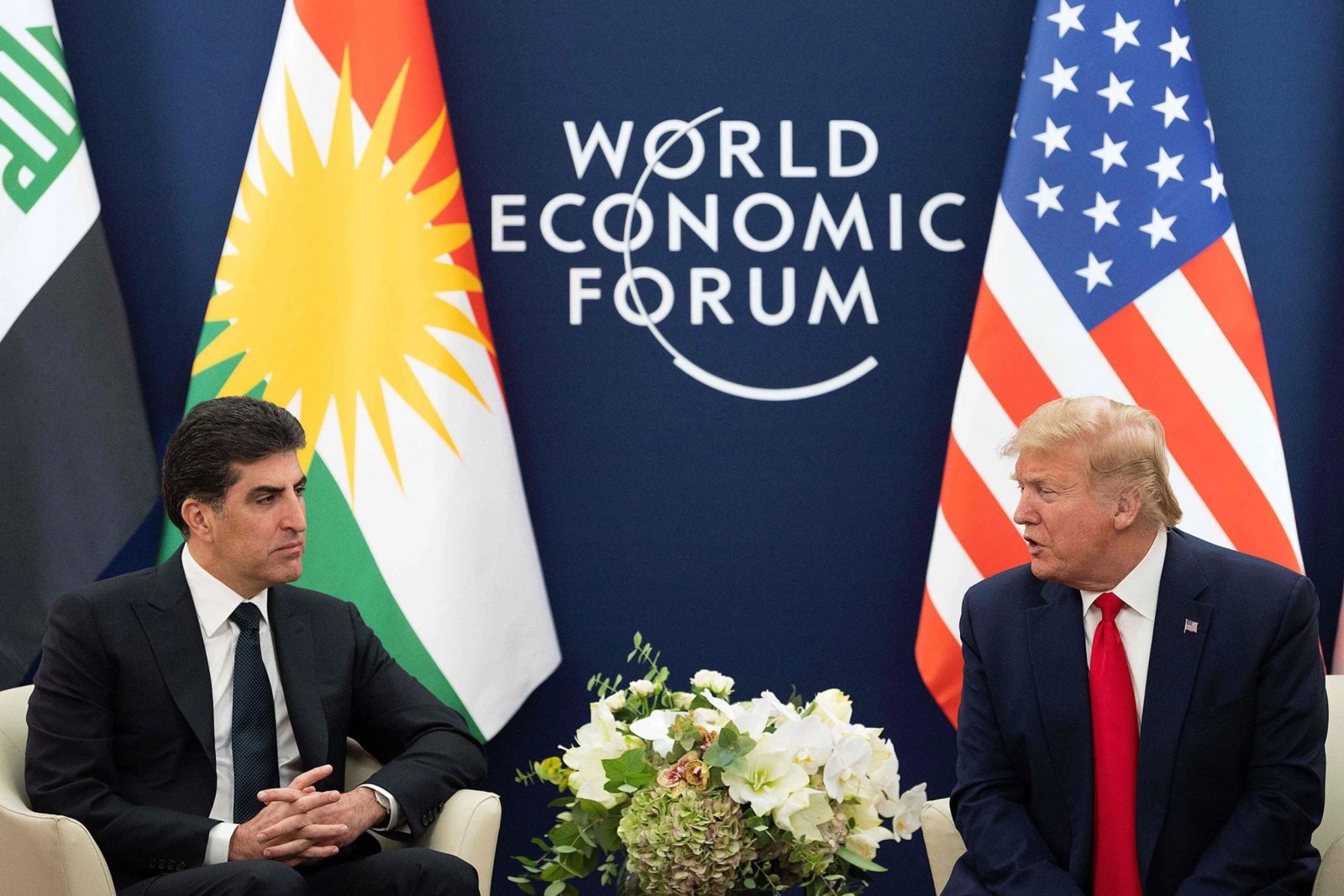
Will the Kurdistan Region lose Washington's support?
According to Kurdistan Press, the complete withdrawal of US military forces from Iraq, which is scheduled to be completed by September 30, 2026, will not only mean the end of Washington's military presence in the country; it could also affect the political and security balance between Baghdad, the Kurdistan Region, and regional powers. In the meantime, the main question for the Kurdistan Region is whether the withdrawal of US forces will be accompanied by a decrease in Washington's political commitment to the region or whether the United States will continue to support the region's position and rights in the political structure of Iraq.Jeng Sagnik, a US-based geopolitical analyst and expert on Kurdish and Middle Eastern issues, examines the US withdrawal from Iraq and its implications for the future of the country and the Kurdistan Region in the latest episode of the New Region’s Geospace podcast.
According to Sagnik, the vacuum created by the US withdrawal from Iraq has already been created, and regional actors are largely filling it. He emphasizes that the competition between these actors continues, and therefore the main issue is not simply the withdrawal of US forces, but the form of Washington’s political commitment to Iraq, and especially the Kurdistan Region, after this withdrawal.
Sagnik considers one of the most important questions to be whether the US will conduct all its interactions with Iraqi parties through the Prime Minister’s Office in Baghdad after the withdrawal of its forces, or whether it will continue to maintain direct political channels with the Kurdistan Region.He raises the possibility that Washington’s new approach in Iraq will become a model similar to its policy in Syria, one in which supporting the central government structure takes priority over direct relations with local actors.
From the analyst’s perspective, the significance of this development for the Kurdistan Region is more political than military. He believes that in recent years, the United States has also played a limited role in directly defending the region from internal and external attacks on the region. In fact, the region’s most important demand from Washington has always been to use American political influence to put pressure on Baghdad.
At the same time, Sagnik does not consider the presence of American troops in Iraq and the Kurdistan Region to be unimportant. According to him, the presence of American forces creates a kind of indirect deterrence, because any attack on the region also carries the risk of casualties among American forces.Therefore, with the withdrawal of American forces, one of the existing layers of deterrence against potential attacks will also be reduced.
However, Sagnik distinguishes a fundamental difference between the situation in the Iraqi Kurdistan Region and the Kurdish areas of northern and northeastern Syria. In his opinion, the Kurdistan Region is in a different position due to its legal and constitutional status in the structure of Iraq, its economic capacity, as well as its geographical location on the emerging trade routes between the Persian Gulf and Europe, and it is much more difficult to eliminate or dissolve than the political structure of the Kurds in Syria.
In this context, he also points to the difference in the power structure in Baghdad and Damascus, and believes that Ahmed al-Sharaa’s control over Damascus is much stronger than the control that the Iraqi Prime Minister has over Baghdad.From this perspective, Iraq’s political structure continues to be less centralized due to competition between different forces, parties, and armed groups, and this could be an important factor for the Kurdistan Region in maintaining its political position.
However, Sagnik warns about the region’s future. According to him, the effort to create a stronger central government in Iraq will continue, and the pressure to further centralize power in Baghdad will be a constant process. Therefore, to counter this pressure, the Kurdistan Region must highlight its role in creating stability, not only within Iraq but also in its surrounding environment.
In this context, the region’s geographical location and its role in regional trade routes can become a political tool.The region could increase its geopolitical importance to Baghdad and foreign powers if it strengthens economic ties and becomes part of the communication networks between the Persian Gulf, Iraq, Turkey and Europe, something that Sagnik says could help protect the region from centralizing trends.
On the other hand, Sagnik also believes that Turkey’s role after the US presence is reduced will likely increase its political influence in Iraq and the Kurdistan Region. However, he does not expect Turkey’s military presence to expand from the mountainous regions to deeper areas of the region and other parts of Iraq. According to him, Turkey’s military presence will remain mainly in mountainous areas and away from population centers, but Ankara’s political influence could increase.In such circumstances, the US withdrawal could bring the Kurdistan Region to a stage where it cannot rely on external support solely through the US military presence. The region will be forced to pursue three paths simultaneously: maintaining political relations with Washington, managing relations with Baghdad, and balancing the growing influence of Turkey and Iran.
From this perspective, the most important consequence of the US withdrawal for the Kurdistan Region is not the end of US support, but rather a change in the form of this support. If Washington continues to support the region’s constitutional rights and political role in Iraq after the military withdrawal, the region can maintain an important part of its position. However, if the withdrawal of forces is accompanied by a reduction in US political presence and a complete focus of Washington’s relations on Baghdad, the region will face the reduction of one of its most important external levers against the central government.Thus, after September 30, the main issue for the Kurdistan Region will no longer be how many American soldiers remain in Iraq, but rather how much Washington will keep the region in its political and security equations after the military withdrawal.
User comments