
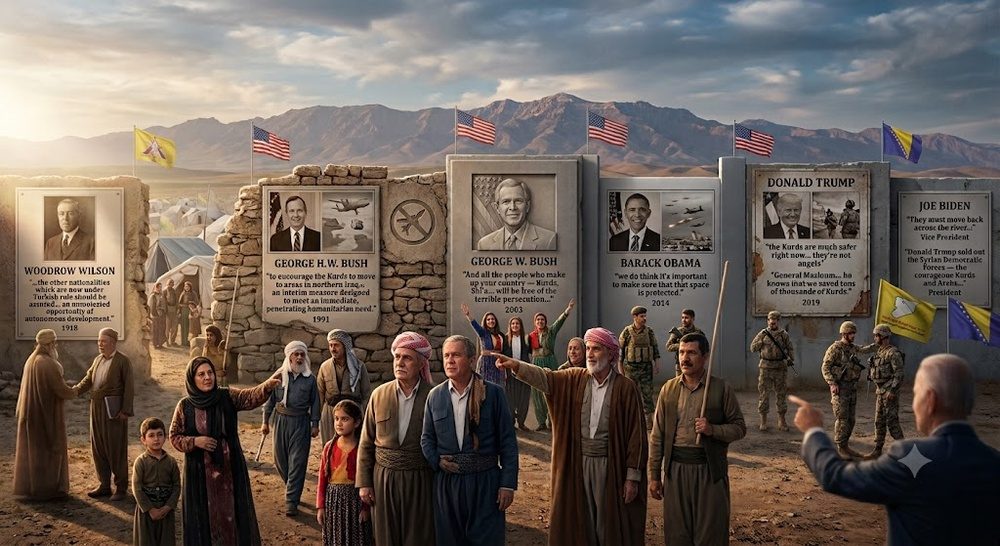
The Gradual Decline of Kurdish Power in Iraq and Syria
According to KurdPress, the Kurds have been at an unprecedented point in terms of political, territorial and military influence over the past decade, but recent developments in Syria and Iraq show that a significant part of those achievements are being lost. This trend has been, above all, the result of the change in calculations of Western powers, the return of central governments and the weakness in the political exploitation of the opportunities that have arisen.In an article, Middle East analyst John Spier sees the dissolution of the Syrian Democratic Forces on August 25 and the end of the autonomous administration in northern and eastern Syria as the latest step in a process that has significantly weakened the Kurdish position in the region in recent years.
According to Spier, about a decade ago, Kurdish forces in Iraq and Syria reached one of their most significant points of power in modern history. The territory controlled by the Kurdish forces, although divided between rival factions, stretched from the Iraqi-Iranian border to Afrin in northern Syria, only about 65 kilometers from the Mediterranean coast.
This sphere of influence was divided between three main factions: the Kurdistan Workers' Party and its affiliates in Syria, the Kurdistan Democratic Party of Iraq led by the Barzani family in the western part of the Kurdistan Region, and the Patriotic Union of Kurdistan led by the Talabani family in the eastern part of the region.Despite deep divisions among these movements, they dominated territories that had important oil resources, fertile agricultural lands, and vital water resources.
Spier believes that the rise of the Kurds during this period was more than anything the result of the collapse or retreat of the authority of central governments in large parts of Syria and Iraq. The power vacuum created after the civil wars and the spread of ISIS paved the way for the rise of military forces based on ethnic, religious, and tribal identities.
Meanwhile, the Kurdish forces gained special importance for Western countries because, on the one hand, they had an organized structure and significant military capabilities, and on the other hand, they were considered an effective ally for the United States and other Western countries in the fight against ISIS.The YPG was the mainstay of the ground forces in the US-led coalition’s operation against ISIS in Syria, and in northern Iraq, the Kurdistan Region became one of the most important areas of stability amid the turmoil in the region.
The peak of this trend can be seen in 2016 and 2017; but after that, a series of domestic political mistakes by the Kurds and changing regional conditions caused their rise to power to be reversed.
One of the most important turning points was the holding of the independence referendum of the Iraqi Kurdistan Region in September 2017. In this referendum, 92% of voters supported independence, but according to Spier, the leadership of the Kurdistan Democratic Party of Iraq had failed to provide the diplomatic support and military readiness necessary to turn the vote result into a practical process of independence.The United States and regional countries also did not provide practical support for the formation of an independent Kurdish entity, and only Israel provided political support for the idea of Kurdish independence, without making a practical commitment to defend it.
Inside the region, Kurdish political and military forces were also not united. Disagreements within the Patriotic Union of Kurdistan and its hesitation regarding the timing of the referendum were one of the important factors that weakened the Kurds’ position vis-à-vis Baghdad.
Finally, the Iraqi army and its armed groups launched their operations against the disputed areas in October 2017. The Kurds managed to prevent a complete collapse, but they lost about 40 percent of the areas under their control, including Kirkuk.
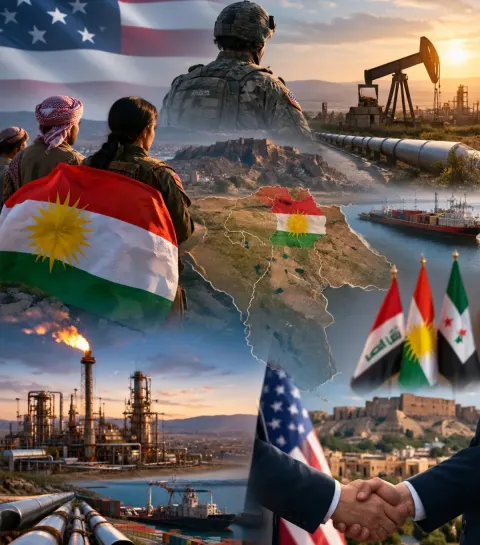
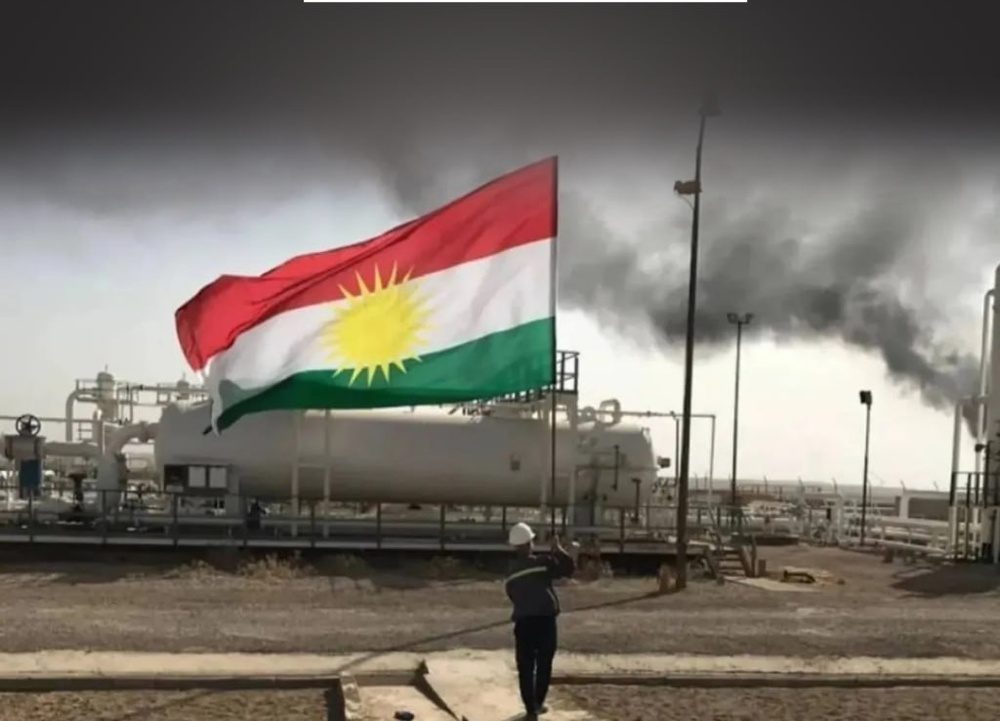
This defeat was not just a military setback; its economic consequences were also heavy for the Kurdistan Region.In February 2022, the Iraqi Federal Court declared the Kurdistan Region’s independent oil exports illegal, emphasizing that the authority to conclude oil export contracts rests with the central government in Baghdad. The suspension of the region’s oil exports has since turned into a protracted crisis, significantly reducing the region’s and even Iraq’s revenues.
An agreement reached in September 2025 to resume oil exports averted a major financial crisis for the region, but came at the cost of reducing some of its economic independence. Under the agreement, oil produced in the region’s fields will be placed at the disposal of the Iraqi state oil marketing organization, SOMO, and the region will no longer claim to independently sell its oil.
According to the analyst, the pressures on the region are not only economic.The reduction or end of US security support for the Peshmerga forces could deal another blow to the region’s position, especially as the region has been the target of drone and missile attacks in recent months.
In Syria, the Kurdish retreat has been even more rapid.
According to Spier, the US decision to support the new government in Damascus effectively changed the fate of the Kurdish autonomous structure in northern and eastern Syria. The SDF tried to defend its gains as much as possible, but Damascus’ military offensive in January and political pressure pushed them back to the main Kurdish areas in northeastern Syria.
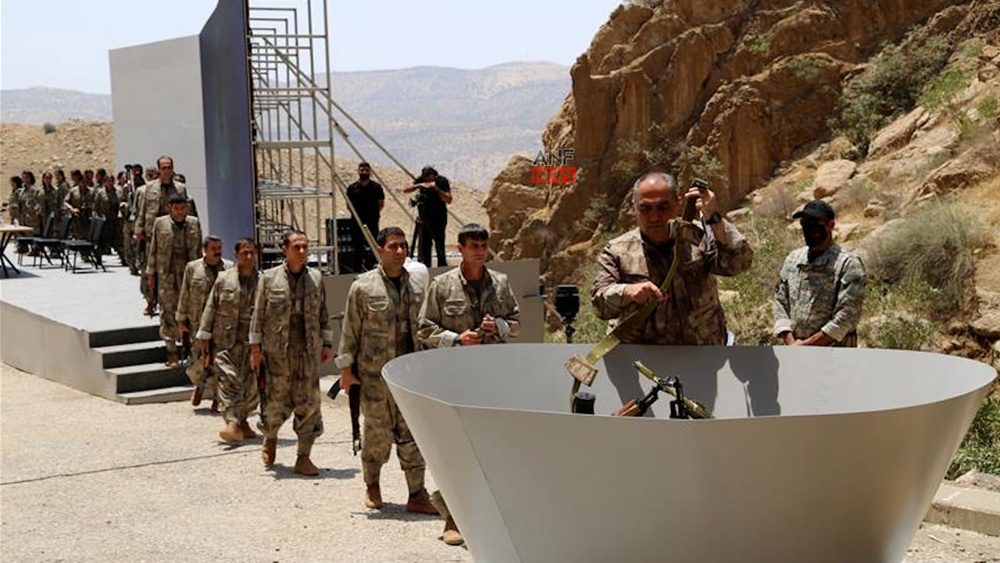
Finally, the SDF was disbanded on August 25, and the process of integrating its military forces and political structures into the central government in Damascus began.
This development does not mean a complete return to the conditions of the Syrian Kurds under Bashar al-Assad.Under the new agreements, Kurdish will be taught in schools, and Kurds without Syrian citizenship will also be able to obtain citizenship.
But the difference between the positions of Kurdish leaders in the past and today is striking. Mazloum Abdi, who once had de facto influence over about 30 percent of Syrian territory, is now an advisor to the Syrian president. Ilham Ahmed has also left the leadership structure of the autonomous administration and is set to serve as an appointed member of the Damascus parliament.
In Spier’s view, the main reason for this retreat cannot be found solely in the political mistakes of the Kurds. The change in policy of Western countries has also played a decisive role.During the Syrian civil war and the collapse of the Iraqi central government, Western countries relied on Kurdish forces as their effective partners; but now, with the ISIS threat decreasing and the desire for stability increasing, they have moved towards supporting the central governments in Baghdad and Damascus.
In such circumstances, the Kurds no longer have the same strategic importance from the perspective of Western powers as they did during the war with ISIS.
Spier evaluates this change in approach as a kind of political gamble by the West and believes that the United States supports the structure led by Ahmed al-Sharaa in Syria and the coalition of Shiite forces known as the Coordination Framework in Iraq; forces that, in his opinion, are not necessarily aligned with the traditional interests of the West.
However, the most important message of this development for the Kurds may not be only the loss of some territory or political authority, but rather a change in their position in the calculations of the great powers.During the collapse of the central governments, the Kurds were able to become a major player by relying on military organization, territorial control, and cooperation with the West. But with the restoration of the power of the central governments in Syria and Iraq, the very conditions that provided them with the opportunity to gain power are now working in the opposite direction.
Spier concludes by warning that if the current US and Western strategy in Syria and Iraq fails, they may once again need to cooperate with the Kurds. But whether the Kurds can seize such an opportunity at that time will depend largely on their ability to reduce internal divisions, build effective political institutions, and learn from past experiences.
User comments