
Unveiling of the Kurdistan Region's Comprehensive Roadmap until 2048 with the Aim of Containing the Water Crisis
According to KurdPress, the Iraqi Kurdistan Regional Government authorities, based on a 24-year plan, intend to drastically reduce the share of well exploitation by constructing new projects and relying on surface water and prevent the erosion and drying of groundwater resources.
According to Al-Sabah, "Ari Ahmad", the Director General of Water and Sewage of the Kurdistan Region, stated: The regional government has developed a 24-year national roadmap until 2048, the main goal of which is to achieve sustainable security and increase the share of reliance on surface water resources by 75 percent in order to stop the process of reducing and eroding wells and groundwater aquifers.He pointed out that the Kurdistan Region currently relies on 5,810 wells to supply drinking water, adding: “The new policy is to gradually phase out reliance on these wells and provide the possibility of recharging underground layers to ensure the sustainability of resources.”
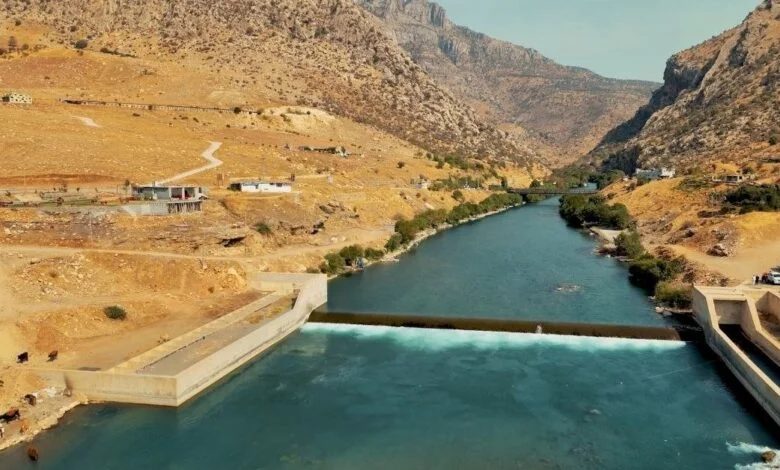
He noted: “This plan focuses on optimizing and maximizing the use of the Tigris, Greater Zab, Lesser Zab, Khabur, and Sirvan rivers.”
The Director General of Water of the Kurdistan Region stated: “Currently, 25 strategic projects for the production and distribution of drinking water are active in the region, with a daily production capacity of 3,678,563 cubic meters, equivalent to 153,000 cubic meters per hour.”He noted: In the new plan, by 2048, it is targeted to increase the production of drinking water by 2 million 100 thousand cubic meters per day, which will be achieved by constructing 26 new strategic projects in different cities and counties, all of which will rely solely on surface water. With the implementation of these projects, the number of people covered by the water supply network will reach 11 million 660 thousand people.
He finally noted that the most key environmental impact of this strategy is saving groundwater aquifers from complete destruction, as it increases the level of reliance on surface water to 75 percent and reduces the share of using wells and underground resources by 25 percent.








User comments