
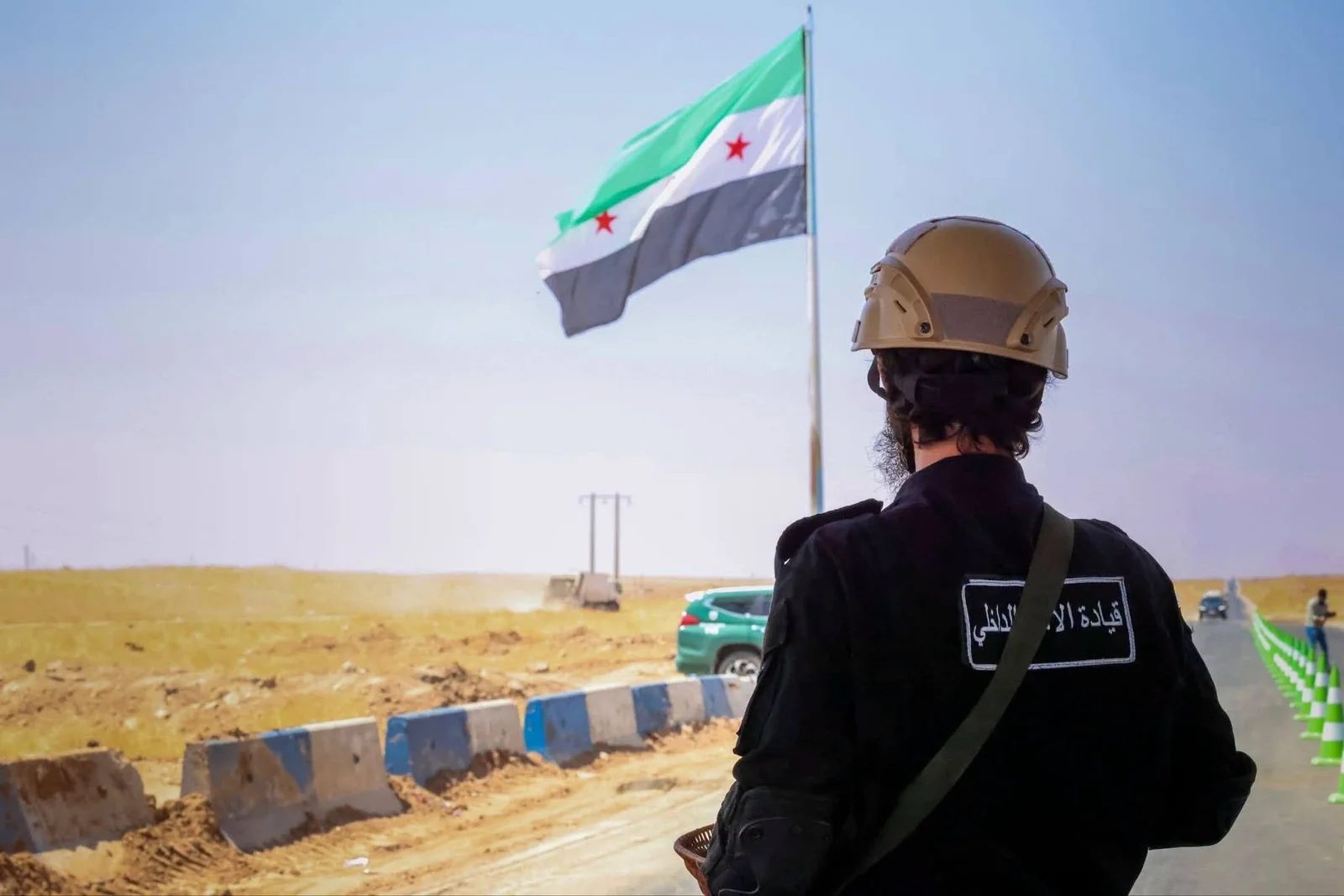
Damascus's Rise to Full Control of Kurdish Areas in Syria
According to KurdPress, the entry of the Syrian government's Ministry of Interior and Defense forces into the city of Hasakah is a sign that the merger agreement between the Syrian Democratic Forces (SDF) and Damascus has entered a new phase; a phase in which the Syrian government's control is transferred from a legal and nominal level to practical and security control of the Kurdish areas in northeastern Syria.
According to a report by National Context, over the past two days, a significant number of forces affiliated with the Syrian Ministry of Interior and Defense have entered Hasakah to take responsibility for the city's security affairs within the framework of the merger agreement.These forces include around 100 military police and 300-350 special mission units deployed in the northwestern, eastern and northeastern parts of the city.
The deployment of the special mission units is of particular importance, as these forces are organized to respond quickly to security crises, serious unrest, hostage-taking and sudden threats. Therefore, their presence can be considered one of the first operational stages in the gradual transfer of responsibility for security in Hasakah to the central government.
In the next stage, police forces, road security, military police and other security agencies of the Ministry of Interior are to enter the city. The SDF-affiliated Asayesh forces will also be absorbed into the new security structure, but the decisive point is that the command of these forces will be in the hands of Damascus.Thus, the integration of Kurdish forces does not mean that they will retain independent control over areas formerly under SDF influence.
The developments regarding security appointments in Hasakah province confirm the same trend. The three key security positions in the province have been filled by individuals appointed by Damascus, none of whom were nominated by the SDF.
Marwan al-Ali has been appointed as the provincial head of internal security, responsible for coordinating the presence of the Ministry of Interior, the civilian police, public security, criminal operations, and checkpoints. Imad Fawaz al-Ayyash has also been appointed as the head of the military police, the body responsible for enforcing military law, maintaining discipline in the armed forces, and investigating military misconduct.
The significance of this appointment is made clearer when one considers that the three brigades stationed in Hasakah province are largely composed of former SDF forces.However, their disciplinary and legal control will be in the hands of the military police under Damascus’ command; therefore, these forces cannot act independently.
The third position, the Directorate of Military Security, has been assigned to Thaer Obeid al-Balal. This body will be responsible for protecting military facilities, security monitoring, force assessment, and counterintelligence tasks. Overall, the appointment of these three positions shows that the main issue in the integration process is not simply the composition of the forces, but the transfer of the chain of command.
Meanwhile, the first meeting of the Hasakah Provincial Executive Office has also been held. In terms of composition, this office has a significant presence of SDF-linked figures, but its role is mainly civilian.In the new structure, Damascus seems to have given more space to the presence of forces close to the SDF in civilian areas, while placing the institutions of power and security control directly under its control.
This pattern could also be extended to Qamishlo, Dirak, Remilan and the Samalka border crossing in the coming weeks. Remilan in particular, due to the presence of oil fields, and Samalka due to its border and commercial importance, are considered important areas for the next stage of integration.
Samalka has already been administratively subordinated to the central government structure, but its security sector is still mainly in the hands of former SDF forces and forces associated with the autonomous administration. Damascus is expected to enter these areas in the next stage and integrate some of the comfort forces and the SDF into a joint security structure.Such a structure would, even with a large Kurdish presence, break their former security monopoly.
Qamishlo, however, remains the most complex part of the process, and there appears to be no final agreement yet on how to deploy government security forces there. However, the pattern emerging in Hasakah suggests that the most likely option is a combined security force of the merged Asayish and Damascus-affiliated forces, under central government command.
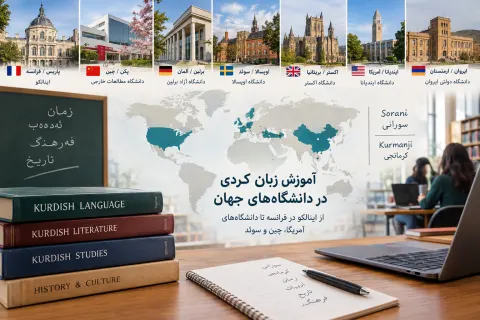
At the same time, developments in the areas of education and language suggest that the privileges granted to the Kurds are more limited than some initial reports suggested. Kurdish is recognized as a national language, but the official language of instruction will remain Arabic.Kurdish students will have three Kurdish language lessons and one activity session per week, and for only one year, they will be able to take some social studies courses, such as history, geography, and philosophy, in Kurdish or Arabic. Therefore, contrary to some initial reports, Kurdish has not become the official language of education in the Kurdish regions.
All these developments indicate that the Damascus-SDF agreement has entered a phase that can be called “transition from nominal to practical integration.” Damascus is creating a structure in which some former SDF forces may still be present in military and security institutions, but ultimate authority over command, security control, military discipline, borders, and strategic infrastructure will gradually be transferred to the central government.
From this perspective, the change in the situation in Hasakah is not just a transfer of forces; it is part of a broader process of returning central government authority to the Kurdish regions of Syria.If the same pattern is followed in Qamishlo, Dirak, Rmilan, and Samalka, Damascus will effectively assume security control over the entire area formerly controlled by the SDF, while Kurdish forces and figures will remain largely in the role of integrated forces and civilian administrators.
In other words, what is happening now in Hasakah could represent the ultimate pattern for the new order in northeastern Syria: “Kurdish presence in the structure, but command in the hands of Damascus.”

User comments