
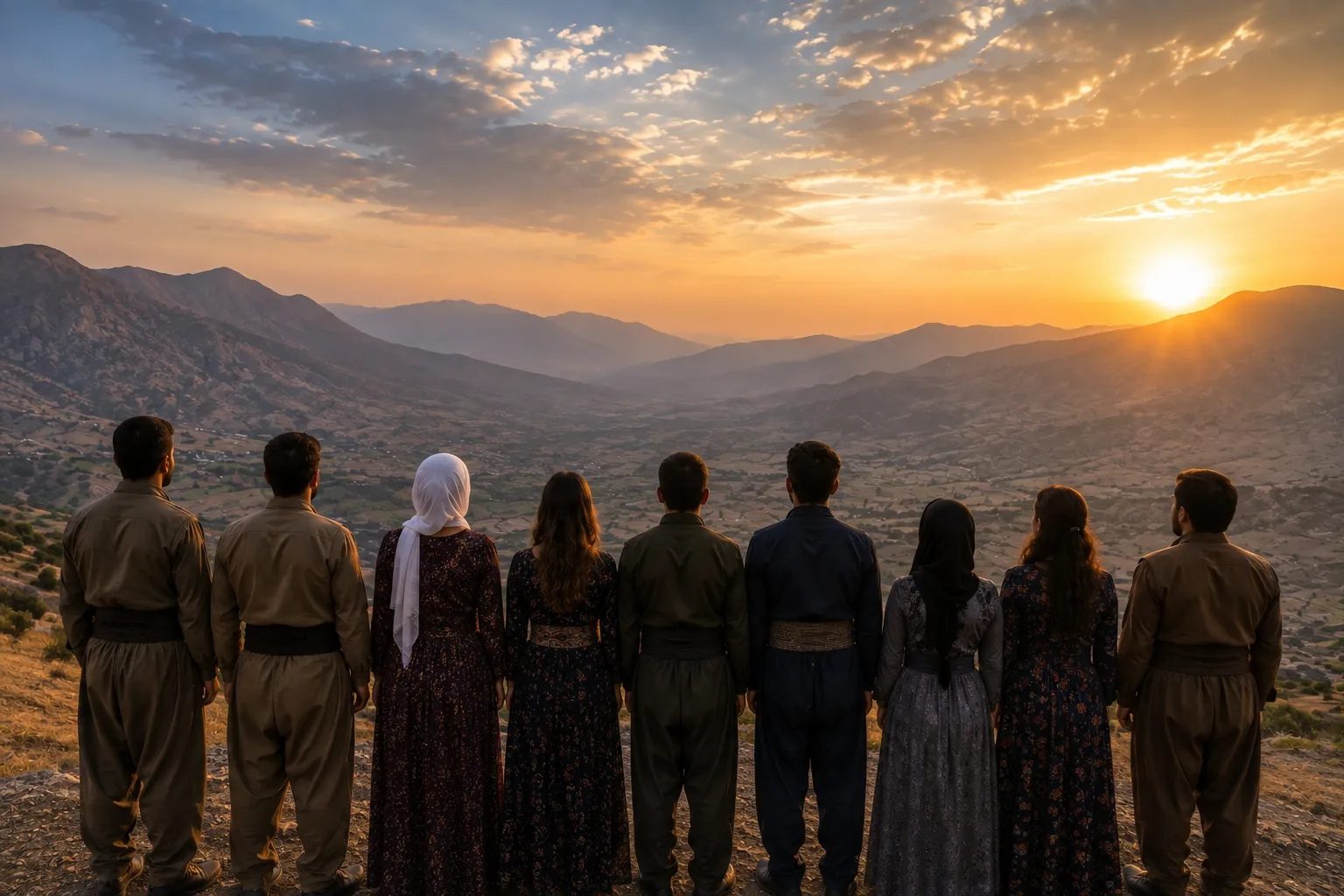
Who is a Kurd?
According to KurdPress, the question "Who is a Kurd?" seems simple on the surface, but in Kurdish politics and thought it is a complex and even dangerous question, because any simple answer can ignore the multi-layered reality of Kurdish society. A Kurd can be defined based on language, culture, history, geography, political experience, or personal identification, but none of these criteria alone can present a uniform and homogeneous picture of the Kurds.Kurds live in different countries, speak different dialects and languages, have different historical and political experiences, and are not unified in terms of religion, ideology, class, and generation. There are serious differences of opinion among them even about concepts such as state, border, sovereignty, and the meaning of “Kurdistan.” Therefore, “Kurd” is more than a unified political subject; it represents a vast and diverse historical community.
From here, the issue of “unity” becomes important. Unity has often become an almost sacred value in Kurdish political literature; in such a way that disagreement is sometimes considered a sign of weakness and division, sometimes a form of betrayal. But the fundamental question is: unity over what and against whom?
Cultural and historical solidarity can be an important asset, but transforming this solidarity into political, ideological, or organizational unity is a completely different matter.In his famous 1882 speech “What is a Nation?” Ernest Renan argued that a nation cannot be defined solely on the basis of race, language, religion, or geography. For him, a nation is based on a shared historical memory and a continuous consent to live together; what he called a “daily plebiscite” on the continued existence of a nation.
This view sees the nation not as a natural and unchanging reality but as a political and ongoing project. But this view reveals an important contradiction: if national belonging is based on consent, no nation can have an absolute and unlimited right to impose unity on those who do not accept such unity.
In fact, no society is completely unified.France is divided along regional, class, and ideological lines; Britain is home to a variety of national identities; and Spain continues to see competing national projects. Even established states have deep disagreements about the meaning of belonging, identity, and their political future.
National unity is thus more than a status quo; it is an ideal and sometimes an instrument of power. Through constitutions, educational systems, armies, borders, symbols, political institutions, and historical narratives, states produce a particular kind of unity, while simultaneously determining who is included and who is excluded.Here is where a fundamental question about the Kurds arises: why should a people who have experienced more than a century of forced assimilation reproduce the same political imagination within themselves?
Unlike many existing national units, the Kurds are scattered across different countries. As a result, Kurdish communities have developed different political cultures under the influence of different political structures. Kurdish nationalism has also failed to create a single political center similar to the institutions of established nation-states.
From this perspective, the Kurdish political arena is inherently pluralistic. Different parties compete with each other, governments and parties in different regions have different interests, and Kurdish society is also affected by ideological, religious, linguistic, tribal, and generational divisions. The slogan “national unity” cannot eliminate these realities.In this context, Abdullah Öcalan’s intellectual evolution also challenges the traditional understanding of nationalism. In the process of his political thought evolution, he made a greater distinction between the nation and the state and did not necessarily seek the liberation of the Kurds in the establishment of a Kurdish nation-state.
The concept of the democratic nation in his thought attempts to imagine a kind of political and collective organization that does not require ethnic homogeneity or the formation of an independent state. In such a framework, a society can be culturally and politically organized without becoming a centralized and homogeneous structure.
“Democratic confederalism” and “democratic self-government” have also been proposed in the same framework as forms of organizing coexistence, not simply reproducing the centralized nation-state.
However, this approach faces an important contradiction.The concept of a “democratic nation” continues to use the word “nation” while attempting to shed some of its traditional, state-centric meaning. The question is, therefore, whether such an approach truly transcends nationalism or merely redefines it in a new form?
The answer to this question lies not in the words but in the institutions. The key issue is whether a political structure can truly guarantee diversity, political dissent, and social autonomy.
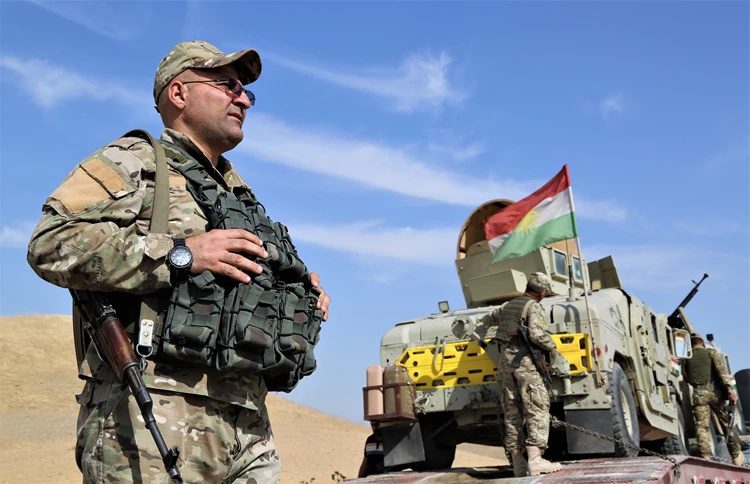
The recent developments in Syria are an important test of this. On August 25, 2026, the Syrian Democratic Forces announced that they would end their independent military activities and integrate into the Syrian National Army. This development followed agreements between the Syrian Democratic Forces and the Syrian Transitional Government in Damascus.These agreements, supported by Ankara, have been presented by the parties as a step towards restoring Syrian unity.
But “Syrian unity” can have two very different meanings.
In the first sense, unity means creating a democratic political framework in which Kurds, Arabs, Assyrians, Armenians, Druze and other groups are equal citizens while retaining meaningful cultural and political rights.
In the second sense, unity can mean restoring centralized state authority over territory, security and political institutions; a situation in which ethnic and political differences are accepted only to the extent determined by the political center in Damascus.
In the first case, we are talking about “integration”; in the second, there is a danger that assimilation will take place under the guise of integration.
From this perspective, the main issue for the Kurds is no longer whether they are “united” or not.The more important question is whether they can have a meaningful political existence without becoming a small nation-state. If the integration of Kurdish forces into the Syrian state structure leads to equal citizenship, recognition of Kurdish cultural rights, guaranteed political rights, and genuine participation of local communities, this process could be a democratic transformation. But if it simply results in the transfer of Kurdish armed forces to a centralized army and the weakening of self-governing institutions and political pluralism, the concept of “unity” will effectively mean the concentration of power.
This is not limited to Syria. In today’s Middle East, many states and international actors place greater emphasis than ever on territorial integrity, the sovereignty of the central government, and the preservation of existing borders. As a result, while diversity in political discourse is praised, the prevailing political and international structures still largely favor the concentration of power.From this perspective, the main challenge of the Kurdish political scene may not be to achieve “national unity” in the traditional sense; rather, it is to create a kind of political solidarity that can tolerate difference.
Kurdish unity may not mean a single party, an ideology, or a single state. It may be based on a set of shared commitments to democratic rights, cultural survival, political pluralism, and mutual recognition of Kurdish communities.
Ultimately, perhaps the right question is no longer “How can Kurds become one?” but rather “How can Kurds remain politically connected without becoming politically identical?”
This shift in question shifts the Kurdish discourse from a search for unity and homogeneity to democracy, pluralism, and the politics of coexistence.And perhaps the answer to the initial question lies here: a Kurd is not someone who necessarily fits into a single political paradigm; a Kurd can be a member of a historically and culturally diverse community that has the right to disagree about the shape, boundaries, and future of its political belonging.
Amarji Magazine
Author: Sivan Saeed, the author of this article, is an associate professor of regional studies at Shaanxi Normal University in China and a lecturer at the University of Rojava in Syria. He completed his bachelor’s degree in sociology and his master’s degree in social policy at the University of Wolverhampton in the United Kingdom, and received his doctorate in Middle East politics from the University of Exeter in 2015.Sivan Saeed has taught and lectured at various domestic and international universities since 2015 and has published numerous articles and research on social and political issues in the Middle East and beyond in six languages.
User comments