
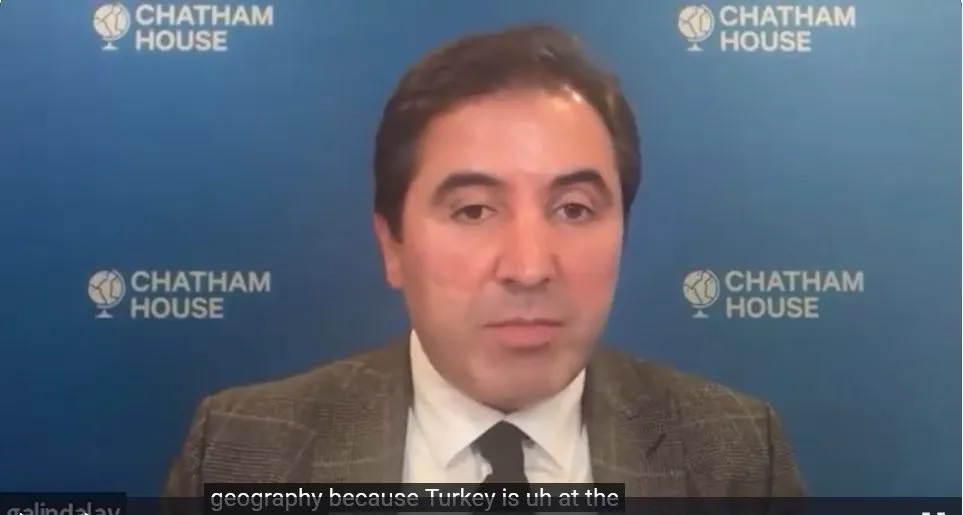
The consequences of the peace process with the PKK go beyond Turkey's borders
According to KurdPress, Galip Dalay, a senior researcher at the Chatham House Institute, considered Turkey's peace process with the Kurdistan Workers' Party (PKK) one of the few positive developments in the turbulent Middle East, and emphasized that the consequences of this process will affect developments in Syria, relations between Ankara and Baghdad, and the security equations of the region beyond Turkey's borders.
In an interview with New Region, Galip Dalay examined the consequences of the peace process with the PKK and its impact on Turkey's regional policy.
Referring to the ongoing wars and crises in the Middle East, Dalay said that the peace process with the PKKHe described the PKK as one of the few promising developments in the region, saying: “This process is probably one of the few bright spots in a region defined by war, conflict and destruction.”
According to the researcher, the importance of the peace process is not limited to Turkey’s domestic issues, but also affects developments in Syria, Turkey-Iraq relations and the behavior of Kurdish armed groups in the region. He also considered the reduction of tensions related to the Kurdish issue as one of the factors that could pave the way for a change in Turkey’s security relations with its neighbors.
Dalai also linked Turkey’s recent decision to withdraw from the Bashiqa military base in northern Iraq to the peace process with the PKK, saying that if the PKK is disbanded and its affiliated groups are integrated into the security structures of neighboring countries, some of the reasons for Turkey’s military presence in these countries will disappear.
He stated in this regard: “If the PKK is to be"If the PKK disbands and its affiliated groups are integrated into the national security structures of neighboring countries, the pretexts for the existence of these military bases will become less important in the first place."
This assessment shows that, from Dalai's perspective, the progress of the peace process could also affect Ankara's security calculations in Iraq and pave the way for a review of some of Turkey's military presence outside the country's borders.
Galip Dalai also linked Turkey's peace process with the PKK to developments in Syria, a country that has entered a new phase of political and security restructuring after the fall of Bashar al-Assad's regime. In his opinion, resolving the PKK issue could affect developments in Syria and Turkey's relations with the country's Kurdish forces.
At the same time, he considered the differences in Turkey and Israel's views on the future of Syria to be one of the important axes of regional competition.According to Dalai, Ankara wants a stable, centralized, and militarily capable Syria, while Israel prefers a weak, fragmented Syria lacking an effective air defense system.
This difference in perspective could affect Turkey’s calculations about the future of Syria’s political and security structure and the place of Kurdish forces in it, especially since Ankara considers the issue of the PKK and its affiliated groups to be part of its security considerations in Syria.
Overall, he considered the peace process with the PKK a factor that could reduce the intensity of some security tensions in the region and pave the way for a change in Turkey’s relations with its neighbors.
From the researcher’s perspective, recent developments show that resolving the Kurdish issue in Turkey is not merely an internal issue, but could also affect Ankara’s relations with Baghdad, the future of Syria, and the security balance of the Middle East.However, the realization of these outcomes will depend on the progress of the peace process, the fate of the PKK's dissolution, and how its associated groups are integrated into the security structures of the countries in the region.


User comments