
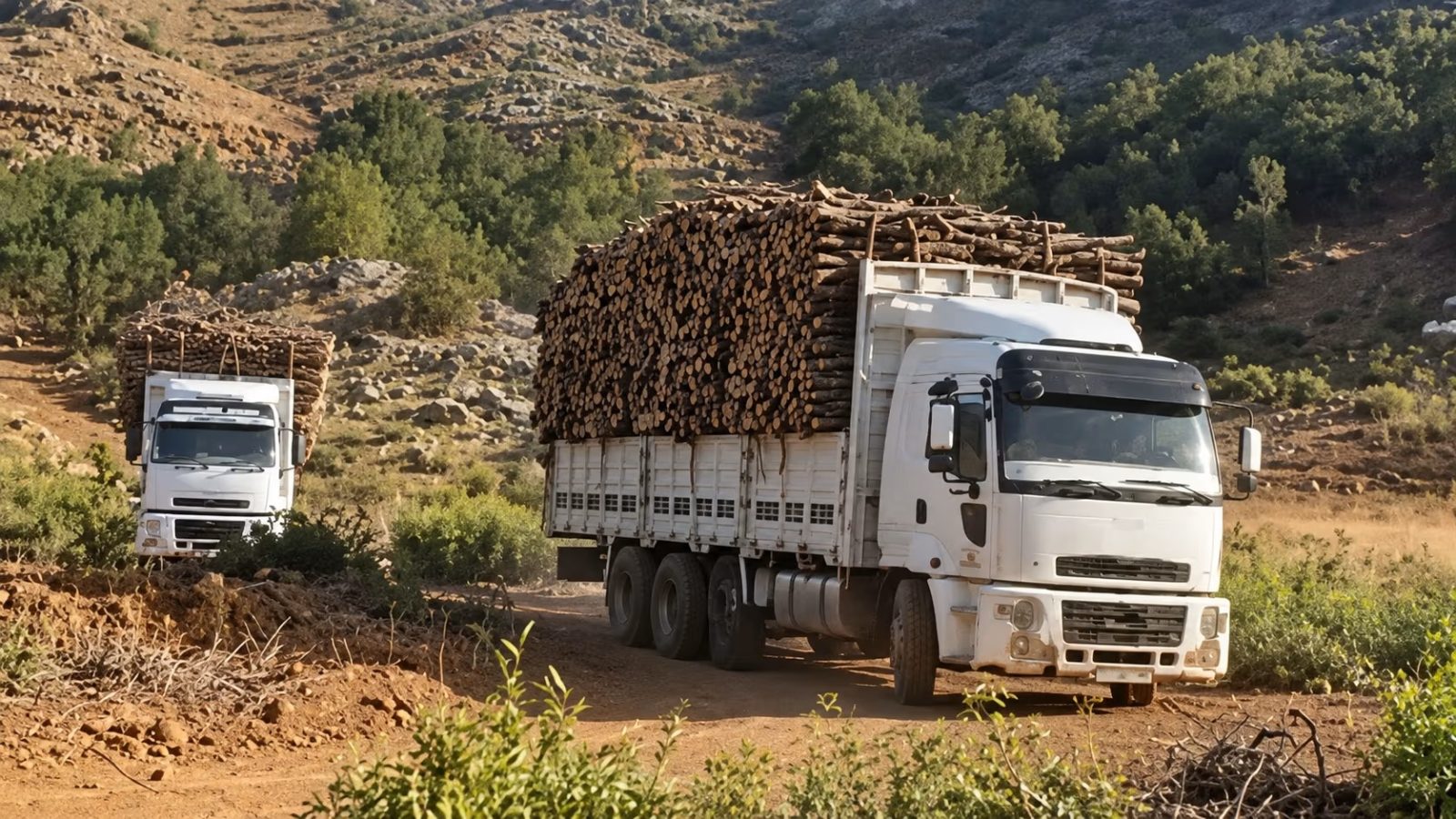
Expansion of Turkish bases in the Kurdistan Region at the cost of destroying forests
According to KurdPress, natural forests in the mountainous areas of Badinan in the Kurdistan Region of Iraq have once again been targeted for widespread deforestation. In recent days, numerous other reports have been published about widespread deforestation in the dense forests of the northern Kurdistan Region of Iraq.Turkey justifies these actions as part of a military operation against the Kurdistan Workers’ Party, but Khaled Suleiman, a writer for the magazine Amaraghi, believes that the destruction of forests, in addition to environmental damage, leads to the displacement of local residents and the loss of their livelihoods.
According to the report, the Turkish army has advanced 40 kilometers into Iraqi territory and has established more than 100 military bases in these areas. To connect these bases, Turkish forces have built about 660 kilometers of military roads in the heart of the mountainous forests.
Bakhtiar Zebari, a journalist and environmental researcher from Dohuk province, attributes the start of organized tree felling in these areas to 2013. According to his estimate, about three million trees were cut down or uprooted between 2020 and 2023 alone.The Turkish military claims that the dense forest cover makes it difficult for its troops to see and operate against the PKK. However, according to Suleiman, this policy has turned parts of the region’s rich ecosystems into militarized zones and wastelands. He also writes that the PKK has stopped logging and forest exploitation in areas where it is present.
In 2021, Fahim Abdullah, the head of the Dohuk Provincial Council, warned about the scale of logging in militarized areas. The Iraqi and Kurdistan Regional Government’s agriculture ministries also condemned the measures in a joint response, calling them an attack on the environment and forests of Kurdistan.The transfer of felled wood to Turkey also has a long history, according to Suleiman.Local reports indicate that since 2018, the Turkish military has established three main routes into Iraq to transport military equipment, which are also used to remove timber and transport it to Turkish markets. Chiya Sharif, a member of the Kurdistan Regional Government’s parliament, said that some local merchants, encouraged by Turkish military officials, were buying up the felled timber and transporting it across the border.
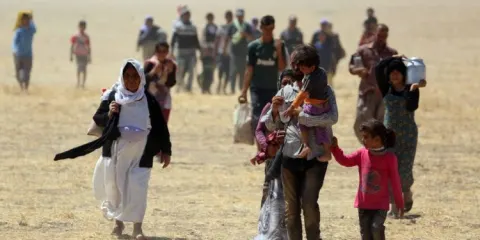
The consequences of this process are not limited to deforestation. Thousands of residents of mountain villages have fled their homes and farmlands. Life in these areas depends on oak forests, groundwater resources, terraced agriculture and livestock, and the destruction of these resources has made it difficult for many families to continue their lives.
Suleiman emphasizes that this pattern of deforestation is not limited to Iraqi Kurdistan.Hüseyin Keçmaz, a former Turkish MP from the Peoples’ Democratic Party, reported in 2021 that extensive logging was taking place in the Cüdi Mountains. He wrote on social media that Turkish companies, with the support of military forces and village guards, were harvesting around 400 tons of wood from the mountains every day.
According to the report’s author, deforestation in Kurdish areas, in addition to destroying the environment, also threatens the agricultural and livestock traditions, livelihoods and cultural heritage of rural communities. As natural resources are depleted, these communities’ ability to meet their needs decreases, and migration becomes an inevitable option.
Süleyman points to the experience of Haiti to illustrate the long-term consequences of deforestation.After gaining independence from France in 1804, the country was forced to pay a heavy indemnity to its former colonizer and resorted to extensive logging and timber exports to finance the costs. According to him, Haiti’s forest cover, which once covered a large part of the country’s territory, has now fallen to less than two percent, a situation that, among other factors, has exacerbated the country’s economic problems and persistent poverty.
The author warns that the destruction of forests in Kurdistan could have similar long-term consequences. The loss of natural resources prevents rural communities from becoming self-sufficient and paves the way for migration and demographic change in the region. As a result, what is happening in the mountains of Iraqi Kurdistan is not just logging, but a threat to the environment and the economic and cultural foundations of the lives of the indigenous people.





User comments