
Threats and Opportunities of the US Withdrawal from Iraq for the Kurds
According to Kurdpress, the withdrawal of American forces from the Erbil air base, while reducing the possibility of the Kurdistan Region of Iraq being targeted in conflicts related to Washington and Tehran, has challenged the region's defense capabilities against drone and missile attacks.The Conversation magazine emphasized in a report that the future of Kurdish security depends on Baghdad's ability to control armed groups and protect Iraqi airspace, as well as expanding the Kurdistan Region's cooperation with the United States in the economic and diplomatic fields.
According to the Conversation magazine, the withdrawal of the last American troops from the Erbil air base on September 30, 2026, does not simply mean the end of the US military presence at the base, but has also changed the security equations of the Iraqi Kurdistan Region.
The presence of American forces over the past years has provided military support and a level of protection against drone and missile attacks, on the one hand, and on the other, it has made the Kurdistan Region one of the points of conflict in the broader US confrontation with Iran.Therefore, the US withdrawal has created a dual situation; the Kurdistan Region may be less exposed to attacks aimed at putting pressure on Washington by reducing the US military presence, but at the same time it will lose some of its defense capabilities to counter other threats.
According to the report, the Iraqi Kurdistan Region, a federal and semi-autonomous region with a population of about 6.5 million, has long faced security challenges arising from internal Iraqi tensions and regional rivalries, and Iraqi armed groups have also targeted political, security and economic targets in the region in recent years.
The holding of the Kurdistan Region’s independence referendum in 2017 and the support of 92.73% of participants for independence intensified tensions between Erbil and Baghdad.After the failure of this effort, the Peshmerga forces lost parts of the disputed areas and allied armed groups gained access to closer positions around the Kurdistan Region. Some of these areas later became the launch pads for attacks on Kurdish targets.
Energy infrastructure, including oil fields, refineries, and gas facilities, have been among the targets of these attacks. Kurdistan Regional Government officials have also repeatedly accused the Iraqi federal government of failing to prevent these attacks.
The author of the report believes that the US-Iran war has added to these insecurities; although Kurdistan Regional Government officials have repeatedly stated that they do not intend to enter the conflict. Since the war began on February 28, 2026, according to statistics cited in the report, more than a thousand drones and missiles have targeted the Kurdistan Region.The withdrawal of American forces could remove one of the incentives for attacking the Kurdistan Region, namely the pressure on the US military presence, but Iraq’s internal political and security disputes and threats from armed groups remain.
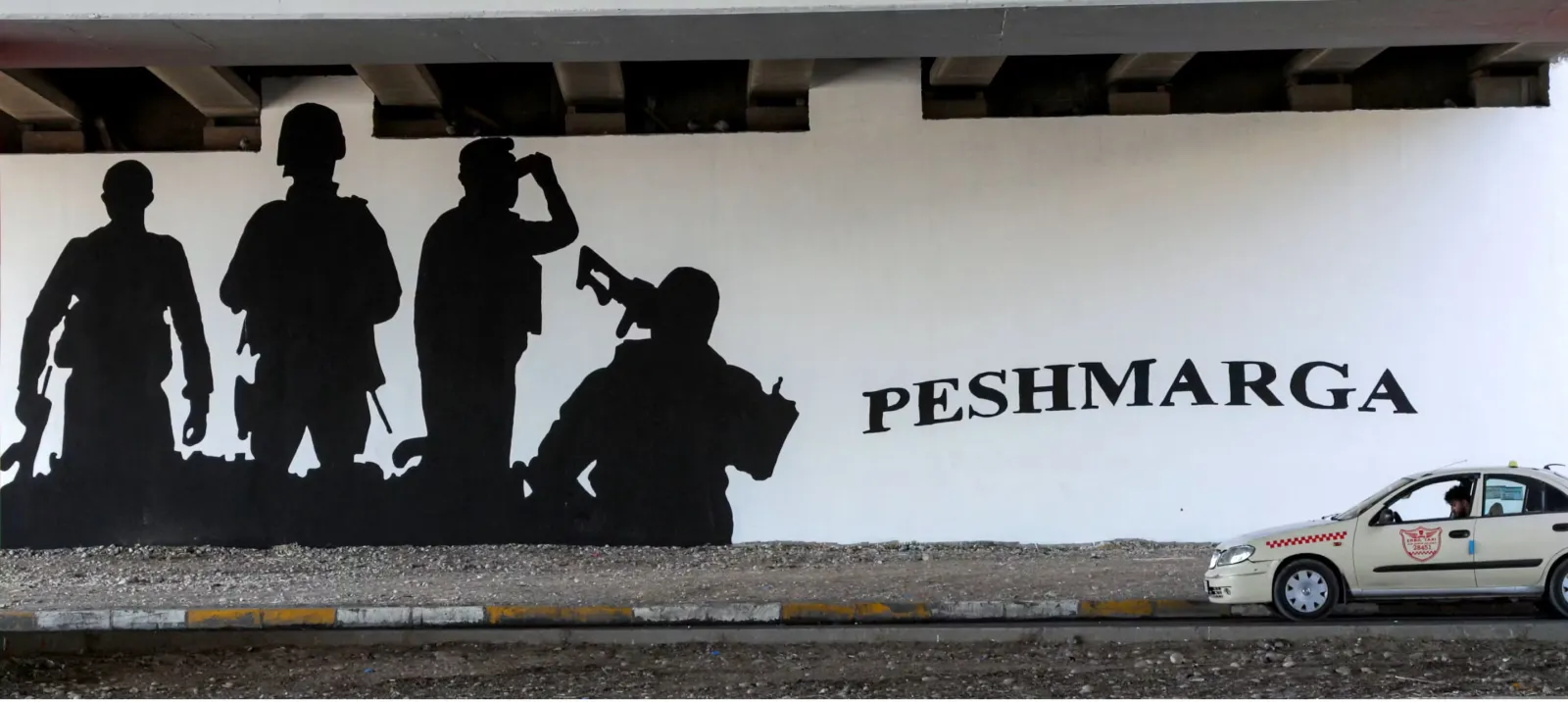
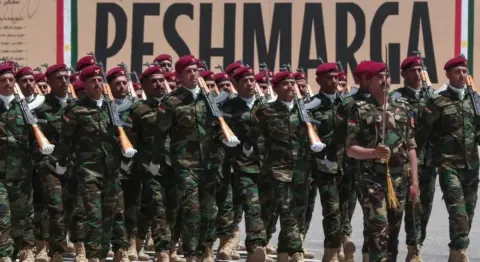
Another important development that coincided with the US withdrawal was the announcement of the completion of the process of integrating the Peshmerga forces under the command structure of the Kurdistan Regional Government. These forces had been affiliated with the two main parties in Iraqi Kurdistan, the Kurdistan Democratic Party and the Patriotic Union of Kurdistan. The integration of the Peshmerga, which was pursued with the support of the US and the international coalition, is an important step in reforming the region’s security structure.
However, the author emphasizes that the integration of ground forces alone cannot compensate for the air defense gap.The Peshmerga have extensive experience in ground combat and have played a significant role in the fight against ISIS, but countering missiles and drones requires systems and capabilities that the Kurdistan Region does not have on its own.
Masrour Barzani, the Prime Minister of the Kurdistan Region, has also emphasized the need to strengthen military capabilities, acquire advanced weapons, and establish air defense systems. The Kurdistan Region’s Ministry of Peshmerga, citing the sensitivity of the security situation with the US withdrawal, has placed the responsibility for protecting Iraqi airspace on the federal government’s shoulders.
However, Iraq’s air defense system is not yet fully operational.Thus, the Kurdistan Region is in a situation where it is more dependent on Baghdad to protect its airspace than ever before, but the central government still does not have all the necessary capacities to deal with air threats.
According to the Conversation, this situation reveals the difference between formal sovereignty and the government’s real ability to exercise authority. Iraq has presented the withdrawal of foreign forces as a sign of the full return of security responsibility to domestic institutions, but Baghdad still does not have effective control over all the armed groups operating in the country.
The Iraqi government has also extended the deadline for disarming armed groups outside the government’s control from September 30, 2026 to June 30, 2027. The opposition of some powerful groups to accepting the set timetable has increased doubts about Baghdad’s ability to monopolize arms control.In such circumstances, the main issue for the Kurdistan Region is whether the federal government can protect Iraq’s territorial integrity and airspace, including against drone attacks.
The Conversation report goes on to look at the future of US-Kurdish relations and argues that the US military withdrawal does not necessarily mean the end of cooperation between the two sides. Relations between Washington and the Iraqi Kurds over the past few decades have been based largely on security cooperation, from the establishment of a no-fly zone after the 1991 Gulf War to cooperation in the fight against ISIS.
With the withdrawal of US forces from Erbil, the military basis of this relationship has changed, but there are other areas for continued cooperation. The opening of a new US consulate complex in Erbil in 2025 has provided a long-term basis for the development of diplomatic, economic, educational and trade relations.The United States is also an economic partner of the Kurdistan Region, and American companies operate in various parts of the region.
According to the author, expanding these relations could move cooperation between the two sides away from being solely dependent on the US military presence. For the Kurdistan Region, such an approach would mean reducing its dependence on changes in Washington’s military policy, and would allow the United States to maintain influence and cooperation with the Kurds without permanently deploying military forces.
The report emphasizes that the US withdrawal does not necessarily lead to a security vacuum, but rather changes the responsibility for managing existing threats. If the number of attacks on the Kurdistan Region decreases after the withdrawal of American forces, it can be concluded that the US military presence has been one of the main factors in exposing the region to attacks.But if the attacks continue, Kurdish officials’ concerns about the region’s declining defense capabilities and its security and economic consequences will only grow.
Ultimately, the future of the Kurdistan Region’s security will depend on several factors, including Baghdad’s ability to control armed groups and protect Iraqi airspace, strengthening the defensive capabilities of the Peshmerga forces, and expanding the Kurdistan Region’s economic and diplomatic relations with the United States.

User comments