
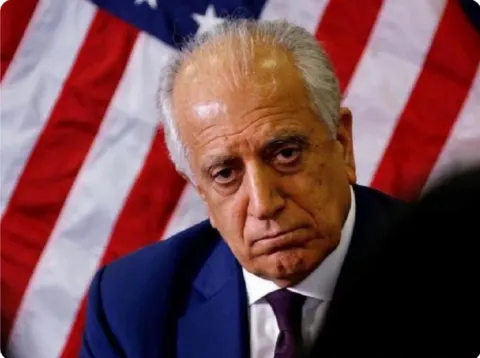
Baghdad and Erbil Must Agree on Implementing the Constitution to Avoid Conflict
According to KurdPress, Zalmay Khalilzad, in a statement referring to the short period of time since the withdrawal of American forces from Iraq, said that relations between the country's central government and the Kurdistan Region have entered a critical stage after the sweeping order of Iraqi Prime Minister Ali al-Zaidi to place border crossings under Kurdish control and oil fields located in disputed areas under the supervision of the federal government. Khalilzad said Iraq’s Federal Supreme Court quickly upheld the order, but the Kurdistan Regional Government (KRG) called the order an intervention beyond the central government’s authority and questioned the court’s legitimacy.
The former US ambassador to Iraq warned of the consequences of escalating the differences, stressing that the continued confrontation between Baghdad and Erbil could increase the risk of instability and conflict, a situation that, he said, threatens not only the interests of Iraq and the Kurdistan Region, but also the stability of the wider region and the interests of the United States.
To avoid violence and chaos, Khalilzad called on both sides to refrain from escalating tensions and pursue a path to resolving differences through the Iraqi constitution. Noting that the Iraqi constitution distinguishes between the exclusive powers of the federal government, shared responsibilities, and the jurisdictions of the regions and regions, he considered it necessary for Baghdad and Erbil to agree on a roadmap for implementing these shared responsibilities.
Khalilzad also recalled the role of the United States in helping to draft the Iraqi constitution and said that Washington could play a mediating and facilitating role in helping the central government and the Kurdistan Regional Government reach an agreement on this roadmap.
Khalilzad's statements came at a time when the differences between Baghdad and Erbil over the central government's powers in the oil sector, border crossings, and the administration of disputed areas have once again become one of the main challenges in bilateral relations.
User comments