The dangerous cycle of division in the Kurdistan Region
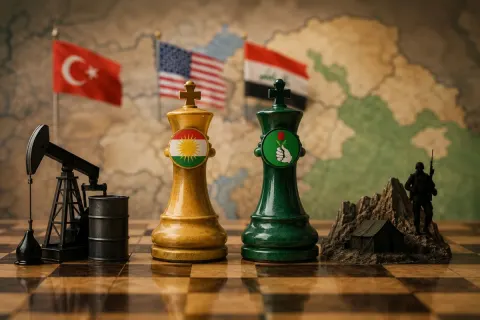
According to Kurdistan Press, Kamal Chomani, a researcher on Kurdish issues, emphasizes in an article titled "The Vicious Cycle of Separation in Iraqi Kurdistan" that although the two administrations of the Democratic Party and the Patriotic Union were officially merged into a single government structure in 2006, the two parties never gave up the right to exercise independent power in the areas under their influence.
According to the researcher, to understand the roots of the current differences, one must go back to 1964, when Mullah Mustafa Barzani, the then leader of the Democratic Party, reached a ceasefire agreement with the Baghdad government without the approval of the party's political bureau. Ibrahim Ahmad and Jalal Talabani opposed this agreement.
Mullah Mustafa Barzani's opponents accused him of authoritarianism, and after their expulsion from the party, armed clashes broke out between the two factions. Ibrahim Ahmad, Jalal Talabani, and their supporters fled, and the political dispute within the Kurdistan Movement turned into a competition pursued with the use of military force.
After the collapse of Mullah Mustafa Barzani's rebellion in 1975 and the cessation of Iranian support, Jalal Talabani founded the Patriotic Union of Kurdistan. Since then, the Iraqi Kurdistan movement has had two independent leadership centers, each with its own armed forces and a separate claim to represent the Kurdish people.
However, rather than creating a unified political system, this mechanism transferred mutual distrust into the structure of government. Both parties retained the necessary tools to confront the other, and neither was willing to cede real power if it lost the political competition.
In 1994, a civil war began between the two parties, which in Kurdish literature is referred to as "Brakuji," meaning fratricide.
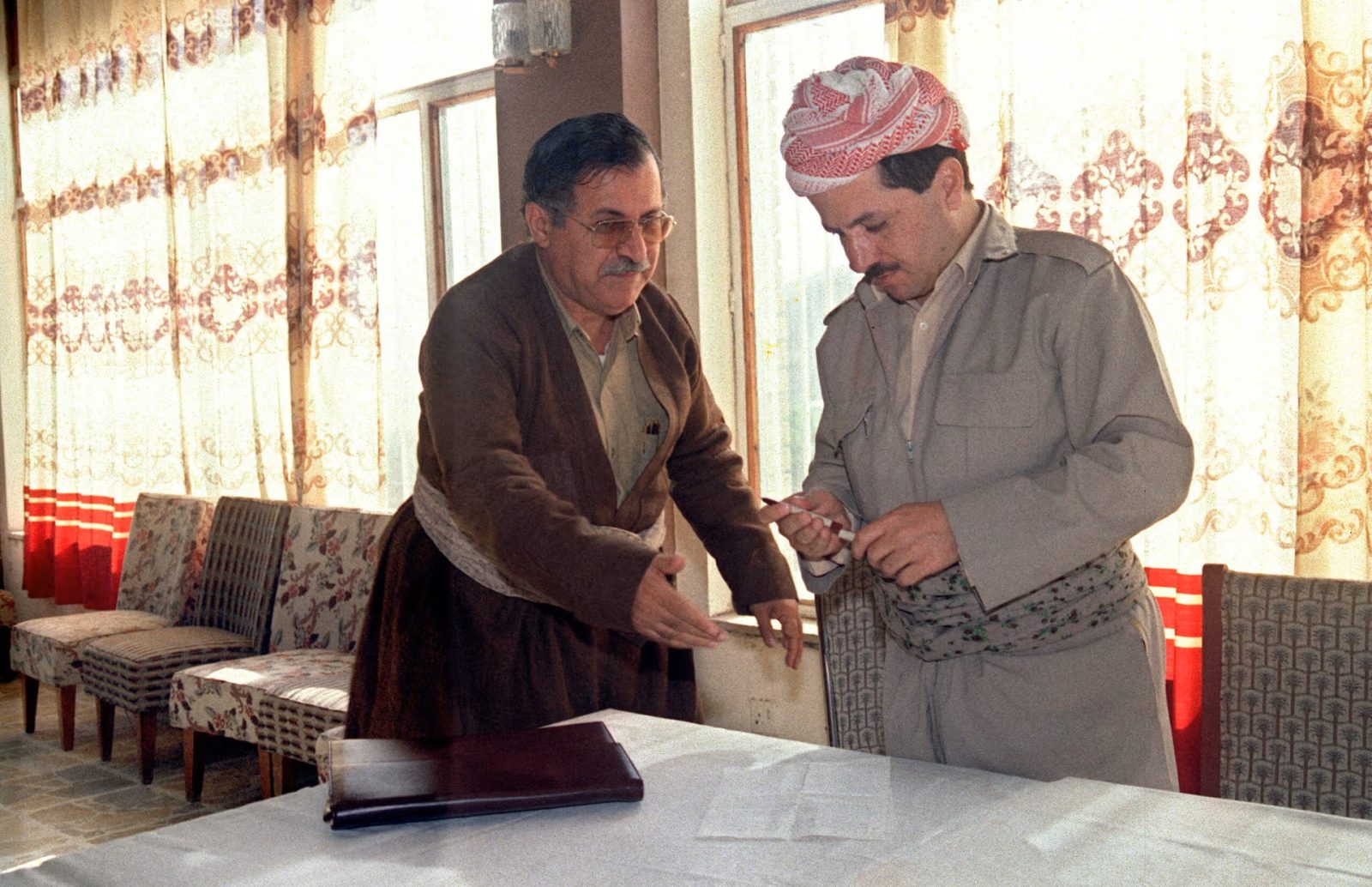
The Washington Agreement of September 1998, brokered by the United States and involving Massoud Barzani and Jalal Talabani, was an important step towards ending the conflict. It covered issues such as power-sharing, revenues, security, and refugees, and was intended to lead to the restoration of joint institutions and the holding of elections.
This researcher believes that the new generation of leaders has also failed to change the inherited structure of power. In addition to political and family rivalry, economic interests have also added to the complexity of the disputes, On the other hand, the geographical location of the two parties has also given them different sources of power. The Democratic Party benefits from trade routes and economic ties with Turkey, and the areas under the influence of the Patriotic Union are home to the Khormur and Chamchamal gas fields.
The current crisis intensified after the October 2024 elections. In these elections, the Democratic Party won 39 seats, the Patriotic Union 23 seats, and the New Generation 15 seats, but neither party achieved the required majority. Negotiations to form a new government continued for more than two years, and the cabinet formed in 2019 continued to function.
In the researcher's view, a new agreement between the two parties is necessary to avoid the worst-case scenario, but redistributing positions between political families will not be a sustainable solution. To escape the recurring cycle of crisis, the Kurdistan Region needs security forces accountable to public institutions, a parliament independent of the will of party leaders, and a transparent investigation into the fate of those who disappeared during the civil war.
User comments