
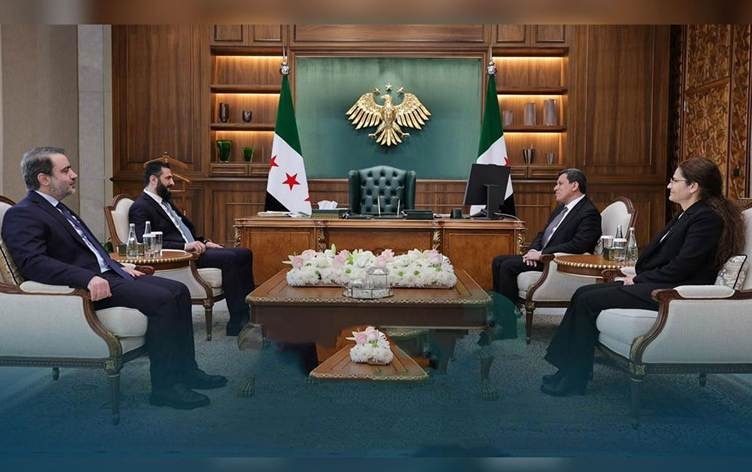
The Impact of Media Propaganda on the Presence of Kurds in the Syrian Government
According to KurdPress, the process of integrating the Syrian Democratic Forces into the Syrian government and security structures has faced new tensions, along with the increase in protests by a part of the Arab population of Hasakah; according to National Context Magazine, the media competition between the Syrian Democratic Forces and the Damascus government over how to portray developments on the ground has fueled concerns and ethnic differences in this multi-ethnic city.The National Context magazine wrote in an analytical report that as the implementation of the agreement to integrate the Syrian Democratic Forces into the Syrian government progresses, protests from a section of the Arab population in Hasakah have increased, especially in the southern areas of the city. These protests have taken place in a situation where the two sides present different narratives about the extent of their influence and achievements in the integration process.
According to the report, Hasakah is a city with a diverse population, with Arabs probably constituting the largest population group. Arab protesters in parts of the southern part of the city are demanding a greater share in the administrative and security structures. The Ghuwayran neighborhood, which is a densely populated and predominantly Arab area, has become the main focus of the protests.This neighborhood has also been considered one of the intellectual and social centers of the Arabs of Hasakah in the past, and this feature has provided the basis for the rapid mobilization of its residents.
The return of a number of pro-Damascus activists, including those who worked alongside Syrian President Ahmed al-Sharaa and other figures opposed to the former regime during the Syrian revolution, has also helped organize the protests. According to National Context, these activists are now more organized and face fewer restrictions on their activities in the predominantly Arab parts of southern Hasakah, an issue that makes it more difficult for the SDF to maintain influence throughout the city.
However, the author of the report believes that part of the current tensions should be sought in the media competition between the two sides.According to the publication, a network of journalists and activists close to the Syrian Democratic Forces are publishing similar and coordinated stories, making appointments related to these forces appear larger than their actual size. This narrative has created the impression among a section of the Arab population of Hasakah that control of the city or even the province has been handed over to the Syrian Democratic Forces.
The appointment of judges is an example of this disagreement over the narrative of developments. According to a report by National Context, the Syrian Democratic Forces have accepted a total of 11 judges affiliated with them in Hasakah province, and 20 more are scheduled to undergo judicial training in Damascus. However, so far, four of those 11 judges have begun their work in the Palace of Justice in Hasakah, a city that is scheduled to have a total of 25 judges.It is not yet clear how many of these judges will ultimately be based in Hasakah itself.
The provincial prosecutor general has also been appointed by the Damascus government. According to the estimate presented in the report, the number of judges in Hasakah province will reach at least 65 and possibly as many as 85. Therefore, the author believes that although the presence of judges close to the Syrian Democratic Forces is important for these forces, which have operated outside the government’s judicial structure for years, the scale of these appointments is not the same as the image presented in the media close to them.
National Context writes that the exaggeration of these appointments in the media close to the Syrian Democratic Forces has caused concern among some of the Arabs of Hasakah. In contrast, the relative silence of the Damascus government about the ongoing changes has also contributed to intensifying these concerns.The publication assesses that the Syrian government prefers to gradually expand its control in Hasakah without widespread propaganda, an approach that could be linked to political and security considerations, given the government’s numerous problems across the country and its limited resources.
The report also argues that, contrary to the image presented by media outlets close to the SDF, the SDF’s influence on the ground is gradually declining. According to the information presented in the report, about two-thirds of the senior security positions in Hasakah are assigned to people affiliated with the Damascus government and one-third to the SDF; however, protests by sections of the Arab population continue.
The report’s author sees the protesters’ dissatisfaction as stemming from a set of genuine concerns about the changing balance of power, as well as ethnic prejudices.According to him, some protesters believe that the SDF is regaining legitimacy and expanding its influence, while others oppose the presence of Kurds in some administrative and security positions. The report emphasizes that these two factors, despite their substantive differences, contribute to the escalation of current tensions.
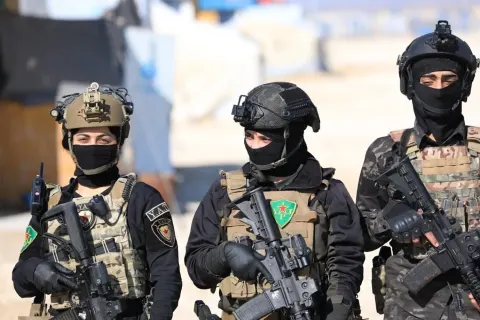
In the security sphere, the integration process also continues to face challenges. According to National Context, the security structure in Hasakah is effectively made up of two parallel networks, a situation that increases the risk of clashes between established forces and the spread of violence. Although the security control of the Damascus government is gradually expanding, the SDF still maintains a significant number of formal and informal forces in the field.According to the figures provided in the report, around 8,000 Asayish forces, the security forces affiliated with the Syrian Democratic Forces, have recently been integrated into the internal security structure of the Syrian Ministry of Interior. Of these, around 5,000 are Kurds and 3,000 are Arabs. At the same time, the Damascus government has also gradually deployed its internal security forces in Hasakah; although the exact number of these forces is not known, the report estimates that their number has now exceeded 1,000 and is still increasing.
In its conclusion, National Context warns that the media competition to portray victory or retreat in the integration process could have important consequences on the ground.In a city like Hasakah, which is ethnically diverse and where the two security structures have not yet fully integrated, exaggeration of achievements, government silence, and intensification of ethnic concerns could complicate the transition of power and increase the risk of new conflicts.


User comments