
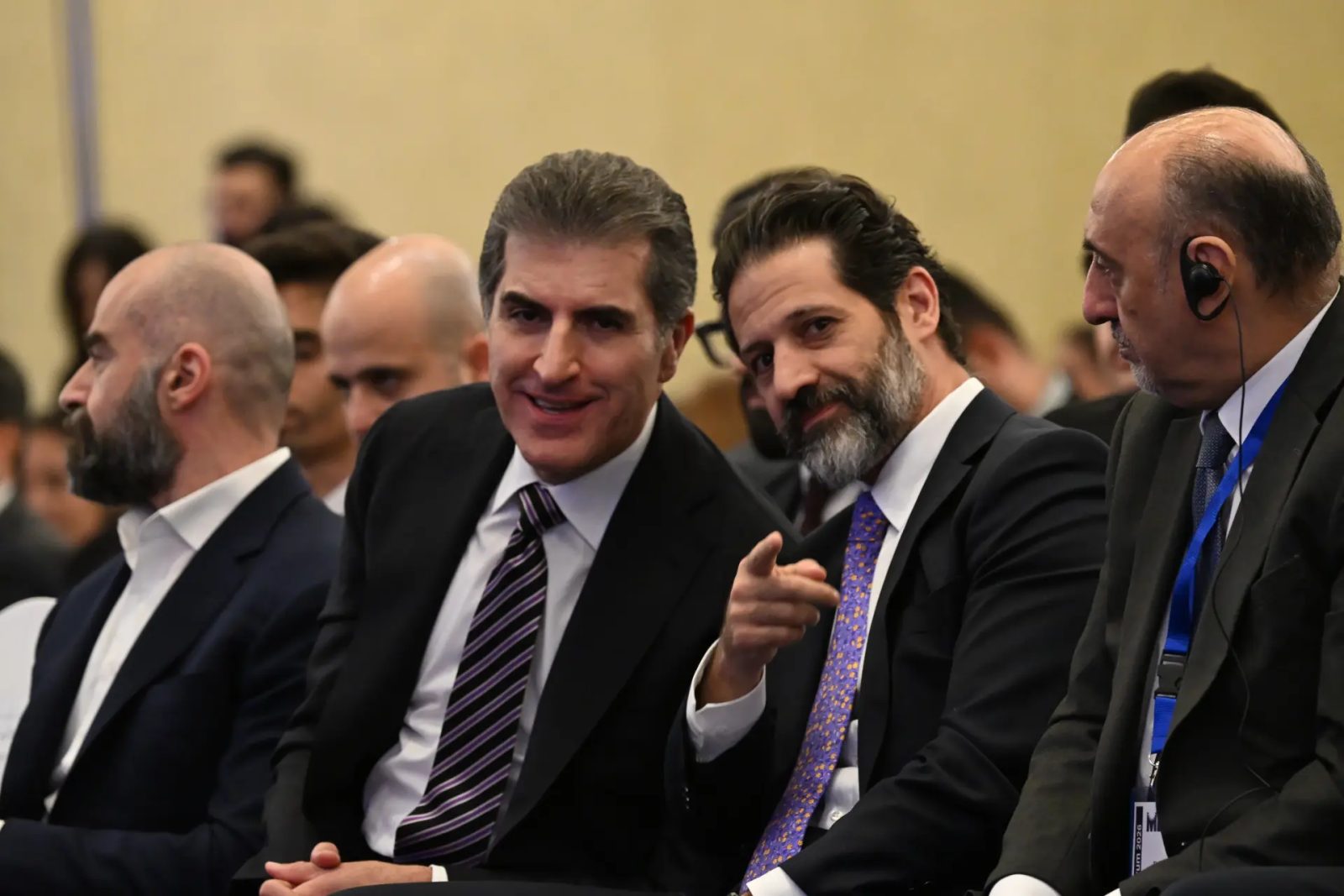
Have the political elites of the Kurdistan Region heard the voices of the protests?
According to Kurdistan Press, recent developments in the Iraqi Kurdistan Region, from the announcement of a plan to integrate the Peshmerga forces to the resumption of talks between the Kurdistan Democratic Party and the Patriotic Union and efforts to reopen the parliament, are signs of renewed momentum among the region's political leaders; but it is not yet clear whether these measures will lead to institutional reforms and a reduction in the influence of parties on government structures or whether they will simply be a temporary agreement to manage political differences.
Bamo Nouri, a professor of international relations at the University of West London and an analyst of Kurdish issues, argues in an analysis in the journal Amrgi that the political elites of the Kurdistan Region have faced a situation where continuing to govern the region based on historical achievements, party loyalties, and foreign support is no longer sufficient to maintain the gains of political self-sufficiency.According to Bamo Nouri, regional changes and developments, the withdrawal of American forces from Iraq, the weakening of Kurdish autonomy in Syria, and the efforts of the Iraqi central government to increase its capacity for governance have made the need for a review of the way the Kurdistan Region is governed more evident than ever before. In such circumstances, the main question is whether new cooperation among Kurdish leaders will lead to the strengthening of public institutions or will once again lead to a limited agreement between parties on power-sharing.
One of the most important recent developments is the announcement of a plan to organize and integrate the Peshmerga forces within the framework of the Kurdistan Region’s Ministry of Peshmerga. According to this plan, forces affiliated with Units 80 and 70, which are associated with the Kurdistan Democratic Party and the Patriotic Union, respectively, are to be organized into a military structure consisting of 11 divisions and support units.However, the importance of integrating the Peshmerga is not limited to changing the organizational structure. The main issue is to end the operational dependence and command of the military forces on parties and transfer authority to the formal institutions of the region. Such a transformation requires a single command, professional appointments and civilian oversight of the armed forces; otherwise, organizational changes will not necessarily lead to the formation of a national and professional force.
In the political arena, the new talks between the Kurdistan Democratic Party and the Patriotic Union for the reopening of parliament are also important. The October 2024 elections did not result in the formation of a parliamentary majority, and the differences between the two parties delayed the formation of a new regional cabinet.Resuming parliamentary activity could be a step towards breaking this deadlock, but according to Bemo Nouri, parliament will only play its true role when it can operate independently of party leaders’ agreements, oversee government performance, and scrutinize executive decisions.
In the analyst’s view, political cooperation is valuable when it strengthens public institutions, not simply redistributes power among political elites. A parliament whose activities depend on the continuous agreement of party leaders cannot fully enjoy its legal powers and represent the people.
The developments in Iraq and Syria have also highlighted the need for this change of approach. The Iraqi central government is trying to demonstrate its efficiency with projects in the areas of housing and public services; a move that could also raise the expectations of the citizens of the Kurdistan Region.In such circumstances, the legitimacy of the regional administration will not be measured solely on the historical achievements of the Kurdish political movement or the enjoyment of legal powers, but also on its ability to provide employment, housing, regular payment of salaries, and the provision of public services.
In Syria, too, the weakening of the position of the Syrian Democratic Forces and their agreement to integrate military and administrative structures into the central government are a warning about the fragility of self-government arrangements in the face of changing military balances and foreign relations. Although the legal status of the Iraqi Kurdistan Region differs from that of the autonomous administration in northeastern Syria, the Syrian experience shows that territorial control and the enjoyment of external support alone cannot guarantee the sustainability of political autonomy.
However, Bamo Nouri emphasizes that reform measures should not be dismissed in advance.The announcement of the integration of the Peshmerga and the resumption of political negotiations could be a sign of a growing awareness of the need for reform, but the final assessment will depend on how these decisions are implemented.
A key issue for the future of the Kurdistan Region is the transition from structures that were formed during the period of struggle and resistance to accountable, transparent, and sustainable institutions that can operate independently of political leaders and parties. The Peshmerga must protect the security of all citizens, regardless of their party affiliation; the parliament must represent the voters; and public institutions must be governed by transparent rules, not political affiliations.
Therefore, it is not yet possible to say with certainty that the political elite of the Kurdistan Region has heard the criticism.Recent developments are promising signs, but the real measure of change will not be the announcement of new agreements, but the implementation of reforms, the strengthening of public institutions, and the improvement of citizens' daily lives.
User comments