
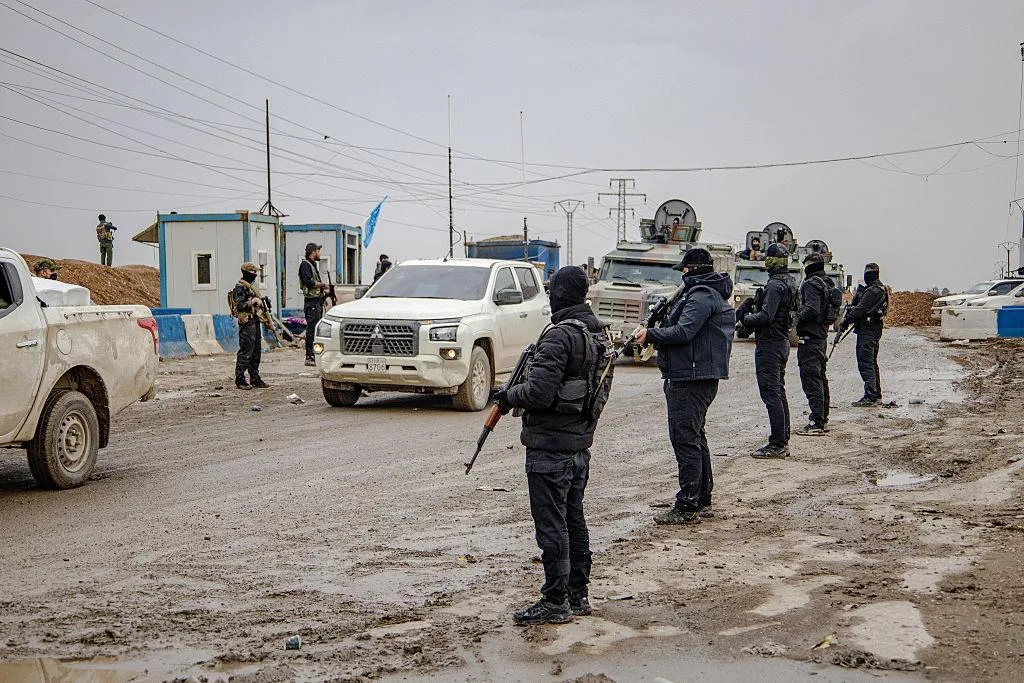
Security tensions rise in Hasakah; Kurdish symbols destroyed and concerns about ethnic clashes
According to KurdPress, the city of Hasakah in northern and eastern Syria witnessed a series of protest and security incidents on Thursday and Friday, October 8 and 9, 2026. These developments intensified after the Syrian flag-raising ceremony in Al-Salam Square and the destruction of Kurdish signs and symbols, and subsequently led to clashes between protesters and security forces, shootings, the injury of a number of citizens, and damage to vehicles and public and private property.Reports of the incidents indicate that internal security forces were deployed to disperse the gatherings, and auxiliary armed forces were deployed in some areas. At the same time, restrictions were imposed on movement in parts of the city and some bridges and commercial centers were closed. In response to these developments, a number of local officials and tribal figures warned about the risk of exploiting political differences to create a rift between Kurds and Arabs.
Kurdish symbols destroyed during Syrian flag-raising ceremony
On Thursday, October 8, a group of people attacked information boards, Kurdish symbols, and surveillance cameras in the square before a Syrian flag-raising ceremony was held in Al-Salam Square in central Hasakah.Signboards in the square, which had the name and information about it in Kurdish, Arabic and Syriac, were destroyed. There were also reports of some individuals attempting to attack internal security forces deployed there to provide security for the ceremony.
At the same time, campaigns were launched on social media, especially Facebook, against Kurdish and SDF symbols. These actions heightened concerns about increased social unrest and the possibility of escalating tensions in the region.
In contrast, a ceremony to raise the Syrian flag was held in the presence of Nur al-Din Ahmed, the governor of Hasakah, his deputies, a number of tribal elders and representatives of security and military institutions. Participants in the ceremony stressed the importance of strengthening the presence of state institutions and expanding government control over different areas of the province.The governor of Hasaka also emphasized the need to maintain coexistence between different communities, strengthen social peace, and continue the process of integrating government institutions and organizations. He announced that efforts to complete the process of integrating institutions within the framework of the agreement between the Syrian Interim Government and the Syrian Democratic Forces are ongoing, and the next stage of this process should focus on improving public services and responding to the needs of citizens.
Intensification of tensions in the Mufti neighborhood and the arrival of reinforcements
After the ceremony, tensions spread to the Mufti neighborhood of Hasaka. In this area, a number of citizens gathered to demand their rights, and clashes between protesters and public security forces followed.
During these incidents, a vehicle belonging to the public security forces was attacked, and reports were also published about one of the protesters attempting to attack the forces present at the scene.Security forces intervened to disperse the protesters, and during these actions, a number of protesters’ vehicles were damaged with gun butts.
At the same time, about 10 vehicles carrying auxiliary armed forces entered the area, an action that was accompanied by increased alertness and concerns about the spread of the clashes. After the tensions increased, the internal security forces left some of their positions in the Mufti neighborhood to reduce the intensity of the clashes.
Shooting around Al-Hamamah Square and Civilians Injured
As the protests spread to other parts of Hasakah, reports of shooting around Al-Hamamah Square were published on Thursday evening.According to reports, security forces fired in the air to disperse the protesters, and during these incidents, a number of civilians were injured by gunfire and were taken to hospital for medical treatment.
There were also reports of Kurdish citizens being injured around Al-Hamamah Square and damage to civilian property. Following the escalation of tensions, restrictions were imposed on movement in the Ghuwayran neighborhood, and the Al-Beiruti Bridge and the city center market were also closed.
Meanwhile, reports were published of the withdrawal of some security forces from some areas and a relative reduction in tensions in parts of the city. However, the calming of the situation in some areas did not mean a complete end to the unrest throughout Al-Hasakah.Reports also indicate that the windows of a number of cars were broken and property damage was caused to citizens during the arguments and clashes around Al-Salam Square. Despite the publication of this information, the final number of injured and the extent of damage has not been determined precisely.
Continuation of gatherings on Friday and increased security measures
On Friday, October 9, other gatherings were held in Hasakah. One of these gatherings began in the Ghuwayran neighborhood and there were reports of destruction of public and private property and attacks on Kurdish symbols.
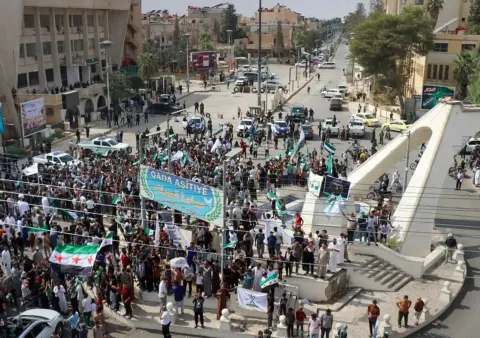
Internal security forces intervened to disperse the gatherings and prevent them from moving towards the northern neighborhoods of the city.At the same time, another rally titled “Syrian Flag Friday” was held in the Ghuwayran neighborhood, where participants called for the expansion of the presence of government institutions, the raising of the Syrian flag in neighborhoods and squares of the city, and increased security measures throughout the province.
Following reports of sporadic shootings by armed individuals in the city, internal security forces increased their presence in various neighborhoods and strengthened patrols. Local authorities announced that these measures were taken to combat violations, prevent public order disruption, and protect the lives and property of citizens.
However, the identities of the armed individuals who are said to have opened fire in the city were not specifically announced, and the possible connection of these shootings to Friday’s rallies has not been confirmed.A review of the events of the last two days shows that two distinct streams of demands and protests have emerged in Hasakah: on the one hand, gatherings aimed at expanding the presence of government institutions and increasing the Syrian government’s control over the province, and on the other, protests in response to the destruction of Kurdish symbols and concerns about the treatment of Kurdish identity and rights. These two streams do not necessarily have the same demands and should not be considered as a single protest movement.
Warning about attempts to exacerbate differences between Kurds and Arabs
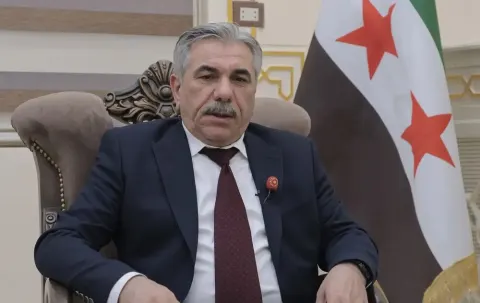
In response to recent developments, Hussein Farhan Abdul Rahman Al-Tai, head of the Tayyib Tribal Council, warned about attempts by some parties to exploit the gatherings and incidents in Hasakah to exacerbate differences between Kurds and Arabs.He pointed to incidents such as the burning of the Kurdish flag and attacks on Kurdish symbols, stressing that some parties may seek to use these events to create social divisions and instability in the region.
Tai, referring to the ethnic and religious diversity of Syrian society, including Kurds, Arabs, Christians, Yazidis, Alawites and Druze, considered the Syrian peninsula a common home for all these communities, and considered maintaining its security and stability a shared responsibility.
He also emphasized the right of citizens to hold peaceful gatherings and demand improved services, fuel supply, price reductions and addressing security problems, but at the same time called for preventing protests from becoming a platform for insults, destruction of ethnic symbols and inciting social divisions.The head of the tribal council also called on tribal elders, cultural figures and representatives of different communities to take action to maintain communication between groups and prevent the spread of tensions. According to him, the responsibility for ensuring security should be borne by the responsible institutions and the government.
The connection between the tensions in Hasakah and the process of integrating institutions into the Syrian government
The recent developments in Hasakah have occurred in a situation where the implementation of agreements related to the integration of the military, security and administrative structures of northeastern Syria into the institutions of the central government is still considered one of the important political issues in this country.
On the one hand, some participants in the gatherings are calling for strengthening the presence of government institutions, ensuring security and accelerating the integration process.On the other hand, the destruction of Kurdish symbols and reports of security forces’ handling of protesters have raised concerns about how to protect Kurdish rights and manage ethnic diversity in the province.
In such circumstances, the main issue is not only the expansion of the presence of state institutions, but also how to implement this process, respect the cultural and social rights of different communities, and prevent political disputes from turning into ethnic confrontations.
Recent events also show that demands for security, public services, and the livelihoods of citizens are intertwined with identity and political concerns. Any security response that is carried out without providing clarity about the incidents or addressing the demands of the protesters could lead to increased distrust and escalation of tensions.In contrast, investigating incidents, holding accountable for the use of weapons, and protecting symbols of all communities can help to reduce concerns.
Despite warnings about the possibility of escalating tensions between Kurds and Arabs, reports published as of Friday, October 9, do not provide sufficient evidence to conclude that widespread ethnic conflict has begun across the province. What has been reported so far is the occurrence of several protest and security incidents, shootings, injuries to a number of civilians, damage to citizen property, and an increased presence of security forces in parts of Hasakah.
In the future, how the responsible authorities respond to these incidents, clarifying the extent of the shootings, and addressing the damage caused, along with how the rallies and citizen demands are managed, will play an important role in determining the course of developments.Preventing the spread of tensions requires that citizens' security and service demands on the one hand, and concerns about Kurdish rights and identity on the other, be addressed in a responsible manner without inciting ethnic divisions.
Bahman Mirani - Syrian Service, KurdPress News Agency
User comments