
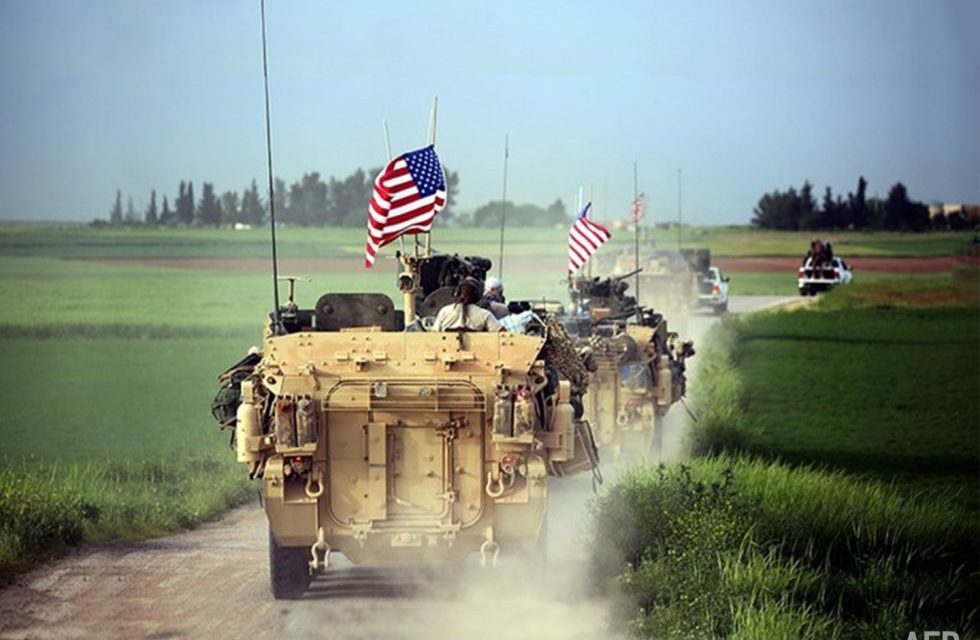
Kurds react to US withdrawal from Iraq
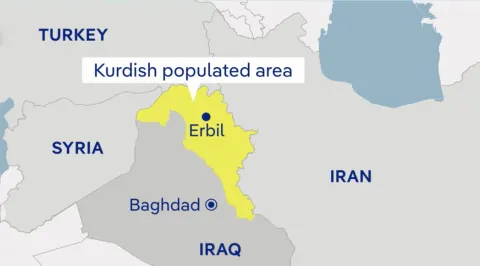
According to KurdPress, quoted by Middle East Eye, Massoud Barzani, leader of the Kurdistan Democratic Party of Iraq, in response to the end of the coalition mission, tried to reduce concerns about the consequences of the withdrawal of US forces. He said that the withdrawal of coalition forces does not mean that the Kurdistan Region will become vulnerable to threats or that its existence will be jeopardized.
Barzani emphasized: “There is strong coordination between the federal government of Iraq and the Kurdistan Region to confront any threat or danger.»
Masrour Barzani, the Prime Minister of the Kurdistan Region, took a more alarming stance on the region’s security situation after the withdrawal of US forces, saying: “The threat is real; we are vulnerable and we are under attack.”
He considered the withdrawal of US forces without leaving an adequate defense system in the Kurdistan Region a cause for concern.
The Kurdistan Region’s Ministry of Peshmerga Affairs also announced on the eve of the withdrawal of coalition forces that the end of the US presence in the current complex situation in the region, without providing a defense system, has raised serious concerns. The ministry called on the Iraqi federal government to assume responsibility for protecting the Kurdistan Region’s airspace if necessary.General Bakhtiar Mohammad Sediq, Secretary General of the Ministry of Peshmerga Affairs, referred to the continuing security threats and said that the framework of the security agreement between Baghdad and Washington to end the coalition mission is in principle a standard and legal agreement, but the timing of its implementation is not appropriate given the current conditions in the region.
He emphasized that the Kurdistan Region faces numerous security threats and that the capabilities of the Iraqi army and Peshmerga forces are not yet fully developed.
Bakhtiar Sediq said: “More time, perhaps a few years, is needed for advice and support.”
He called for the coalition to continue supporting the Peshmerga forces in the areas of weapons, ammunition, training, intelligence, air support and counter-drone capabilities.He asked, referring to the deployment of coalition forces to Kuwait and Jordan: “If they are staying in the region, why can’t they stay in Iraq?”
Nureddin Veysi, the media spokesman for the Kurdistan Regional Government’s prime minister, also stressed the fragility of the security situation in Iraq, saying that armed groups and militias have become a growing threat to the internal security of Iraq and the Kurdistan Region.
“In any future security or defense agreement with Iraq, the security interests of the Kurdistan Region must be fully taken into account, and the Kurdistan Region and the Peshmerga forces must be an integral and clearly defined part of these agreements,” he stressed.
At the community level, the withdrawal of coalition forces has also been accompanied by concerns. “As a Kurd, I am really worried,” said Kaneel, a 19-year-old student at the American University of Iraq in Sulaymaniyah.“The Kurdistan Region of Iraq does not have the level of military equipment, air power, and intelligence that the coalition had,” he added.
“The presence of the coalition gave the Kurds a sense of security, and I worry that without it, ISIS or another extremist threat could return and once again endanger the people of the Kurdistan Region,” the student said.
Alex Plitsas, a non-resident senior fellow at the Atlantic Council, also warned of the potential for a security vacuum after the withdrawal of U.S. forces.
He said U.S. relations with the Kurdistan Region and the Peshmerga forces are “solid,” but the withdrawal of U.S. forces could create a security vacuum that hostile actors could exploit.Plitsas also referred to the attacks on the Kurdistan Region in the past few months, saying that the situation has shown that some opponents of the United States are likely to attack Washington's allies in the region in order to confront the country.
Meanwhile, Sirwan Barzani, commander of the Peshmerga forces and an economic activist, expressed hope that the withdrawal of American forces will stop Iranian attacks on the Kurdistan Region.
"There are no more excuses, the Americans are no longer present; so we hope that there will be no more drones and missiles," he said.
The Kurdistan Region's Ministry of Peshmerga Affairs has also announced that since the start of the war between Israel and the United States with Iran on February 28, the Kurdistan Region has experienced more than a thousand drone and missile attacks, resulting in significant human casualties and damage.In such circumstances, the end of the US-led coalition mission has brought the discussion about the Kurdistan Region's defense capabilities and the level of readiness of Iraqi and Peshmerga forces to ensure the security of the region to a new stage.
User comments