
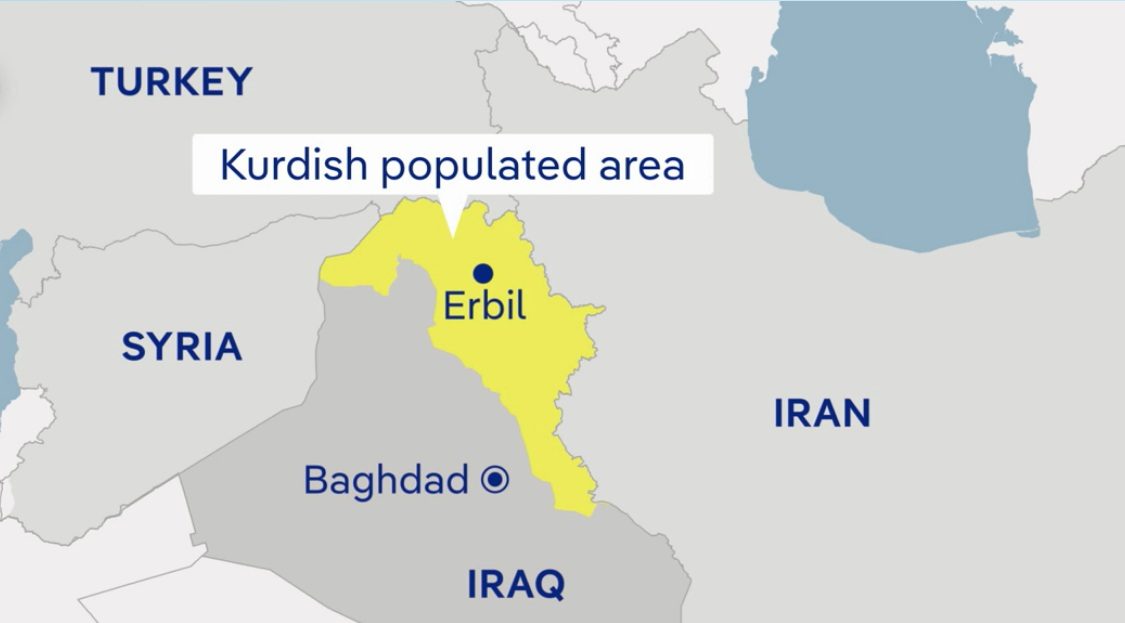
Consequences of the US withdrawal from Iraq for the Kurdistan Region
According to Kurdistan Press, the withdrawal of the last American forces from Iraq comes at a time when the Kurdistan Region has expressed concern about the security implications of this decision, increasing internal and external pressures, and changing the balance of power between Erbil and Baghdad; an expert from the Chatham House Institute says that Iraqi forces and Peshmerga have become more capable in confronting ISIS, but the situation is different in the face of threats arising from the confrontation between the United States and Israel with Iran.
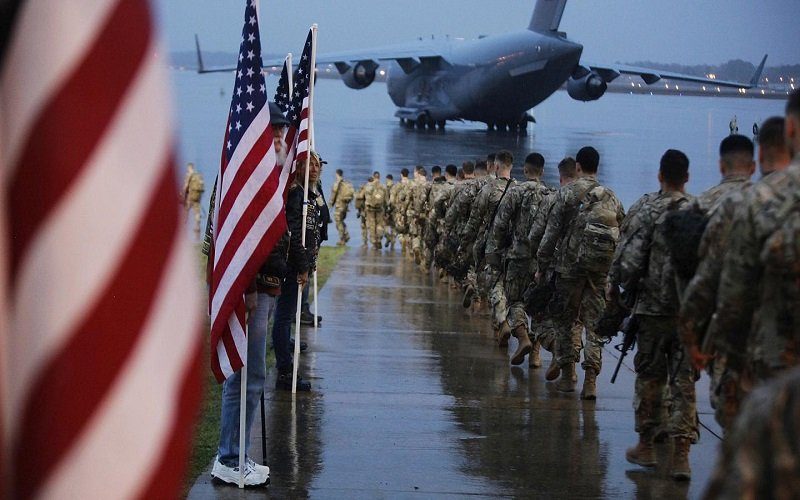
According to Deutsche Welle, the "Operation Resolute" mission, which began in 2014 with the aim of confronting ISIS in Iraq, will end with the withdrawal of the last American forces from the country on September 30, 2026.The withdrawal marks the end of a phase of the US military presence in Iraq that began after the 2003 invasion and resumed in 2014, coinciding with the rise of ISIS, after the end of the first US military mission in 2011.
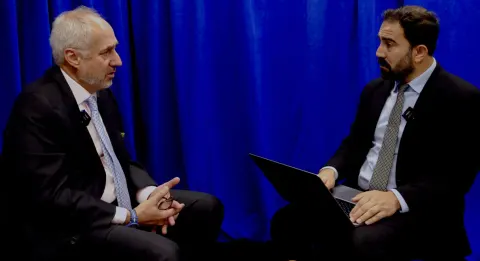
The Iraqi government has described the end of the international coalition mission as the beginning of a new phase in relations with the US, emphasizing a move away from military cooperation towards the development of bilateral economic ties. According to Renad Mansour, deputy director of the Middle East and North Africa program at Chatham House, the talks between Baghdad and Washington have also proceeded on the basis that the threat from ISIS is not as widespread as in the past and that Iraqi forces can contain the remnants of the group.Renad Mansour says that Baghdad’s goal in recent years has been to “normalize” relations with the United States, meaning that cooperation between the two countries would no longer be centered on the presence of American forces on Iraqi soil, and that economic, investment, and diplomatic relations would gain more prominence. According to him, Baghdad wants bilateral relations with Washington, but without the American military presence in Iraq being the main focus of these relations.
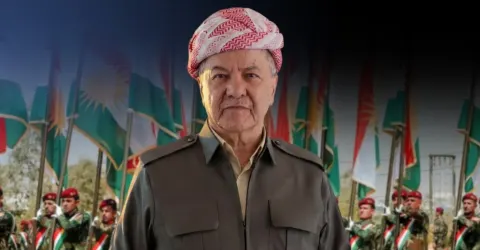
However, this development has raised different concerns for the Kurdistan Region. Masrour Barzani, the Prime Minister of the Kurdistan Region, described the withdrawal of American forces as “shameful” and expressed concern about the vulnerability of the Kurds to attacks from outside sources. The DW report also emphasizes that the region’s main concern is not limited to the return of ISIS, but also related to the reduction of American security support and the change in the balance of power in Iraq.Renad Mansour explains that the Kurdistan Region has enjoyed international support for decades and has always expected the US, European countries or other international actors to support the region in its conflicts with the central Iraqi government if Baghdad increased pressure. According to him, this history has made US support and attention important for the region’s leaders, not only from a security perspective, but also in political negotiations with Baghdad and at the regional level.
One of the main concerns of the region is the increase in drone and missile attacks since the escalation of the conflict between the US and Iran. During this time, the Kurdistan Region has been repeatedly targeted, and armed groups in Iraq still have significant weapons capabilities.Mansour says that in recent years, the region has benefited in particular from US-backed military capabilities and missile defense systems, and a significant portion of the drones that have entered its territory to attack the region have been targeted with the help of these systems.
According to this expert, at the same time, the US presence itself has been one of the factors that has exposed the region to attacks. He considers the Kurdistan Region to be one of the regions that has borne the largest share of attacks resulting from the US-Israeli confrontation with Iran within Iraq, and emphasizes that energy facilities, oil and gas fields, and companies active in this field have also been targeted.
In such circumstances, one of the main questions is whether the US withdrawal will push the Kurdistan Region towards new agreements with its neighbors, including Tehran.Mansour believes that the region, regardless of the presence or withdrawal of American forces, is bound to have some kind of political agreement and understanding with Tehran due to its proximity to Iran. According to him, the lack of such an agreement could put the region at risk.
But in addition to the security issue, this analyst also points to Washington’s changing approach towards the Kurds. He believes that the Donald Trump administration has adopted a different approach towards the Kurds, both in Syria and in Iraq, than in the period after the 2003 invasion. According to Mansour, in Syria, the emphasis has been on the integration of Kurdish forces into the central structure, and in Iraq, on the greater integration of the Kurdistan Region into the central government structure.
This approach, in Mansour’s view, differs from US policy after 2003; a period when, according to him, the creation and maintenance of a significant level of Kurdish autonomy in Iraq was the focus.He recalls that the region had its own parliament and government at that time, and at one point it generated its own revenues and paid its own staff from its own resources, but in recent years the balance of power in Iraq has shifted more in favor of the central government.
Despite these developments, the ability of the Peshmerga forces and Iraqi security forces to confront ISIS has increased. Mansour says that after the end of the main phase of the war against ISIS, a significant part of the US, NATO and EU mission was dedicated to training Iraqi and Peshmerga forces, and in recent years the security capabilities of these forces have been developed. According to him, the number of ISIS attacks and the ability of Iraqi and Peshmerga forces to prevent these attacks show that currently, in the specific issue of ISIS, the security capabilities of Iraq and the region have increased.However, Renaud Mansour distinguishes between the threat of ISIS and the threat posed by the broader conflict between Iran on the one hand and the United States and Israel on the other. According to him, the main concern of the Iraqi security forces and the Peshmerga is not ISIS, but the consequences of this broader conflict, because the instability it causes could seriously affect the security structure of Iraq and the Kurdistan Region.
This situation also raises another question: Will the Kurdistan Region still have an external security guarantor after the withdrawal of American forces? Mansour says that in recent years, American attention to Iraq has decreased and Iraq is no longer a priority for Washington's foreign policy. He believes that the Iraqi Kurds are worried about losing the special status and support they have enjoyed in Washington over the past years.However, he emphasizes that the withdrawal of American forces from Iraq should not be interpreted as a complete cessation of American influence in the Middle East. According to Mansour, various countries in the region still pay attention to Washington, and in many regional capitals the question is raised as to what the United States will do in response to the developments in the region. In his view, the main message of the withdrawal for the Iraqi Kurds is that they are no longer at the center of American foreign policy priorities and that Washington’s attention in the current situation is more focused on confronting Iran.Overall, the end of the US military mission in Iraq means for Baghdad a new phase in relations with Washington and increased responsibility for the Iraqi security forces, but for the Kurdistan Region, this development has been accompanied by the reduction of an important security support, increased concern about attacks by some groups, and a change in the US approach to the position of the Kurds in the Iraqi political structure. According to this interview, the immediate threat from ISIS has decreased compared to previous years, but the main question for the region now is how it will maintain its security and political position in the context of the changing regional balance of power.
User comments