
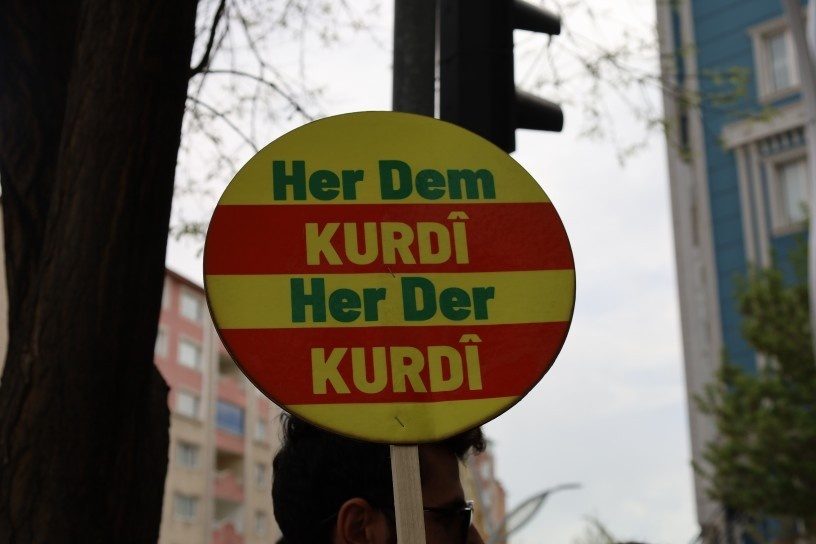
Kurdish textbooks approved by the Syrian interim government
According to Kurdistan Press, "Adnan Beri", the director of education in Hasakah, announced that the Kurdish textbooks of the autonomous administration have been approved by Damascus and that this language is taught from the first to the twelfth grade in schools in the Kurdish-populated areas; he also announced a shortage of about 9,000 seats and only 40 percent of the ministerial textbooks have reached this province.
Since September 6, schools in Syria and its Kurdish-populated areas have opened to students and the new academic year has begun.Adnan Beri, the director of education in Hasakah, gave a detailed explanation to Rudaw Network about the state of education in the province.
Adnan Beri stated that this year’s education process in the province has been accompanied by many difficulties and that after years of war, it is not possible to return directly to the previous conditions. According to him, out of 2,317 schools in the administrative area of Hasakah province, only between 1,700 and 1,800 schools are now open. More than 300 schools are unusable due to war damage, and 100 schools need complete reconstruction. These schools are organized into 19 educational complexes, up from 16 before.
Beri said that the exact number of enrolled students is not yet known, as this number is constantly increasing due to the daily return of refugees from outside the province.He predicted that the exact figures would be announced within the next 10 days, but estimated that the number of students would reach more than 500,000.
He also reported a severe shortage of seats in schools, saying that the province needed nearly 20,000 seats, of which only 11,000 have been provided so far, and another 9,000 are still needed; for this reason, some students are forced to sit on the floor. According to him, there are 36,000 teachers working in Hasakah, although there are shortages in some specialized fields such as mathematics, physics and chemistry.
Textbooks and Kurdish language
The director of education in Hasakah said that only 40 percent of the books sent by the Syrian Ministry of Education had reached the province and were immediately distributed to schools. He added that the shortage of books was not a major problem, as PDF copies of the books were available to teachers.Bari stated that the Kurdish-language textbooks of the autonomous administration have been approved by the Syrian Ministry of Education in Damascus and that the same old textbooks are currently being used without the need for re-editing. Accordingly, students in grades 9 and 12 in areas including Derbasiyeh, Amuda, Qamishlo, Terbsiyeh, Gerkelgeh and Dirik will continue to study according to the previous curriculum of the autonomous administration this year. He emphasized that the decision is limited to this year for now.
According to Beri, Kurdish is taught from grades 1 to 12 in schools that have at least two Kurdish students, and the Syrian Ministry of Education has published a list of these schools on its website. The ministry also announced that any school that wishes to do so, even in non-Kurdish areas, can offer this course.He also announced the translation of history, geography and philosophy courses into Kurdish, saying that the Kurdish Language Institute (SZK) and a committee from the Ministry of Education are working on the project, which is expected to be completed within 4-5 days. Accordingly, these courses will be taught in half Kurdish and half Arabic in middle and high school.
Response to protests in Syrian Kurdistan
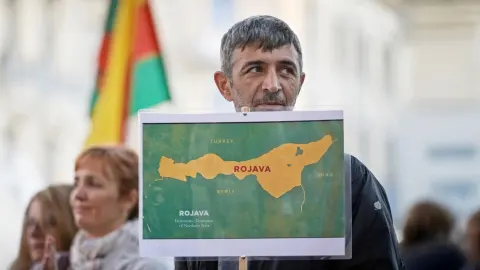
The Director of Education in Hasakah, referring to the recent gatherings of some students and families in Syrian Kurdistan to protest the language policies of the Syrian Ministry of Education, said that language is part of identity and losing it would mean losing identity. He added that the agreement reached for half Kurdish and half Arabic education is a positive step and that every person has the right to strive to preserve their language.Schools in Sarkhaniye
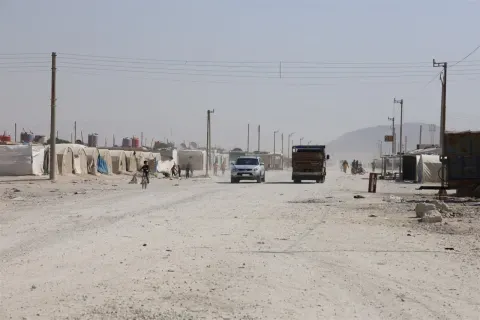
Bari also explained the situation of schools in the Sarkhaniye (Ras al-Ain) IDP camps. According to him, a plan has been drawn up by the governorate for the return of the residents of these camps to their original areas, and for this reason, some teachers have been recalled from these camps; some have returned and some remain in the camps. He said that the situation of these schools will be determined within the next month and if the issue is not resolved, an alternative solution will be considered to prevent students from being deprived of education. Accurate statistics on the number of students affected by this situation are not yet available.
User comments