
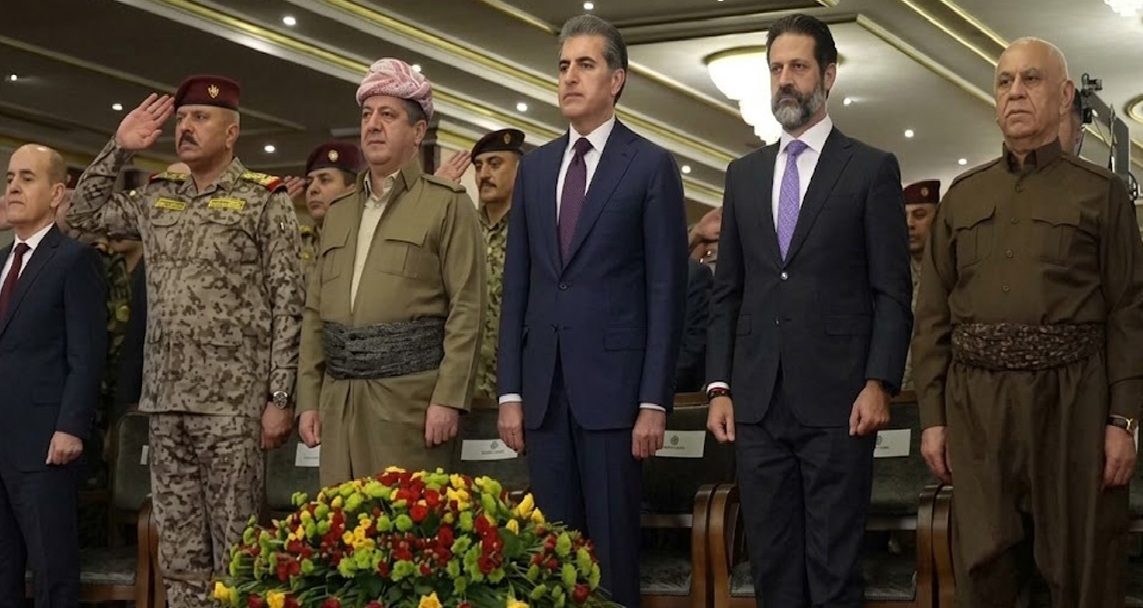
Possibility of a breakthrough in the deadlock over the formation of a new government in the Kurdistan Region
According to a KurdPress report, there are signs that the Kurdistan Democratic Party and the Patriotic Union of Kurdistan are getting closer to an agreement to form a new government in the Kurdistan Region of Iraq; a development that could take the process of forming a new cabinet to a new stage after nearly two years of political deadlock. However, the two parties have not yet announced their official agreement.According to Asharq Al-Awsat, negotiations between the Kurdistan Democratic Party and the Patriotic Union of Kurdistan have become more serious in recent days. A leader of the Patriotic Union, who did not want to be named, said that talks with the Democratic Party are ongoing on a clear basis, although some details still require further consultation.
According to the framework under discussion, the presidency of the Kurdistan Region and the prime ministership of the future government will continue to be held by the Democratic Party, and the Patriotic Union will take over the positions of deputy president of the region and deputy prime minister. The presidency of parliament will also go to the Patriotic Union.
In return, the Patriotic Union wants to increase the powers of the deputy presidents of the region and the prime minister so that these two positions have a more effective role in the administration of the region and the participation of the party in government decision-making will increase.As for key ministries, the agreement will see the PKK take over the Finance Ministry and the Peshmerga Ministry, while the Democratic Party will take over the Oil Ministry and the Interior Ministry. The division has not yet been finalized and neither party has officially confirmed it.
Delawar Faeq, a leader of the Democratic Party, told Asharq Al-Awsat that reports of a basis for understanding between the two parties are “close to reality,” but no agreement has been reached yet, as neither side has yet announced a formal agreement. Barwari, another member of the Democratic Party leadership, said talks between the two parties are continuing and this time there is a serious will to form a government.
Nechirvan Barzani, the president of the Kurdistan Region, also announced on Saturday that efforts are continuing to help Kurdish parties achieve positive results.He said the two parties are still holding their meetings and expressed hope that these efforts will lead to an understanding that will serve the interests of the region and all its components.
The impasse over forming a new government began after the Kurdistan Regional Government parliamentary elections in October 2024. In these elections, the Democratic Party came in first place with 39 seats, while the Patriotic Union won 23 seats. After the elections, the Patriotic Union formed an alliance with the New Generation Movement, which had won 15 seats, and this alliance holds a total of 38 seats out of 100 in the regional parliament.
The new regional parliament held only one session on December 2, 2024, to swear in its representatives, and after that, the disagreement between the two main parties prevented the parliament from starting its normal activities and forming a new government.At this stage, the Patriotic Union and the New Generation Movement are demanding that half of the cabinet be allocated to their coalition, a demand that the Democratic Party has not accepted. The Democratic Party says it does not object to the Patriotic Union’s participation in the government, but this participation must be based on balance and in proportion to the political weight of the parties.
In contrast, some members of the Democratic Party have raised the possibility of holding new elections if the deadlock continues. On the other hand, some members of the Patriotic Union have raised the idea of “an almost independent administration of Sulaymaniyah from Erbil,” an issue that shows that the differences between the two parties remain deep.
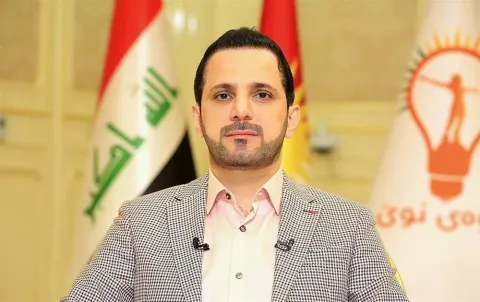
Karvan Ghaznaei, a spokesman for the Patriotic Union, has also said that his party remains committed to its demands regarding the formation of a government, but that the door to negotiations is open to reaching an understanding.Regarding the meeting between Masrour Barzani, the Prime Minister of the region, and Qubad Talabani, the Deputy Prime Minister, he said that the meeting was positive, but it did not lead to an agreement on forming a government. According to him, there was no discussion on the division of positions in the meeting, and the alliance between the Patriotic Union and the New Generation Movement remains intact.
Ahmad al-Haraki, a leader of the Patriotic Union, also announced that the meeting of the political bureau and the leadership council of the party emphasized the continuation of consultations to reach an understanding on the formation of a new government. Soran Davoudi, another leader of the Patriotic Union, also said that in recent days there have been signs of the two parties getting closer and both sides have expressed their willingness to reach an understanding and form a balanced cabinet.
These developments occurred simultaneously with the official announcement of the end of the Peshmerga forces’ dependence on the Patriotic Union and the placement of all forces under the structure of the Peshmerga Ministry of the Kurdistan Region.Asharq Al-Awsat reported that this development could pave the way for a further political rapprochement between the Democratic Party and the Patriotic Union.
According to the newspaper, the Peshmerga forces were previously divided between the Democratic Party’s Unit 80 and the Patriotic Union’s Unit 70. The process of merging forces has been pursued over the past years with the support and pressure of the international coalition, particularly the US, UK and Germany, and now the Kurdistan Region has announced that no Peshmerga forces will remain outside the framework of the Peshmerga Ministry.
Soran Davoudi, a Patriotic Union official, has considered the unity of the Peshmerga forces a factor that could help the two parties to come closer politically and increase public trust in the Peshmerga forces.Despite these developments, the formation of a new government still depends on final agreement on several key issues, including the extent of the deputies' powers, each party's share of the cabinet, and how key ministries will be divided. What has now been formed is a "basis of understanding" between the two parties, not a final agreement to form a government.
User comments