
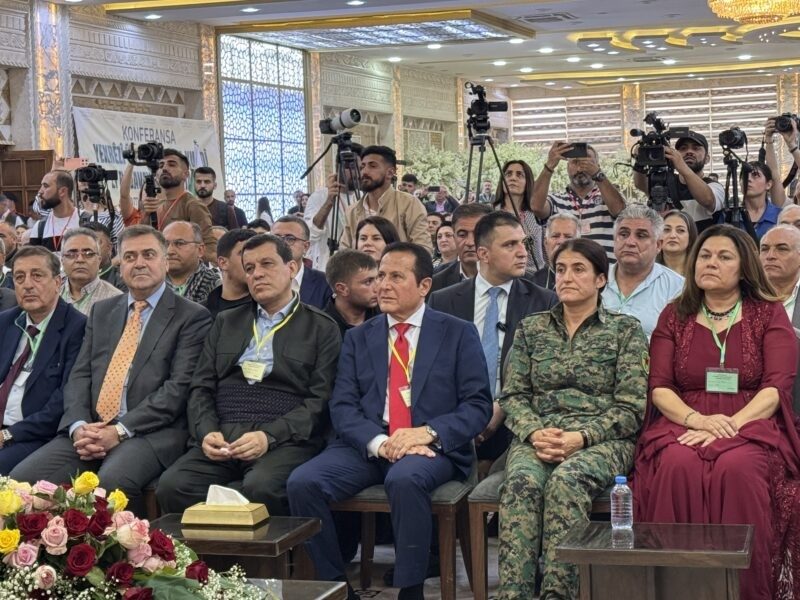
The changing role of Syrian Kurds in the new government
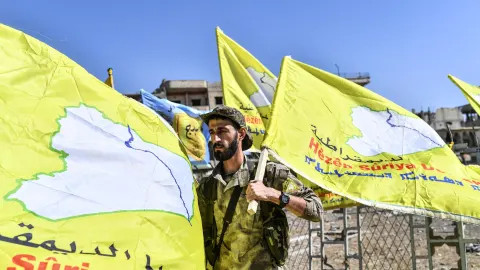
According to KurdPress, the announcement of the dissolution of the Syrian Democratic Forces after the completion of the process of integrating these forces into the Syrian Ministry of Defense and the formation of four military brigades has had a wide impact in the media and political and analytical circles of Kurds and Arabs. This development has been described by a number of observers as one of the most important events in Syria since the fall of Bashar al-Assad's government on December 8, 2024.Tarek Hamo, the author of a note published on the website of the Center for Kurdish Studies in Germany, believes that this development could help consolidate the presence of the Kurds in the structure of the Syrian government, reduce tensions, and help the country move from the stage of armed conflict to the stage of reconstruction and institution-building; a path that Mazloum Abdi, an advisor to the Syrian presidency, has also emphasized.
Among the reactions, the positions of Nechirvan Barzani, the president of the Iraqi Kurdistan Region, and Tom Barak, the US special representative for Syria, have been of particular importance. In a message on the social network X, Barak welcomed the process of integrating the Syrian Democratic Forces into the structure of the central government of Syria, describing it as Washington’s partner’s transition to a national and unified Syrian framework.According to the American official, the Trump administration has paved the way for the organized integration of the Syrian Democratic Forces into government institutions, which he believes can turn past divisions into lasting cooperation and pave the way for a shared future for Syrians. Barak also mentioned the recognition of the Kurdish language in education and the roles that have been assigned to Mazloum Abdi and Ilham Ahmed in the Syrian government structure, calling these measures a sign of recognition of the role of Kurdish leaders and the sacrifices of Kurdish forces in the fight against ISIS.Barak also stressed that true integration should not be based on a winner-loser relationship, but rather on cooperation between parties that have been at odds in the past and are working together to achieve a political and diplomatic solution within the framework of Syrian sovereignty and unity.
Nechirvan Barzani, while welcoming the developments in Damascus, considered the progress made in the integration process of the Syrian Democratic Forces an important step towards strengthening the security and stability of Syria and called on all Kurdish parties and other components of Syrian society to support this process. He also expressed hope that the completion of this process will be the beginning of a new stage in Syria; a stage that guarantees the rights of all citizens and components of this country and paves the way for further peace, security, stability, reconstruction and prosperity.Barzani also praised the efforts of Syrian President Ahmed al-Sharaa and Mazloum Abdi to resolve issues through dialogue and understanding.
From the author's perspective, the support of the United States as one of the main players in the Syrian case and the support of the Iraqi Kurdistan Region, along with the positive positions of Turkey and some Arab countries, have formed a set of regional and international factors in support of the integration process.
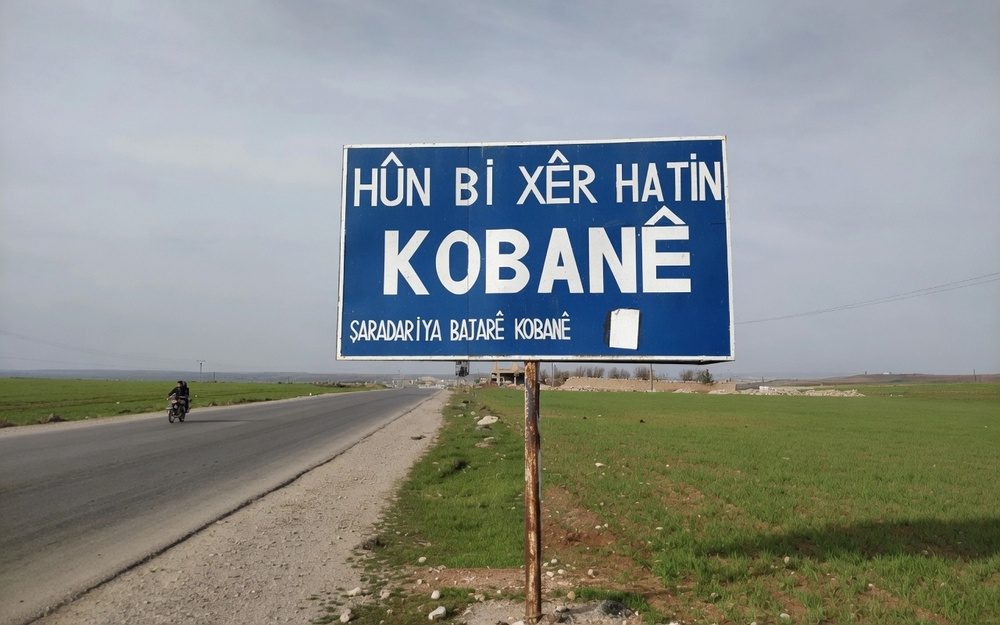
The note adds that during the years of the war with ISIS, the Syrian Democratic Forces played an important role in ensuring security and preventing the spread of internal conflicts in large areas that faced a power vacuum after the withdrawal of Bashar al-Assad's government forces. The liberation of Raqqa, which ISIS had declared the capital of its self-proclaimed caliphate, and the resistance in Kobani are among the events that the author mentions as parts of the force's record.According to Tariq Hammo, a large number of Arab, Syriac and even foreign forces were present alongside the SDF in the battle against ISIS and lost their lives during this war.
The author also emphasizes that Mazloum Abdi and other leaders of the SDF have emphasized from the beginning on preserving the unity of Syria, national dialogue and achieving internal solutions. According to him, the leadership of these forces had repeatedly stated that the SDF should eventually be part of the new Syrian army, because according to them, the existence of two armies in one country is not possible.According to this view, welcoming the new developments in Syria, participating in the political process, signing the March 10 agreement and then the January 29 agreement, along with efforts to reduce tension and prevent the spread of ethnic and religious conflicts, have been among the most important axes of the SDF’s policy during the transition period.
However, in the author’s opinion, the end of the SDF’s military activity does not mean the end of the Kurdish case in Syria; rather, a more difficult stage, namely the political struggle to consolidate Kurdish rights in the legal structure and constitution of Syria, has now begun.
In this context, the note points to the possibility of relying on the achievements achieved in Presidential Decree No. 13 and other official decisions.One of the most important issues raised in this context is the position of the Kurdish language in the educational system and cultural structure of Syria; an issue that, in the author’s view, can be pursued within the framework of government institutions and under the supervision of relevant ministries and agencies.
In addition to these issues, numerous unresolved cases are still facing the Syrian Kurds; including the return of displaced persons and residents of the Afrin, Serikani, Gari Sepi, Raqqa, and parts of Aleppo province to their homes.
The note also emphasizes the need to pay attention to the situation of hundreds of thousands of Kurds living in central Syria and calls for the development of programs to expand the education of the Kurdish language and culture in cooperation with government institutions. The author specifically mentions Kurds living in rural areas of Hama and Latakia, as well as the cities of Damascus and Aleppo.Another part of this note refers to a previous comment by the late Kurdish leader and former Iraqi president Jalal Talabani about the position of the Kurds in Iraq after 2003. Talabani, describing the situation at that time, said that the Kurds “took Baghdad and preserved Kurdistan.” The author compares this statement with the current situation of the Syrian Kurds, writing that the Syrian Kurds are now present in Damascus and have become part of the structure of the state and its institutions.
From Hammo’s perspective, what has been agreed and implemented on the ground so far has preserved a significant part of the Kurdish achievements.He sees this situation as a kind of administrative and decentralized reality in Syria, which, in his opinion, was established in the January 29 agreement and was previously paved by Presidential Decree No. 13 and then Decision No. 13 of the Ministry of Local Administration and Environment on February 15, 2026, in order to increase the powers of governors and strengthen decentralization.
Based on this analysis, existing official decisions and arrangements can be the basis for pursuing further Kurdish demands in the administrative, cultural, and identity areas throughout Syria.
In conclusion, the author considers the recent developments in the Syrian Kurdish case to be part of a broader change in the approach of regional countries to the Kurdish issue; a change that, in his opinion, was first reflected in Turkish policy and then in Syria, and the reaction of Kurdish movements has also been shaped in accordance with this change.In the end, Tariq Hammou refers to the materials published by the Kurdish Studies Center and the note by Syrian scholar Muhammad Sayyed Rassam titled “A Great Event Happened in Damascus” on September 1st for a deeper examination of this development, and considers these sources significant for understanding the strategic dimensions of the recent developments related to the Kurdish issue in Syria.
Source: Kurdish Studies Center in Germany
User comments