
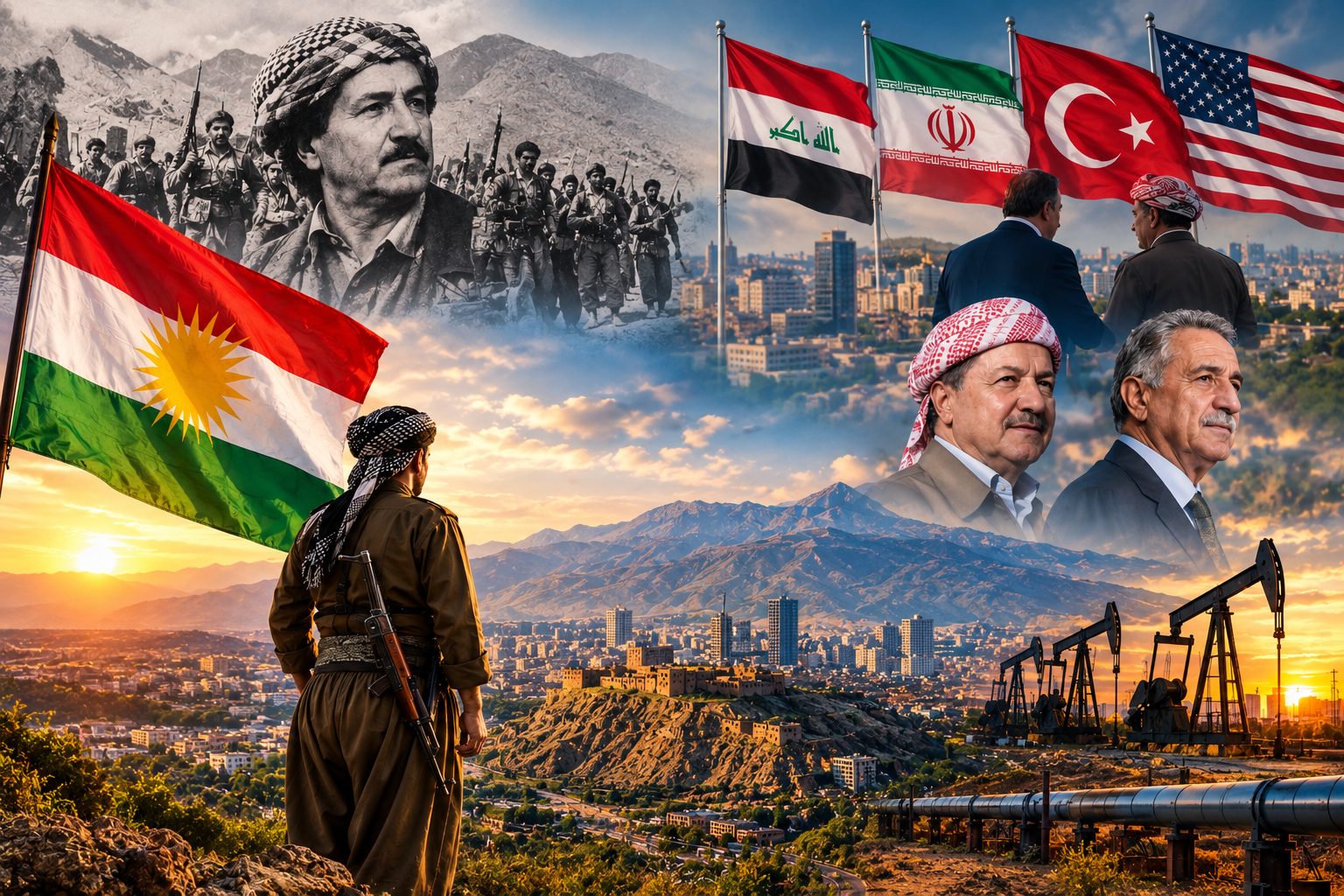
Iraqi Kurdistan Region; A Century of Conflict, Three Decades of Autonomy, and a Perpetual Crisis of Power
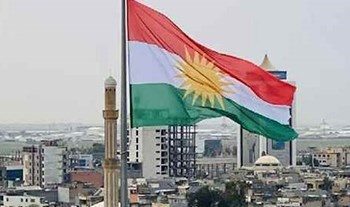
According to KurdPress, the Iraqi Kurdistan Region in the north and northeast of the country, with a population of about 6.5 million people, is considered one of the most important political and security players in Iraq and the Middle East. The region, whose majority population is Kurds, is also home to Arabs, Turkmens, Yazidis, Assyrians, Armenians, Shabaks, and Mandaeans, in addition to Kurds.The region's geographical location, oil and gas resources, and the long history of the Kurds' struggle for autonomy have cemented its place in the equations of Iraq and the region.
Over the past decades, the Kurdistan Region has moved between two contradictory realities; on the one hand, it has been able to form its own political, economic, and security institutions and be recognized as a federal region in the Iraqi constitution, and on the other, internal disputes between the Kurdistan Democratic Party of Iraq and the Patriotic Union of Kurdistan, ongoing disputes with Baghdad, and dependence on economic and security relations with neighboring countries and the United States have continued to limit the scope of its authority.
Today, Erbil is forced to simultaneously manage its relations with Baghdad, Iran, and Turkey, while maintaining its relations with the United States and other Western countries.The situation is further complicated by the fact that the two main parties in Kurdistan, the Kurdistan Democratic Party of Iraq and the Patriotic Union of Kurdistan, have different approaches on many issues and still effectively exercise political and security influence over separate parts of the region.
Historical roots of a long struggle
The political history of the Kurdistan Region can be traced back to the nearly century-long struggle of the Kurds to achieve some form of self-government. The Treaty of Sûre in 1920 briefly offered the possibility of a Kurdish political structure, but three years later the Treaty of Lausanne replaced it, establishing Turkey’s new borders without any provision for Kurdish self-government. As a result, the Kurdish population was divided among different regions, and Kurdish movements in each of these regions pursued different paths in managing their affairs.In Iraq, the Kurdish armed struggle against Baghdad continued in the following decades, and the First Kurdish War of 1961–1970 finally led to the 1970 autonomy agreement between Mullah Mustafa Barzani and Saddam Hussein, then the Iraqi vice president. This agreement was not fully implemented, particularly over the future of Kirkuk and the oil fields, and war broke out again in 1974.
A year later, the Algiers Agreement between Iraq and Iran and the end of Iranian and American support for the Kurdish rebellion ended the uprising. The defeat of 1975 dealt a heavy blow to the Kurdish political movement and deepened its internal divisions.
The 1980s and 1990s were marked by repression, war, and displacement for the Iraqi Kurds. Saddam Hussein’s Anfal campaign of 1987–1988 killed thousands and destroyed thousands of villages.The Kurdish uprising in 1991 and the establishment of a no-fly zone in northern Iraq following the US Operation Peace Spring paved the way for the formation of the Kurdistan Regional Government in 1992.
But this period was also marked by internal strife. The 1994-1998 Kurdish civil war between the Kurdistan Democratic Party of Iraq and the Patriotic Union of Kurdistan was eventually ended with US mediation; however, the two parties effectively ruled separate parts of Kurdistan.
2003; The Beginning of a New Phase
The US invasion of Iraq in 2003 was another turning point in the region’s modern history. The Peshmerga fought alongside US forces against the regime of Saddam Hussein, and Kurdish-controlled areas became the northern front of the coalition.
Two years later, the Iraqi constitution recognized the Kurdistan Region as a federal region.This development solidified the legal status of the regional institutions, but disputes between Erbil and Baghdad over oil, oil revenues, export rights, and disputed territories continued.
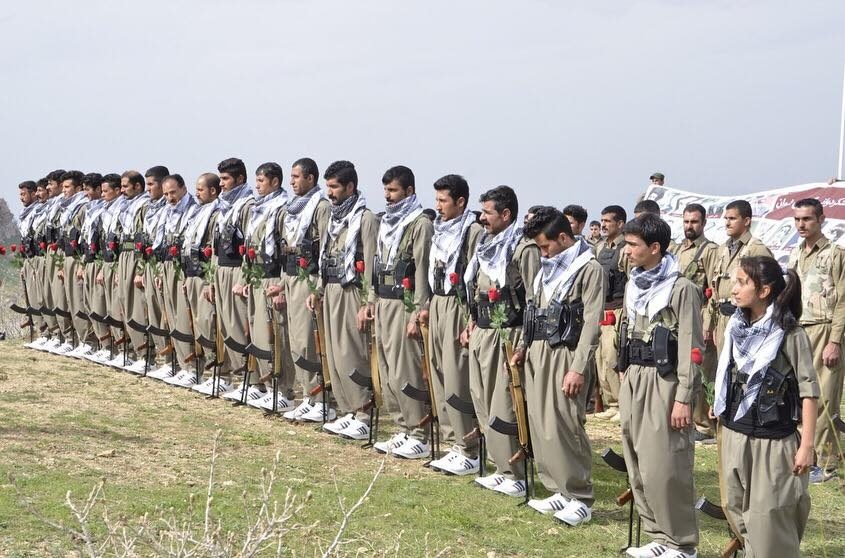
The rise of ISIS in 2014 once again increased the importance of the Kurdistan Region. The Peshmerga were on the front lines of the fight against ISIS, and the United States provided extensive military support to Kurdish forces. During the war, the Peshmerga took control of parts of the disputed territories, including Kirkuk.
However, the extensive cooperation between the Democratic Party and the Patriotic Union during the war against ISIS was short-lived. Massoud Barzani’s decision to hold an independence referendum in September 2017, despite explicit US opposition, once again exposed the differences between the two parties.With Tehran’s support, Baghdad was able to regain control of Kirkuk and a significant part of the disputed areas from Kurdish forces, and Erbil’s position vis-à-vis Baghdad was significantly weakened.
Two Parties, One Region
Although the Kurdistan Region legally has a unitary government, parliament, regional presidency, and council of ministers, its political structure is still influenced by the competition between the Kurdistan Democratic Party of Iraq and the Patriotic Union of Kurdistan.
The Kurdistan Democratic Party of Iraq, founded in 1946 under the leadership of Mullah Mustafa Barzani and headquartered in Erbil, is usually described as a more traditional, nationalist party, and reliant on the Barzani family structure. The Barzani family still holds an important position in the leadership of the party and the institutions of the regional government.
The Patriotic Union of Kurdistan was formed in the 1970s following ideological and political differences with the Democratic Party.Jalal Talabani and a group of leftist forces and urban intellectuals disagreed with the traditional, familial structure of the Democratic Party and eventually founded the Patriotic Union. This party has its headquarters in Sulaymaniyah and is more inclined to cooperate with Baghdad than the Democratic Party.
A power-sharing agreement in 2006 merged the two rival administrations into the regional government structure and established a framework for the division of political posts, ministries, budgets, and security agencies between the two parties. However, this integration was not completed in practice.
As of mid-2026, the regional presidency was held by Nechirvan Barzani of the Democratic Party, and the two deputy regional presidents, Jaafar Sheikh Mustafa and Mustafa Qadir Mustafa, were members of the Patriotic Union. In practice, the Democratic Party still controls Erbil and Dohuk, while the Patriotic Union has influence over Sulaymaniyah and parts of Erbil and Kirkuk.This dichotomy is not limited to politics. The structure of the Peshmerga forces is also still influenced by party divisions. Although the Peshmerga legally operate under the supervision of the Peshmerga Ministry of the Kurdistan Regional Government, parts of this force remain loyal to the Democratic Party or the Patriotic Union. A similar situation can be seen in the internal security apparatus and intelligence agencies of the two parties.
For this reason, one of the fundamental problems of the Kurdistan Region is that the unitary government that exists in law is still not sufficiently integrated in practice in many areas.
Economy; Oil at the Center of Everything
The Kurdistan Region’s economy is more dependent on oil and gas than anything else. According to the Middle East Institute, oil accounts for about 80 percent of the region’s revenues.Such dependence has made the region’s economy vulnerable to oil price fluctuations, disruptions in transmission lines, and political disputes with Baghdad.
In recent years, the regional government has tried to develop agriculture, industry, and tourism and wean the economy off oil, but these efforts have not yet fundamentally changed the region’s economic structure.
Agriculture, once a major sector of the Kurdistan region’s economy, has shrunk dramatically in the past few decades. The Anfal campaign destroyed large swaths of villages and farmland, displacing the rural workforce. Then, the oil-for-food program of the 1990s and 2000s made it more cost-effective to import food than to invest in domestic production.
Agricultural production has improved in recent years, but it still falls far short of the region’s actual arable land and water resources.On the other hand, the public sector is very large, employing more than a third of the adult workforce by some estimates. Paying salaries and frequent disputes between Erbil and Baghdad over the region’s share of the federal budget have put significant pressure on the regional government’s financial resources.
The informal economy also plays a significant role, with many transactions conducted in cash. This makes it difficult to gauge the true size of economic activity and has led the regional government to develop a banking system and formal payments.
The United States: A Close Ally, but Opposing Independence
The United States' relationship with the Kurdistan Region is one of the region's most important foreign relations. Washington supports the stability of a federal Iraq and considers the regional government an important regional partner, but it has consistently opposed Kurdish independence.
US-Kurdish relations entered a new phase after the 1991 Gulf War. Operation Peace Spring to aid Kurdish refugees and the establishment of a no-fly zone in northern Iraq paved the way for the formation of a Kurdish self-rule structure.
This cooperation expanded after the US invasion of Iraq in 2003. The Peshmerga operated alongside US special forces and became Washington's most important ground partner in northern Iraq in the fight against ISIS.
In 2014, when ISIS advanced towards Erbil, US airstrikes prevented the region from falling.The US continued to provide the Peshmerga with military training, weapons, equipment, intelligence and air support.
Military cooperation remains a cornerstone of Washington-Irbil relations. However, this relationship has not been without its differences. After their important role in defeating ISIS, the Iraqi Kurds expected the US to support them on their path to independence, but Washington opposed the 2017 independence referendum.
In 2026, there were reports of discussions within the Donald Trump administration about the possible use of Kurdish forces in the recent US war with Iran, although this did not become official US policy.
The Kurdistan Region at a Sensitive Point
The Kurdistan Region of Iraq today has a place in the Middle East equations that goes beyond its geographical size.Its geographical location, oil and gas resources, shared borders with three Kurdish-populated countries, and the role of the Peshmerga in the fight against ISIS have made the region an important partner for regional and international powers.
However, the region’s most important issue continues to come from within. The rivalry between the Kurdistan Democratic Party of Iraq and the Patriotic Union of Kurdistan has divided the region’s political and security structure and has also affected how it interacts with Baghdad, Tehran, Ankara, and Washington.
Baghdad, Tehran, and Ankara each have different relationships with the two main Kurdish parties, and this internal divide has limited the region’s bargaining power. On the one hand, the region depends on Baghdad for its share of the budget, on the other hand, it needs Turkey for oil exports and a significant portion of its foreign trade, and it also has extensive security and economic relations with Iran and the United States.From the Middle East Institute’s perspective, the region’s future depends more on the ability of the Democratic Party and the Patriotic Union to resolve internal disputes and present a common position on regional developments than on a specific foreign relationship. If these two parties fail to truly integrate the region’s political and security structures, its economic resources and security capabilities will continue to translate into political power far below their true potential.
Middle East Institute

User comments