
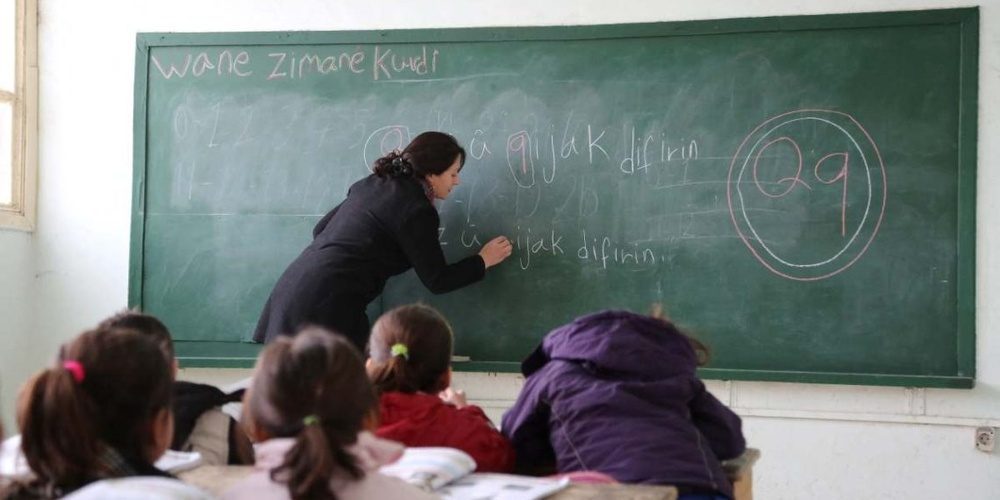
The fate of the Kurdish language in the new Syrian order
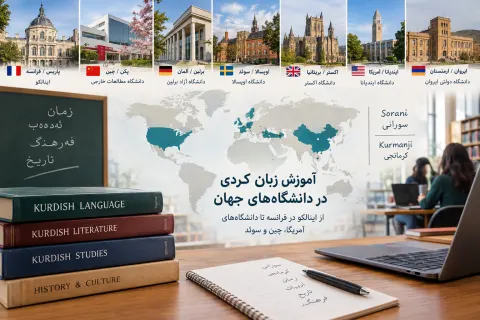
According to KurdPress, the decision of the Syrian Ministry of Education to teach Kurdish as a "national language" from the beginning of the 2026-2027 academic year can, at first glance, be seen as a sign of Damascus's change in approach towards one of the most important cultural demands of the Kurds. According to this decision, Kurdish will be taught in areas with a Kurdish population on an optional basis for three hours a week in public and private schools, and its score will also be calculated in the final assessment of students. However, this decision does not make Kurdish the official language of Syria.The main issue for Syrian Kurds is not simply the possibility of “learning” Kurdish. Their historical demand has been for Kurdish to become the language of education, public institutions, and state structures, and to find an official and constitutional place in the Kurdish regions of Syria. In this view, language is not simply a means of communication or a cultural issue, but rather one of the foundations of Kurdish political, geographical, cultural, and national identity.
Therefore, the place of the Kurdish language in the new Syrian order cannot be assessed solely on the basis of increasing the possibility of teaching it. The fundamental question is whether Damascus is moving beyond the historical pattern of a monolingual, mono-identity state or whether it has merely changed the form and literature of this policy.
In the political memory of Syrian Kurds, the Kurdish language has become one of the most important symbols of the struggle for recognition over the decades.Kurdish was the language of the home, family, community, and daily life of the Kurds, while Arabic was mainly the language of school, administration, and communication with state institutions. This separation led many Kurds to see the state as an external institution that represented neither their language nor their identity.
This situation has a long history. In the 1920s, in the Jarablus region, Kurdish became the official language at the local level for a time and was used in education; knowledge of Kurdish alongside Arabic was even required to hold certain government jobs. However, this exceptional and limited experience never became a sustainable model throughout Syria.
From this perspective, Damascus’s new decision is a limited but still incomplete step forward. The main difference from the official recognition of the Kurdish language in a multilingual system is that Kurdish does not yet have an equal place with Arabic in the Syrian state structure.Arabic remains the main language of official identity, communication with state institutions and the constitutional definition of Syrian society, while Kurdish is offered more as an optional subject for citizens of Kurdish-dominated areas.
According to the analysis of the journal Daraj, such an approach could be a reproduction of the same historical policy with a new literature, namely the limited acceptance of Kurdish in the cultural sphere, without its full acceptance as one of the constituent languages of the Syrian state and society. In this context, Kurdish is a language that can be learned, but it is not yet a language that can be used as the language of education, administration and official structure of the country on the same level as Arabic.
This difference is of great political importance. For Kurds, the issue of language is inseparable from the issue of identity.As this publication emphasizes, the demand for Kurdish education was not just a request to learn vocabulary and grammar; it was also a demand to make Kurdish the language of cities, schools, and public institutions. For this reason, increasing Kurdish language classes does not necessarily mean solving the Kurdish language problem.
In fact, the real test of Syria’s new order in the field of language will be whether the new government is willing to define Syria as a multi-ethnic and multilingual country or whether it will continue to make Arab identity and the Arabic language the main framework for defining citizenship. Daraj raises the concern that the limited acceptance of Kurdish cultural characteristics, if not accompanied by a change in the definition of the Syrian state and political identity, could be a form of assimilation from above and within the framework of the dominant identity.From this perspective, the position of the Kurdish language in the new Syrian order can be described as one of “limited officialdom” because, although Kurdish is no longer as undeniable as it once was, it has not yet reached a position where it can be part of the official architecture of the Syrian state alongside Arabic. This is the gap between “allowing a language” and “recognizing the linguistic rights of a community.”
Therefore, the importance of the new decision lies not in the number of hours of Kurdish teaching, but in the question of how the new Syria will define itself. If the Kurds continue to be considered merely a cultural minority within a fundamentally Arab identity, Kurdish language education could be structurally limited. But if the new Syrian order moves towards recognizing the country’s ethnic and linguistic plurality, Kurdish education could be the first step in a broader institutional change.Ultimately, the Kurdish issue is a test of the depth of political transformation in the new Syria. Accepting Kurdish in schools does not in itself mean the end of the legacy of denial and assimilation policies. The decisive criterion will be whether Kurdish is transformed from a “language that can be taught” to a “language with rights,” so that it can have an official presence not only in the classroom but also in the school, municipality, administration, media, and political structure of Syria. The publication emphasizes that Kurds have never simply wanted to learn their own language; they have also wanted their language to be the language of the institutions of their city and their land.

User comments