Damascus and Syrian Kurds have a serious disagreement over education in their mother tongue
According to KurdPress, Reuters news agency, in a report, narrated the experience of Syrian Kurds in reviving their mother tongue and expanding education in Kurdish, and showed how the developments in the Syrian war paved the way for the Kurdish language to leave the margins of the educational system and enter schools and cultural centers. These achievements are now facing a new challenge with the return of the authority of the central government in Syria and the integration of the administrative structures of the Kurdish regions into state institutions.In this report, whose images and narration date back to the experience of the first years of Kurdish self-rule, Reuters points to the changing conditions of Kurdish language education after the start of the Syrian war in 2011; a period during which Syrian Kurds were able to establish their own schools, educational centers and cultural institutions after decades of deprivation from formal education in their mother tongue.
Before the start of the Syrian war, Kurdish language education was banned in the country's schools, and the policies of the Baath Party government, based on Arab nationalism, limited the possibility of teaching and spreading the Kurdish language. Publishing books and cultural materials in Kurdish could also have security implications for activists in this field.
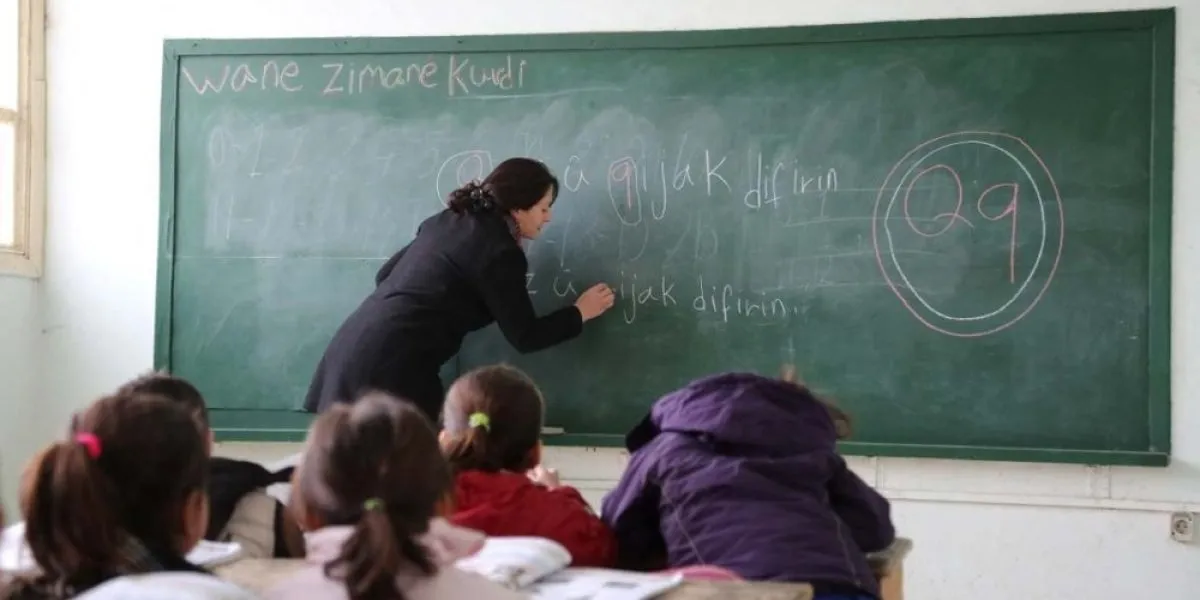
However, with the outbreak of the Syrian war and the formation of self-government in the Kurdish-populated areas of the north and northeast of the country, the situation gradually changed. Kurdish language teaching entered schools, book publishing centers expanded their activities, and cultural activists were able to work in the fields of media, education, and holding cultural festivals.
During this period, the autonomous administration's educational institutions developed curricula in Kurdish, Arabic, and Syriac and expanded mother tongue education in schools in the areas under their administration.
According to Reuters, one of the main concerns of Kurdish cultural activists was the possibility of losing educational gains if conflicts returned or political conditions changed. These concerns entered a new phase after the political and military developments in Syria and the fall of the Bashar al-Assad regime in December 2024.
In January 2026, the Syrian government issued Decree No. 13, recognizing Kurdish as a national language and providing for its teaching in areas with significant Kurdish populations. The Syrian Ministry of Education also developed regulations to implement this decision in public and private schools. However, the manner in which this policy was implemented has been criticized by Kurdish officials, teachers, and students.
According to decisions by the Syrian Ministry of Education, Kurdish language instruction in schools in Kurdish-populated areas has been limited to three sessions per week.
The Reuters report shows that the issue of Kurdish language teaching in Syria is no longer simply a cultural and educational issue, but has become one of the main areas of conflict over how to integrate Kurdish regions into the central government structure.
The experience of past years has shown that teaching Kurdish to the Syrian Kurdish community goes beyond learning a language in teaching various subjects and is related to preserving cultural identity, transmitting linguistic heritage to the new generation, and enjoying equal citizenship rights.

User comments