
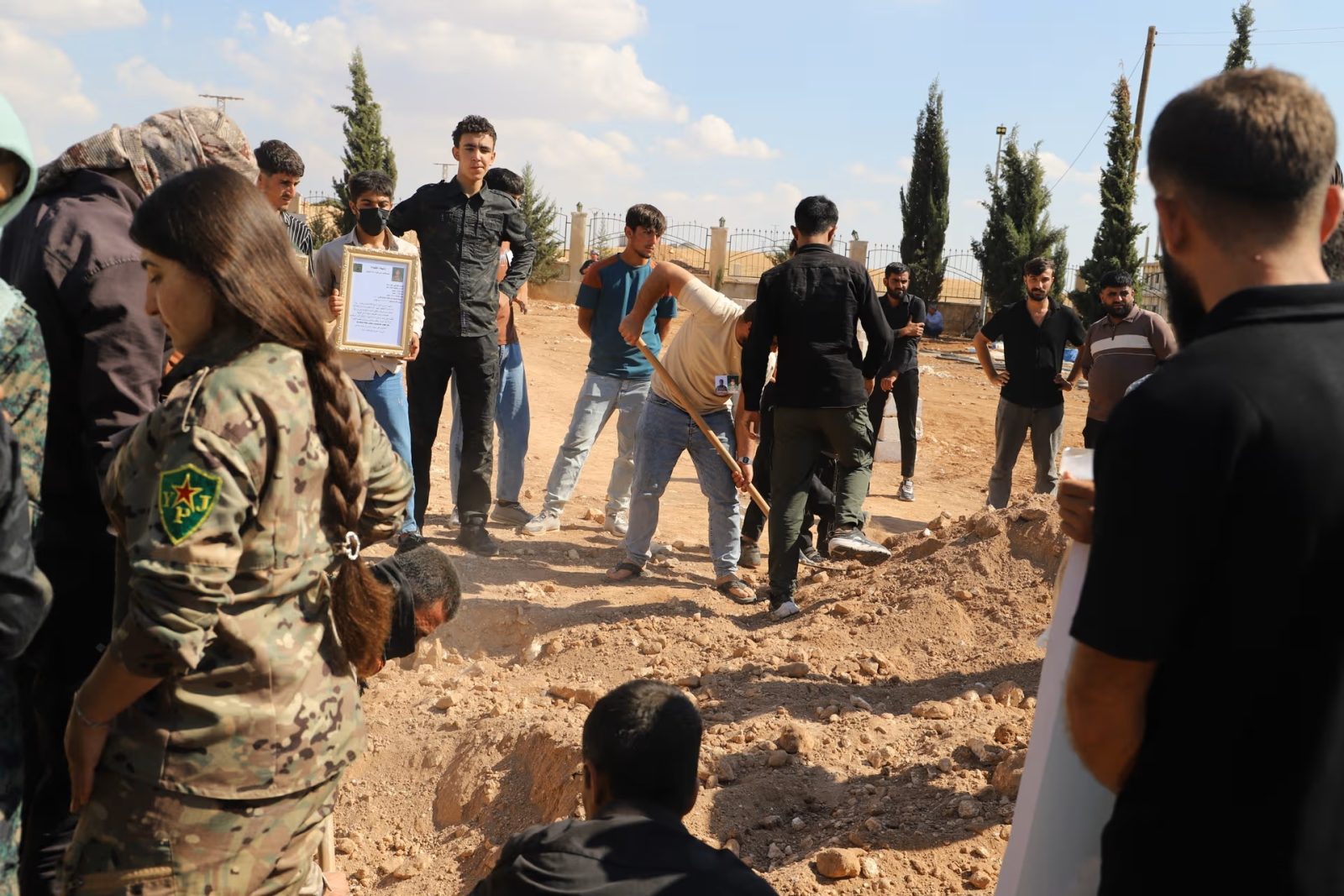
Concerns about the fading of Kurdish identity in Kobani
According to KurdPress, the Syrian Kurdish city of Kobani, which became a symbol of resistance against the ISIS group during the war, is now facing a series of security, economic, and social problems.Although the siege of the city has officially ended after clashes between the Tahrir al-Sham and the Syrian Democratic Forces in January 2026, restrictions on movement remain in place and residents have not fully regained access to surrounding villages. Military forces, whom the people of Kobani consider their enemies, are stationed around the city and sometimes enter it. For this reason, some residents believe that the siege has not yet ended, at least in their daily lives.
The streets of Kobani are still the scene of families walking, children playing and the elderly in front of their homes; but behind this peaceful image, the effects of years of war, poverty and the loss of loved ones can be seen. Despite the hospitality and welcome of visitors, people speak of fatigue and despair when talking about living conditions.The lack of basic amenities, the difficulty of obtaining fuel, reduced access to electricity and water, and the rising cost of living have put a heavy strain on families.
Susan Kobani, a former member of the Women’s Defense Units, is one of those who still carries the scars of the war. She joined the ranks of the forces at the age of 17 in 2014. Susan Kobani says that during the first training course for new recruits of the People’s Defense Units and the Women’s Defense Units, about 40 people were with her, but after 12 years, she is the only survivor of that group.
Susan Kobani believes that being wounded in the ISIS attack on Kobani on June 25, 2015 was one of the reasons she survived. The attack took place five months after the city was liberated.According to the narrative published in the statistical report, despite the official closure of the Turkish border crossing, the attackers crossed the border, and another group entered the city through Jarablus. Some of the attackers wore YPG uniforms and shaved their beards in an attempt to move around the city without attracting attention.
During the attack, 252 people, mostly civilians, were killed, including 64 women and 35 children. Suzanne Kobani was shot in the head, losing the sight in one eye and gradually losing the sight in the other. This injury destroyed almost all of her memories and ended her military service in the Women’s Defense Units. Some of Suzanne Kobani’s memories later returned with the help of her friends and comrades, who told her the story of her life.She now works at the Mullah Gazi Institute, which cares for wounded soldiers.
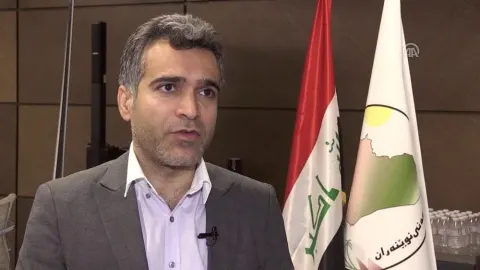
Along with these historical wounds, the political future of Kobani and the status of the achievements of the self-governing administration have become one of the main concerns of the residents.Medinah Sayed Ahmed, a member of the Democratic Union Party in Kobani, emphasized in an interview with the Amagi magazine that what has been done so far between the autonomous administration and the Syrian government is merely an agreement and should not be equated with final integration.
Medinah Sayed Ahmed believes that the integration of the autonomous administration into the central government structure cannot mean unilateral acceptance of Damascus’ authority, but rather that this process must be accompanied by the recognition of the rights of the Kurds and their political and social achievements. According to her, if the agreement becomes a tool to impose the will of the central government, the concept of integration will change from a political mechanism to resolve disputes to a process involving pressure and coercion. In contrast, the demands of the Kobani Kurds are clear from Medinah Sayed Ahmed's perspective: recognition of Kurdish identity in the Syrian constitution, guaranteeing the status of the Kurdish language, and maintaining the autonomous administration. She emphasizes that the Kurds' goal is not to separate from Syria, but to enjoy the right to self-government within the framework of this country.According to him, nearly 3,000 families in Kobani have lost members in the fighting over the past years, and the city’s achievements have been achieved with the sacrifice and loss of lives of many soldiers and civilians.
However, political concerns for many families are outweighed by the daily hardships of their livelihoods. Reduced access to electricity and water, shortages of diesel and rising fuel prices have made life more difficult for people. Medinah Sayed Ahmed says people are asking officials why, if the integration is supposed to improve conditions, their access to basic amenities has decreased since the process began. She believes that the worsening economic situation has undermined public confidence in the outcome of the agreement with Damascus.
What is happening in Kobani today is not simply a debate about how the autonomous administration should join the central government structure. The city’s residents are also demanding the lifting of security restrictions, improved economic conditions, guaranteed cultural and linguistic rights for Kurds, and the preservation of the possibility of women’s social and political participation. For them, an agreement with Damascus can only mean the end of the differences when Kurdish identity, the Kurdish language, and the achievements of autonomy have a clear and guaranteed place in Syria’s future political structure. Otherwise, concerns about the weakening of Kurdish identity and the loss of the achievements of past years will remain in Kobani.

User comments