
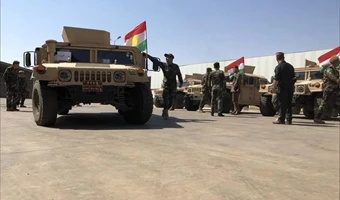
The new challenge of maintaining the security of the Kurdistan Region after the US withdrawal
According to KurdPress, the complete withdrawal of the international anti-ISIS coalition from the Kurdistan Region of Iraq on September 30, 2026, has increased concerns about the security vulnerability of this region. Iraqi Kurdistan leaders believe that the reduction in the military presence of the United States and its allies, in a situation where the region has experienced more than a thousand drone and missile attacks since the beginning of the US-Iran war, could pave the way for increased military and political pressure. According to officials and experts who spoke to the Fair Observer, the lack of effective air defense systems and the region’s dependence on Baghdad for defense equipment are the most important security gaps after the coalition’s withdrawal.
The US-led international coalition, which was formed in 2014 to combat ISIS, gradually ended its military mission in Iraq within the framework of an agreement between the Joe Biden administration and the Iraqi government in September 2024. The first phase of this process was completed in January 2026, and in the second phase, coalition forces completely withdrew from the Kurdistan Region on September 30 of the same year. This withdrawal was part of the plan to end the coalition’s military mission in Iraq, but its consequences for the Kurdistan Region are accompanied by serious concerns.
The Kurds’ most important concern is the reduction in deterrence against drone and missile attacks. The Kurdistan Region has been the target of more than a thousand attacks since February 28 during the US-Iranian conflict. These attacks have targeted coalition positions, opposition parties based in the region, security forces and some civilian targets. According to information provided in the Fire Observer report, these attacks have left more than 30 dead.
These attacks were not limited to the period of the US-Iran war; before the conflict began, oil facilities, opposition parties, coalition forces and some economic targets were also targeted. On October 4, Masoud Barzani, the head of the Kurdistan Democratic Party, announced that about half of the attacks were carried out directly by Iran, while the rest were carried out by armed groups affiliated with Tehran inside Iraq.
In addition to threats, the possibility of ISIS resurgence is another security concern after the coalition’s withdrawal. On October 5, a clash between security forces and ISIS elements in Hawijah city in Kirkuk province left one police officer dead and two others injured. On the same day, the Kurdistan Regional Government’s security apparatus announced the arrest of 22 ISIS members who, it said, were planning to establish a base in the Huraman region. The Kurdistan Regional Government’s Minister of Interior also warned on October 13 that ISIS had not been completely eliminated and remained a security threat.
Overall, the Fair Observer report shows that the main concern of Iraqi Kurds after the coalition's withdrawal is not simply the possibility of ISIS's return, but rather the region's increased vulnerability to it, especially in the event of a renewed confrontation between Tehran and Washington.

User comments