
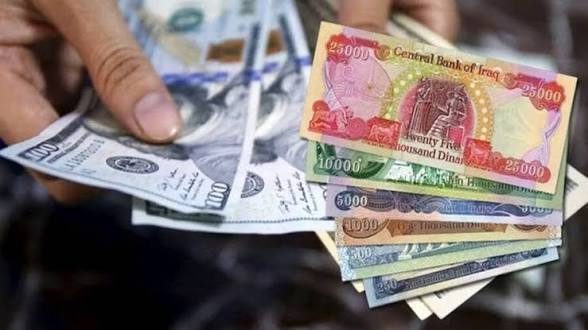
Iraqi Parliament Against Al-Zaidi Government’s Currency Policy; Calls for Return of Dollar Rate
According to Kurdistan Press, the devaluation of the Iraqi dinar and the increase in the dollar rate have sparked sharp disagreements between the government and parliament over financial and economic policies, and have become a political challenge for the government of Iraqi Prime Minister Ali Al-Zaidi.
On October 6, the Iraqi Council of Ministers approved a 15 percent increase in the dollar rate from 1,320 to 1,520 dinars. A day later, the Iraqi Parliament suspended its agenda to review the decision, and a number of MPs called for its cancellation before submitting the 2027 budget draft to parliament.The Central Bank of Iraq announced that it would buy dollars from the Ministry of Finance at a rate of 1,500 dinars and offer them to banks at a rate of 1,510 dinars and to the public at a rate of 1,520 dinars. The bank described the exchange rate change as a “positive adjustment” and stressed that its foreign exchange reserves were sufficient to meet the demand for dollars.
Haider Ghazi, the media director of the Central Bank of Iraq, also announced that the government had repeatedly withdrawn from foreign exchange reserves to pay the salaries of more than 9 million employees. According to him, rates of up to 1,900 dinars per dollar had even been proposed, and continuing the previous rate policy could lead the country directly to the “abyss”. In the open market, the dollar rate reached close to 1,800 dinars on October 7, but fell to around 1,680 dinars at the end of trading. This figure also reached around 1,655 dinars on October 8.At the same time, the price of some food items increased by up to 15 percent, and a number of companies stopped selling their products until the exchange rate stabilized.
In political reactions, a number of members of parliament have begun collecting signatures to cancel the government's decision. The Badr faction has also called for a review of this decision.
Falah al-Khafaji, a member of the Government of Law faction, has warned that if the new rate remains, parliament will take action to withdraw confidence in the Zaidi government. In contrast, Ali al-Jourani of the Hikmat Movement has claimed that this decision was made by the Shiite Coordination Council and that the leaders of this movement have also approved it.On the other hand, Majid Shengali, a representative of the Kurdistan Democratic Party, said that every billion dollars sold by the central bank at the new rates would generate about 200 billion dinars in additional revenue for the treasury and could guarantee the payment of government employees’ salaries for at least two to three months.
These developments come as the Iraqi government is about to present a draft budget for 2027. The draft budget envisages expenditures equivalent to 217 trillion dinars, a deficit of about 50 trillion dinars, and an oil price of $58 per barrel.
The devaluation of the dinar in order to reduce the government’s financial pressures has now become one of the most important economic and political challenges for the Zaidi government on the path to approving the budget.

User comments