
Discontent in Kurdish-populated areas of Syria increases as integration process progresses
According to KurdPress, the increase in fuel prices, restrictions on Kurdish language education, the death of a former SDF soldier after joining the Syrian army, and the fire incident in the Kobani prison are among the most important factors that have affected the social atmosphere in the Kurdish-populated areas of northern and eastern Syria in recent weeks.The developments come as the Syrian interim government seeks to expand its control over areas previously under self-rule and integrate the SDF into the government’s military structure under a January agreement between the two sides.
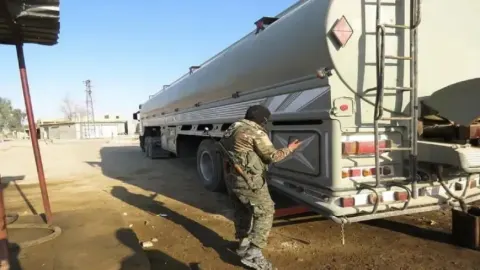
In the most recent case, hundreds of oil trucks were stopped near Tel Tamr, with protesters blocking the M4 highway to protest against the increase in fuel prices. The route is a major route for transporting oil from the Qamishlo and Rmailan fields, and the blockade has halted the passage of oil trucks.
The protests intensified after the Syrian government increased the price of gasoline by about 30 percent and diesel by 40 percent. The government cited the increase in global fuel prices following the US-Iran war as well as repairs to the Banias refinery as reasons for the decision.The fuel price hike in northern and eastern Syria has been particularly sensitive, as fuel was subsidized during the SDF’s control of these areas and oil fields. The transfer of control of the region’s resources and institutions to the central government and the removal of these subsidies had also increased economic pressure on residents before the recent hike.
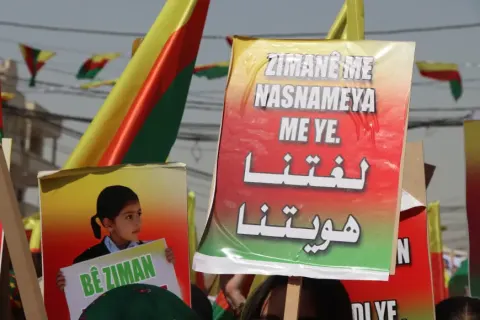
In addition to fuel, Kurdish language education has also become a major area of dissatisfaction. Students in Qamishlo and Hasakah have been protesting a decision by the Syrian government’s Ministry of Education in recent weeks to recognize Kurdish as an official language of instruction for the first time in Syrian history, but its teaching has been limited to three sessions per week.This restriction has been objected to in a situation where, during the regime of Bashar al-Assad, the teaching of Kurdish in schools was prohibited, and during the Syrian war, educational institutions affiliated with the autonomous administration in the north and east established an educational system in which the majority of education was conducted in Kurdish.
Another issue that has affected the social atmosphere in the region is the kidnapping and killing of a former SDF soldier in Hasakah. He had joined the Syrian army after an agreement between the SDF leadership and Damascus, but was kidnapped and killed by a group of Arabs earlier this month. The incident raised concerns about the security of the forces that are joining the Syrian government structures as part of the integration process.
In the wake of these developments, Kobani prison also witnessed a prisoner riot and a fire that killed nine prisoners.Mazloum Abdi, a former SDF commander and current advisor to Ahmed al-Shara, traveled to Kobani to attend the funerals of the victims and tried to prevent the escalation of tensions.
A Kobani resident warned of the consequences of the existing dissatisfaction with the integration process, saying that increasing tensions in society could affect the implementation of the agreement.
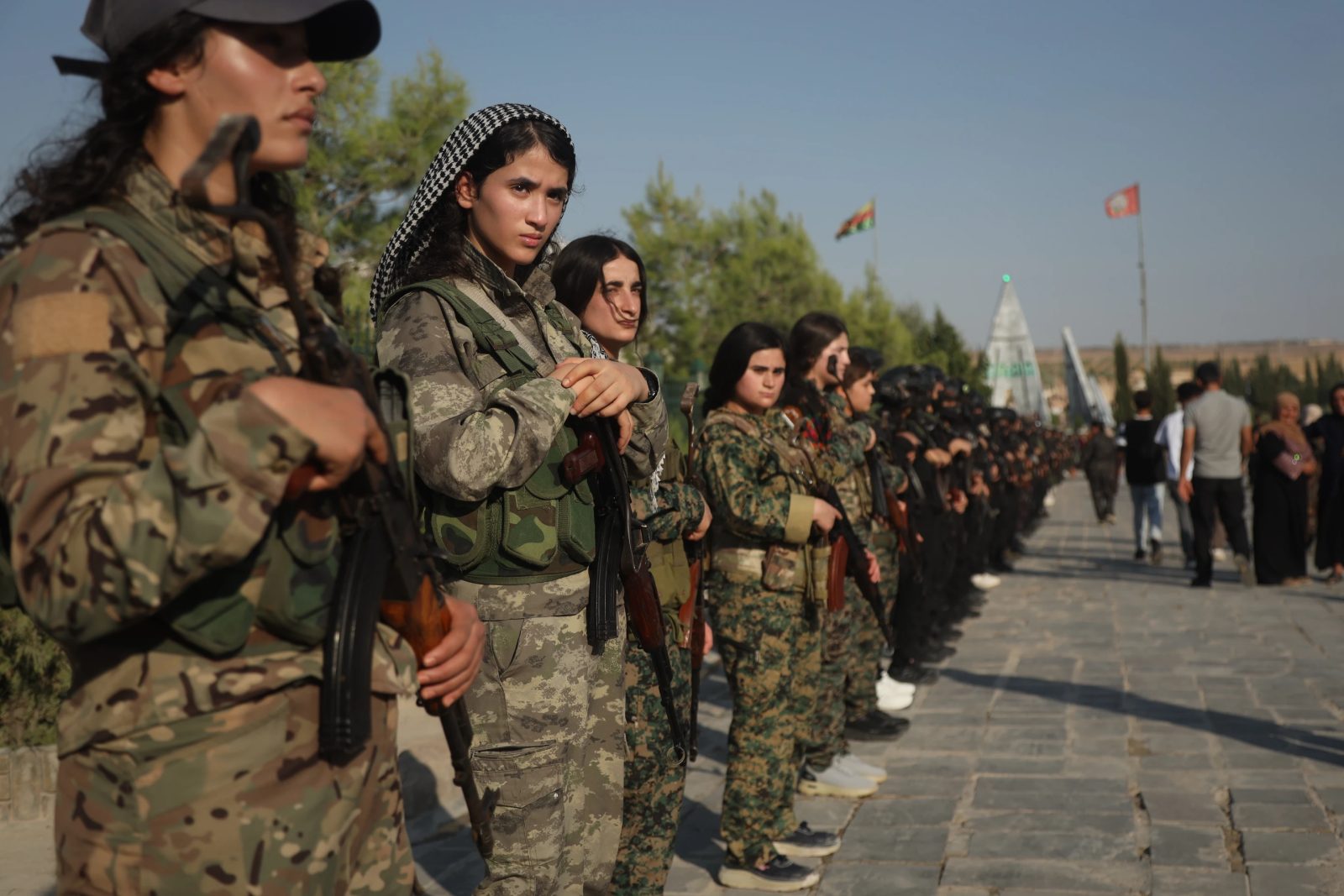
The fate of the SDF’s female forces is another unresolved issue in the integration talks. The Women’s Protection Units (YPJ), which played a key role in the fight against ISIS, want their forces to be integrated into the security forces of the Syrian Interior Ministry.
According to the YPJ’s proposal, the group’s female forces could operate as a regiment in the Ministry of Interior’s Special Operations Department. However, there is disagreement about the presence of women in special operations units.The YPJ has also called for the continuation of its operations in the Hasakah and Aleppo regions, a matter that the force’s command says is being discussed with the Syrian government.
There are currently around 1,500 women in the YPJ, down from around 5,000 at its peak. The YPJ command has stressed that preserving the nature and structure of the force is important for the protection of women, the movement and the region.
Despite these differences, the implementation of the agreement between Damascus and the SDF continues. The agreement, reached in January after weeks of fighting between the two sides, has not only halted the fighting but also established a framework for the gradual integration of the SDF forces and the transfer of institutions under its control to the central government structure.Recent developments show that the implementation of this agreement is not limited to military issues, and issues such as Kurdish rights, Kurdish language training, the status of female forces, fuel prices, economic conditions, and the way in which northeastern Syria is governed can also affect its progress.
On the other hand, concerns about the loss of rights and achievements during the period of self-government still exist among parts of Kurdish society. The Kurds, who made up about 10 percent of the country's population before the start of the Syrian civil war, faced various restrictions during the Assad family's rule and were able to establish independent political, military, and educational structures in northern and eastern Syria during the war.
Now, with the gradual return of central government control to these areas, how to preserve the rights and achievements of the Kurds in the new Syrian structure has become one of the fundamental issues in the integration process.Overall, rising fuel prices, social protests, the issue of Kurdish language education, security incidents, and disagreements over the future of female forces show that the implementation of the agreement between Damascus and the SDF faces a series of simultaneous challenges. At the same time, the continuation of talks and the gradual implementation of the agreement show that the integration process is still ongoing and that the two sides have so far managed to avoid a return to full-scale conflict.



User comments