
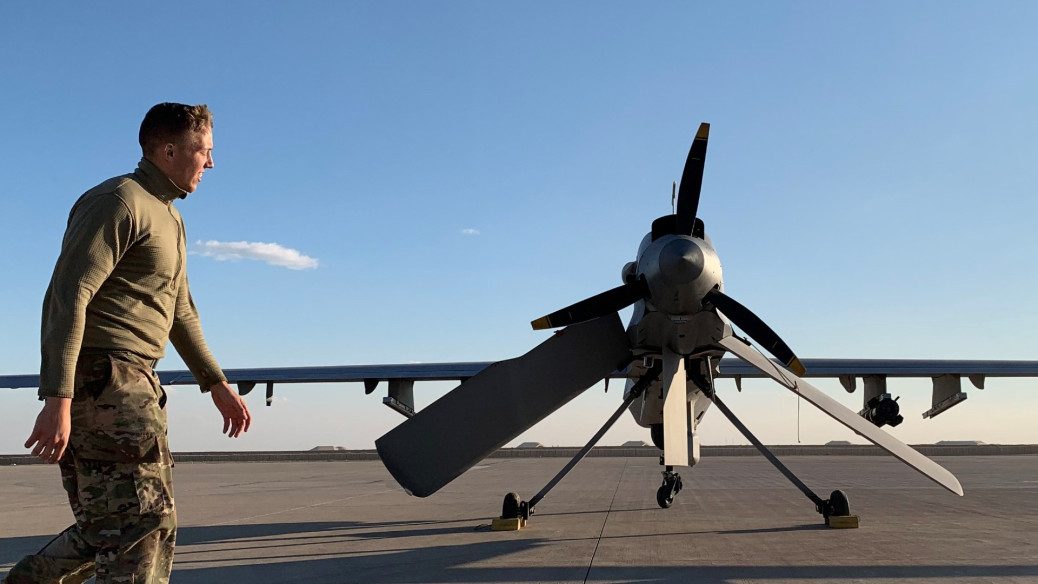
Kurds’ ambiguous assessment of the security situation in the Kurdistan Region after the US withdrawal
According to Kurdpress, as the end of the international coalition’s mission against ISIS in Iraq approaches, the withdrawal of US troops and military equipment, especially air defense systems deployed in the Kurdistan Region, has increased concerns about Erbil’s security vulnerability and the creation of a new vacuum in northern Iraq.
The National newspaper wrote in a report that the withdrawal of US air defense systems from Iraq is not only a domestic military development and could also affect the security calculations of the countries in the region.Meanwhile, the New Arab newspaper reported, citing a Kurdish official in Erbil, that the Kurdistan Regional Government has expressed concern about the consequences of the withdrawal of these systems and the possibility of resuming attacks.
According to the 2024 agreement between Baghdad and Washington, the international coalition mission in Iraq is scheduled to end by September 30, 2026. The withdrawal will include coalition forces and equipment, and Qassem al-Araji, the Iraqi Prime Minister’s security adviser, has confirmed that air defense systems deployed in the Kurdistan Region will also be withdrawn from Iraq.
The Patriot and S-Ram systems deployed around Erbil have been one of the most important layers of defense against missile and drone attacks in recent years, and have played an important role in protecting US and coalition centers in the Kurdistan Region. New Arab also described these systems as an important security shield for the region against repeated attacks.But Erbil’s main concern now is the period after the withdrawal of these systems.
A Kurdish official in Erbil told New Arab that coalition forces will withdraw from Iraq completely, along with the air defense systems. According to the official, the KRG is concerned that removing the systems will leave the region vulnerable to repeated attacks, even leading to deaths.
The official also said that the KRG has asked Baghdad to guarantee that attacks against the region will not resume after the US withdrawal, and that the Iraqi federal government will take action if new attacks occur.
However, according to the same Kurdish official, neither the Iraqi federal government nor the KRG currently have a clear assessment of the security situation after the withdrawal of American forces and systems.This ambiguity is one of Erbil’s most important concerns as the coalition mission nears its end.
The National newspaper has also emphasized that the importance of the American systems deployed in the region is not limited to protecting American bases. The reconnaissance and interception capabilities deployed in northern Iraq, due to the region’s geographical location, have also affected some of the region’s broader security calculations, and their withdrawal could affect regional security beyond the Kurdistan Region.
Maan al-Jabouri, a security and strategic analyst, described the consequences of the US withdrawal for the Kurdistan Region as “direct and significant,” and said that this development will affect the capability and readiness of the armed forces and security institutions, especially in the Kurdistan Region.He warned that the consequences of this situation will not be limited to Iraq as a whole, as the country’s air defense network still faces serious weaknesses. According to Al-Jubouri, after the withdrawal of the American systems, “Iraqi skies will be severely affected” and it will be easier to penetrate the country’s airspace.
This concern arises in a situation where the Kurdistan Region has been repeatedly targeted by drone and missile attacks in recent years. In such a situation, the withdrawal of the American systems could further expose the gap between the existing defense capacity in the region and the indigenous capabilities of Baghdad and Erbil to deal with air threats.
The Iraqi government is trying to fill this gap by creating a national air defense network.Iraqi Defense Ministry spokesman Yahya Rasoul said Baghdad is building an integrated air defense system that includes long-, medium- and short-range capabilities, radar, and command infrastructure.
The Iraqi military had previously developed a six-year plan to build the network, but Prime Minister Ali al-Zaidi has ordered the plan to be implemented in three years, Rasoul said. Baghdad is also in ongoing talks with reputable companies to develop its defense capabilities.
However, al-Jubouri believes that three years is not enough to address this vulnerability. He stressed that building an effective air defense network cannot be achieved by simply purchasing equipment, and that Iraq needs expertise, training, and operational capability to integrate the systems, a process that he said will take “many years.”In summary, the National and New Arab reports show that for Erbil, the US withdrawal from Iraq does not only mean the end of the coalition's military presence; with the withdrawal of the air defense systems, the Kurdistan Region is faced with a fundamental question about security after the US. Erbil has asked Baghdad for security guarantees, but at the same time it has been acknowledged that there is still no clear picture of the security situation after September 30; a vacuum that, if missile and drone attacks are repeated, could become one of the most serious security challenges for the region in the period after the US withdrawal.
In addition to the Kurdistan Region's concerns about the possibility of missile and drone attacks resuming after the withdrawal of the American systems, another security scenario could also affect the region's future, and that is the fate of the peace process between Turkey and the PKK.The withdrawal of some of the US defense capabilities from the region is taking place in a situation where the peace process between Turkey and the PKK has not yet reached a stage where a definitive end to the armed conflicts and Turkish military operations in northern Iraq can be considered guaranteed. If this process ultimately does not lead to a sustainable agreement or if the implementation of the commitments of both parties fails, there is a possibility of a gradual return to the atmosphere of military confrontation.
In such a scenario, the Kurdistan Region may face additional security pressure. Turkey has carried out numerous air and drone operations against PKK positions in various regions of the region in recent years, and the failure of the peace process could pave the way for an escalation of such operations. In this situation, the reduction of the US military and defense presence could further complicate the region’s security equation, as Erbil must simultaneously face two different types of threats.This concern is significant because parts of the border areas of the Kurdistan Region, especially in Dohuk province, have been affected by Turkish military operations in recent years. As a result, if the peace process fails, increased Turkish drone and air strikes could affect the security of villages, residential areas, and civilian infrastructure in the region, in addition to PKK positions.
The current peace process in Turkey began in late 2024, and the PKK announced its disbandment and end of its armed struggle in 2025. However, analyses published in 2026 show that the implementation process of the agreement continues to face political and legal obstacles.For the Kurdistan Region, therefore, the issue is not just how much US air defense capacity will remain after September 30; more importantly, in the period after the US withdrawal, the region may face a series of simultaneous security threats. If the Turkey-PKK peace process fails, the possibility of escalating Turkish air operations, coupled with concerns about attacks from other sides inside and outside Iraq against the Kurdistan Region, could increase security pressure on the region and turn the vacuum created by the withdrawal of US systems into a strategic issue for Erbil.
From this perspective, the withdrawal of US air defense cannot be analyzed solely in the context of the end of the anti-ISIS coalition mission. For the Kurdistan Region, this development coincides with two major regional trends – the redefinition of the relationship between Baghdad and Washington and the future of the Turkey-PKK peace process.K- It will happen and its outcome could directly affect the level of security in northern Iraq.

User comments