
Why is the Damascus Agreement with the Kurds a historic event?
According to Kurdpress, the announcement of the completion of the process of integrating the Syrian Democratic Forces into the country's army on August 25, 2026, is not just a military or administrative development, but could be a turning point in the contemporary history of the Syrian Kurds; an event that, according to Muhammad Sayed Rasas, the author of the article from the Center for Kurdish Studies in Germany, distinguishes Syria after this date from Syria before it.
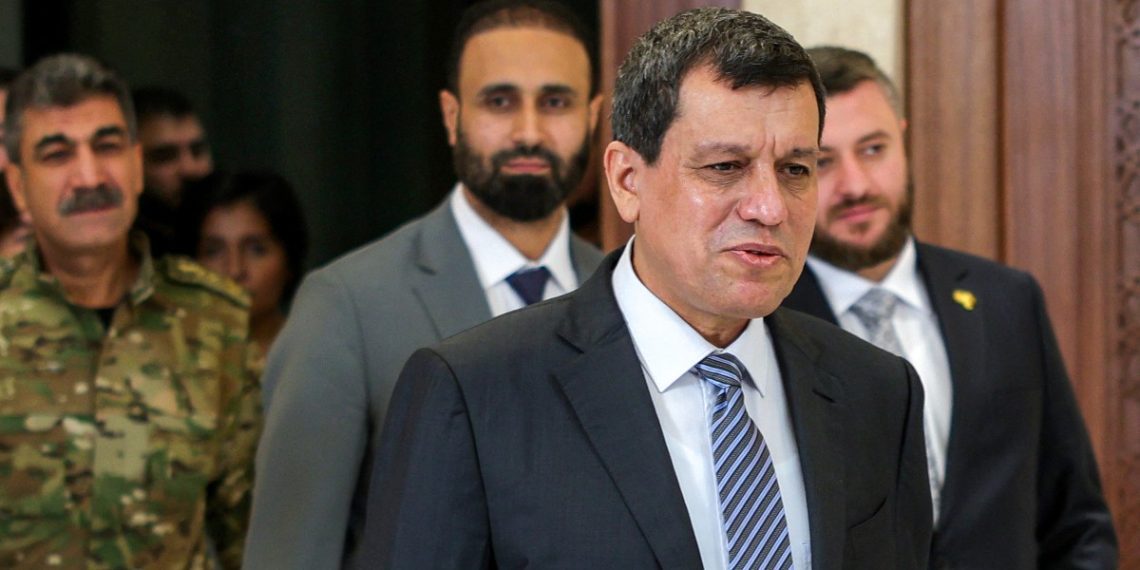
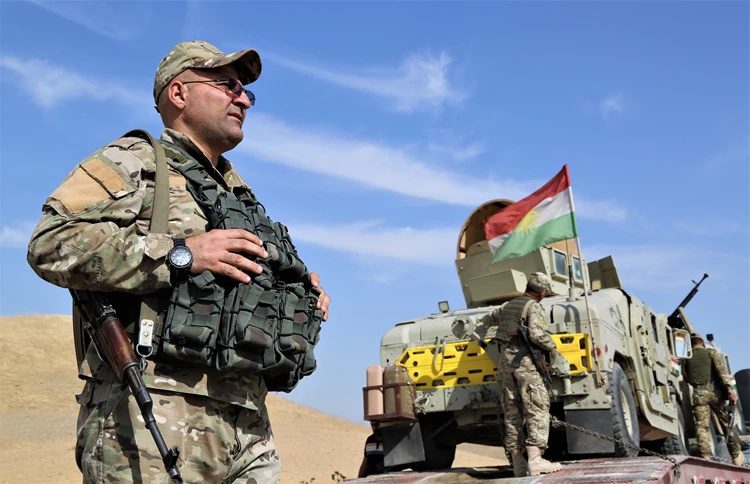
Mazloum Abdi, commander of the Syrian Democratic Forces, announced the completion of the process of integrating the Syrian Democratic Forces into the country's army on Tuesday evening, August 25, at the Presidential Palace in Damascus.This development was made within the framework of the January 29, 2026 agreement between the Syrian government and the Syrian Democratic Forces; an agreement that, beyond military integration, also considered the status of the self-government institutions and the cultural and educational rights of the Kurds in the structure of the Syrian state.
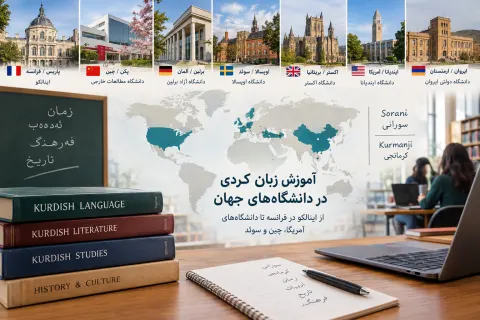
According to Article 9 of this agreement, the self-government institutions should be integrated into the structures of the Syrian state and the employment status of the civilian employees of these institutions should also be recognized. Article 13 also emphasizes the cooperation of the Syrian Ministry of Education in determining the educational path of the Kurdish community and paying attention to its educational characteristics. This follows Presidential Decree No. 13, issued on January 16, 2026, which recognized the Kurdish language as a national language and authorized its teaching in public and private schools in areas where Kurds have a significant share of the population.From this perspective, what happened in the presidential palace in Damascus is not just the end of an independent military structure; it is also the entry of Syrian Kurds into official state institutions after decades of being marginalized and deprived of full political and cultural rights. Since the country’s independence in 1946, Syrian Kurds have faced a series of discriminatory policies and identity restrictions, and for a significant part of this period, they have been on the margins of the official state structure.
The significance of this development becomes even more apparent when we examine it in the context of regional and international developments in recent years. The fall of Bashar al-Assad’s regime on December 8, 2024, fundamentally changed the balance of power in Syria and placed the country more closely than ever before in the orbit of US regional policy.The Syrian Democratic Forces (SDF) had also been the most important Syrian partner of the US in the war against ISIS since 2015 and earlier, through the People’s Protection Units (YPG). In such circumstances, the rapprochement of the political and military structure of northeastern Syria with Damascus gradually turned from a political option into an inevitable path.
The agreement of March 10, 2025, between Mazloum Abdi and Ahmed al-Sharaa, was the first major step in this direction, and the agreement of January 29, 2026, defined a more precise framework for the integration. Thus, the process that ultimately led to the announcement of the completion of the integration of the Syrian Democratic Forces was not the result of a sudden transformation, but rather the result of a simultaneous change in the internal balance of Syria, US policy, the Turkish peace process with the Kurds, and regional developments.
Meanwhile, Mazloum Abdi’s political reading of the new regional order also played a fundamental role.The author believes that the historical experience of the Kurds has repeatedly shown that relying on a foreign power without a clear understanding of changing international alliances can have grave consequences. The collapse of the Mahabad regime in 1946 after the Soviet withdrawal from Iran and the defeat of the Mullah Mustafa Barzani rebellion after the 1975 Algiers Agreement are two prominent examples of this.
In contrast, Abdi’s approach in recent years has been based on the premise that the direction of the regional order should be taken into account after the fall of the Assad regime and the evolution of US policy in the Middle East. From this perspective, maintaining a military structure separate from the central government in Syria, in the new circumstances, was more difficult than reaching an agreement that, while integrating military forces, also preserved some of the political and cultural achievements of the Kurds within the framework of the Syrian government.
This development is also directly related to the new trend in Türkiye.The initiative of Devlet Bahçeli, the leader of the Turkish National Movement Party, on October 22, 2024, and Abdullah Öcalan's positive response to it on February 27, 2025, paved the way for the beginning of a process that ultimately led to negotiations and important changes in the Kurdish issue in Turkey. Based on this analysis, the developments in Syria cannot be separated from the political process in Turkey.
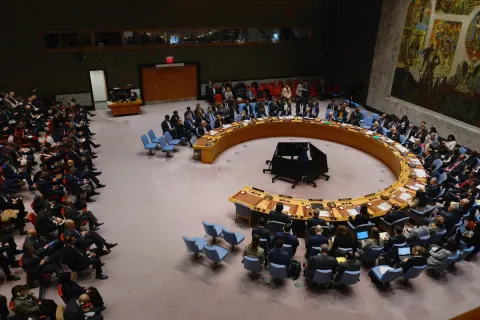
In fact, preventing the spread of the Sheikh Maqsoud and Deir Hafer conflicts to the east of the Euphrates was one of the important factors in preventing the crisis in northern Syria from turning into a wider war. This war could also endanger the peace process in Turkey. In this context, Washington also played an active role in advancing the Damascus-Kurdish agreement. The presence of Tom Barak as the US ambassador to Turkey and its special envoy to Syria was a sign of the close connection between the Syrian and Turkish files in US policy.However, the historical significance of the new agreement for the Syrian Kurds is not limited to the issue of military power. The main issue is that the Kurds, after nearly eight decades, are entering the formal structure of the Syrian state; and that is in a situation where their cultural and linguistic rights have also entered, at least at the legal level, into the new legal framework of the country.
From this perspective, August 25, 2026, can be considered one of the most important turning points in the political history of the Syrian Kurds in the contemporary era. On this day, the Kurds not only moved from a military structure to the structure of the Syrian army, but also entered a new phase in which the main issue is no longer simply the preservation of a region under military control, but also the consolidation of the Kurds' place in the new Syrian political, legal and cultural order.
Of course, this development does not mean the end of all disputes.The manner in which the agreement will be implemented, the extent of the powers of local institutions, the status of former SDF forces in the army, the guarantee of Kurdish cultural rights, and the extent to which Damascus will adhere to the terms of the agreement will remain crucial issues. But on a historical level, the development of August 25 has made a fundamental difference because the Syrian Kurds are no longer simply a community under the rule of the central government, but are becoming a formal part of the political and institutional structure of the new Syria.
For this reason, the Damascus event can be seen not simply as the “dissolution of the SDF” but as the beginning of a new chapter in the Syrian Kurdish question, in which the primary question is no longer how they will survive against the central government, but how the achievements of the past decade will be transformed into sustainable political, cultural, and institutional rights in the new Syria.
Center for Kurdish Studies in Germany
User comments