Kurdistan Regional Government Leaders Seek New Path in Relations with Iran
KurdPress
In a report written by Dr. Fahil A. Abdul Karim, Manara magazine examined the recent positions of the leaders of the Iraqi Kurdistan Regional Government on relations with Iran and the issue of Iranian Kurdish opposition groups.
Statements by senior leaders of the Iraqi Kurdistan Regional Government at the Middle East Research Institute (MERI) forum held in Erbil from October 12 to 14 have placed relations with Iran at the center of a broader political debate.The positions combine efforts to prevent attacks by Iranian Kurdish opposition groups from Iraqi soil with calls for greater engagement with Tehran.
The apparent consensus represents a rare point of agreement among Iraqi Kurdish leaders, although the gathering also appeared to expose divisions within the Kurdistan Democratic Party (PDK).
Nechirvan Barzani, the president of the Kurdistan Region, has strongly criticized the activities of Iranian Kurdish opposition groups during the US-Israeli war with Iran.
He stated that the Kurdistan Region has closed its border with Iran and warned against allowing armed groups to use Iraqi Kurdish soil to carry out operations against neighboring countries.
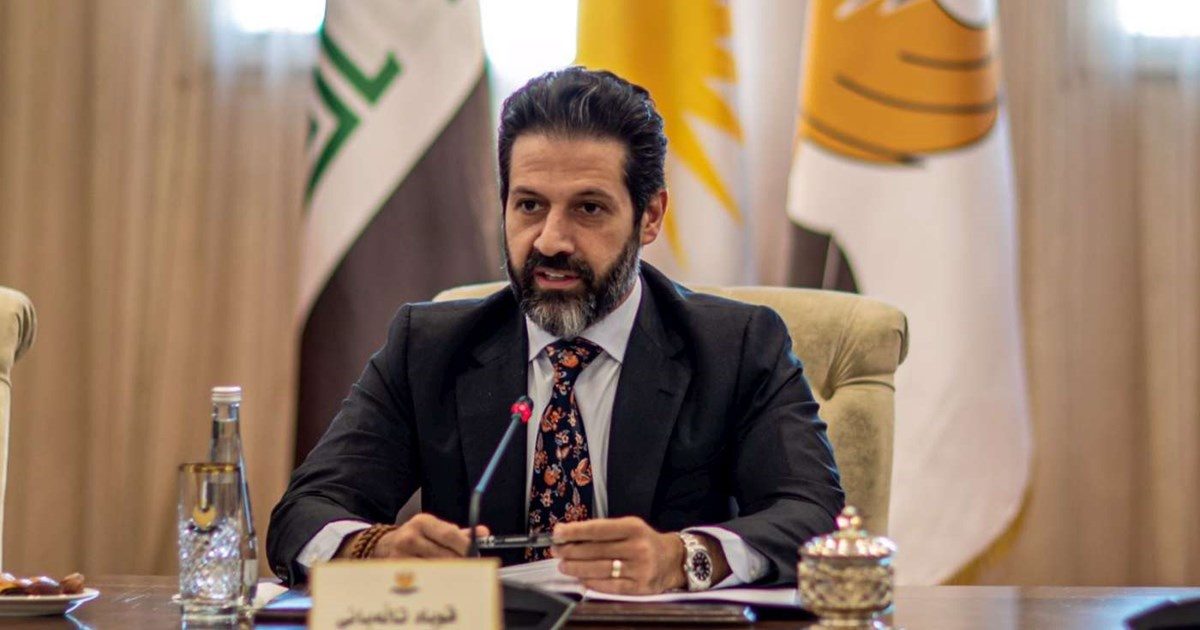
In response, Khalid Azizi of the Kurdistan Democratic Party of Iran reiterated his party’s commitment not to use the Kurdistan Region as a staging ground against Iran.At the October 12 meeting of the forum, Bafel Talabani, the leader of the Patriotic Union of Kurdistan, presented a possible diplomatic alternative to armed operations originating in Iraqi Kurdistan.
Talabani announced that the Patriotic Union had begun talks with Iranian officials on a potentially long-term process aimed at addressing the Kurdish issue in Iran.
Amid uncertainty over how Kurdish political forces outside Iraq would be represented at the forum, the office of Massoud Barzani, the leader of the Kurdistan Democratic Party, distanced itself from the event on October 13. The statement also sparked speculation about divisions within the KDP leadership.
Earlier in the conflict, there were reports that Iranian Kurdish opposition groups based in Iraqi Kurdistan might launch an offensive across the border with US and Israeli support. Such a mobilization never materialized.
Tehran has continued to press for tighter restrictions on these groups, while carrying out attacks on their positions in the Kurdistan Region of Iraq. Meanwhile, Iraqi Kurdish leaders have sought to position the Kurdistan Region of Iraq as a mediator between Washington and Tehran.In mid-May, Nechirvan Barzani reportedly contacted senior Iranian officials as part of an initiative linked to the administration of US President Donald Trump.
Iranian officials reportedly rejected Barzani’s offer to host secret talks in Erbil between US representatives and the Islamic Revolutionary Guard Corps (IRGC). In an attempt to find another channel, Bafel Talabani traveled to Tehran on September 15 to meet with senior Iranian officials. Despite internal rivalries between their parties,
Nechirvan Barzani and Bafel Talabani appear to support regional diplomacy. Since the Kurdistan Regional Government’s parliamentary elections on October 20, 2024, the Kurdistan Democratic Party and the Patriotic Union of Kurdistan have yet to reach an agreement on the formation of a new regional government.The gathering, therefore, points to a divided politics rather than a broader reconciliation among the Kurds.
The Democratic Party and the Patriotic Union have remained internal rivals, while finding common ground on regional security issues where the cost of disagreement is high. On October 19, representatives from Tehran, the Kurdistan Regional Government, and Baghdad will meet to discuss the future of Iranian Kurdish opposition parties. On October 13, Qassem al-Abboudi, Iraq’s national security adviser, announced that Baghdad “is committed to resolving the issue of Iranian Kurdish opposition groups.”
In addition, al-Abboudi said that Baghdad will pressure Tehran to stop its ongoing attacks on these groups. However, any talks appear to be in their early stages.Khaled Azizi, a representative of the Kurdistan Democratic Party of Iran, told reporters that his party would be ready to respond if Tehran made a formal request for contact, but that he saw no opportunity for dialogue at the moment.
Azizi added that the broader coalition of Iranian Kurdish opposition parties had not yet discussed the possibility of engaging with Tehran.
The proposed talks could show whether the 2023 security framework is capable of creating a political path alongside its existing security provisions. This will be much more difficult to achieve if Iran’s attacks continue.
The emerging diplomatic path could also test the limited cooperation on display at the forum. Progress in talks with Tehran or Washington could intensify intra-Kurdish rivalries, especially if rival leaders seek to seize control of communication channels.
User comments